School of Life and Medical Sciences, Department of Psychology and Sport Sciences, University of Hertfordshiregrid.5846.f, Hertfordshire, United Kingdom.
Faculty of Health & Life Sciences, Northumbria Universitygrid.42629.3b, Newcastle upon Tyne, United Kingdom.
mSystems. 2022 Jun 28;7(3):e0012922. doi: 10.1128/msystems.00129-22. Epub 2022 May 17.
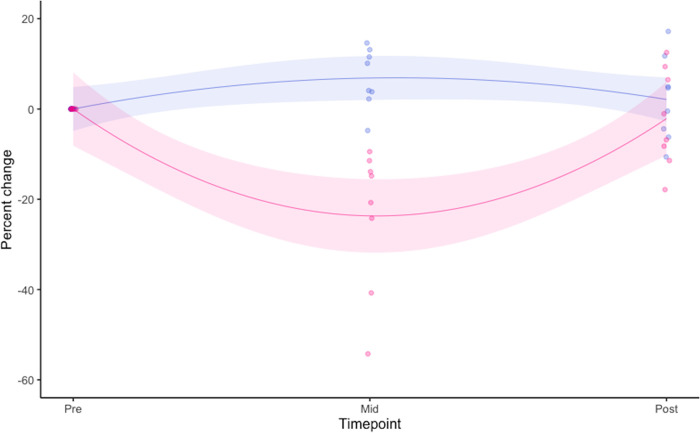
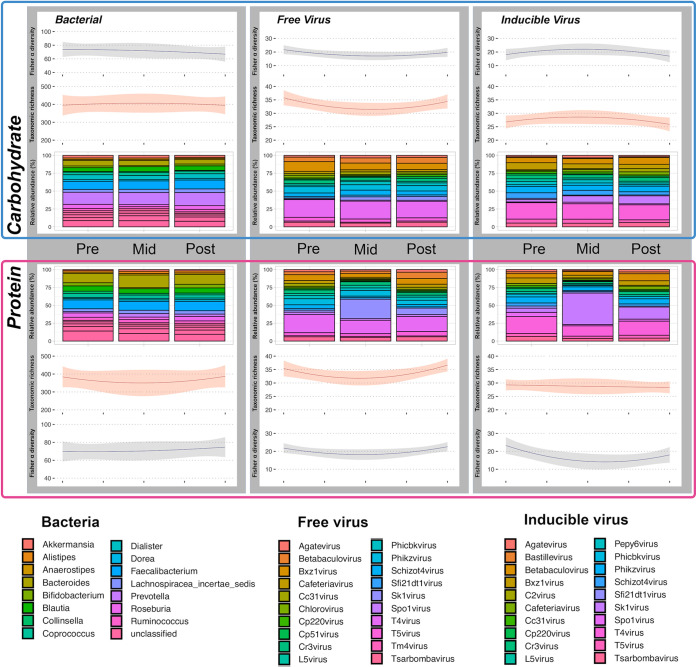
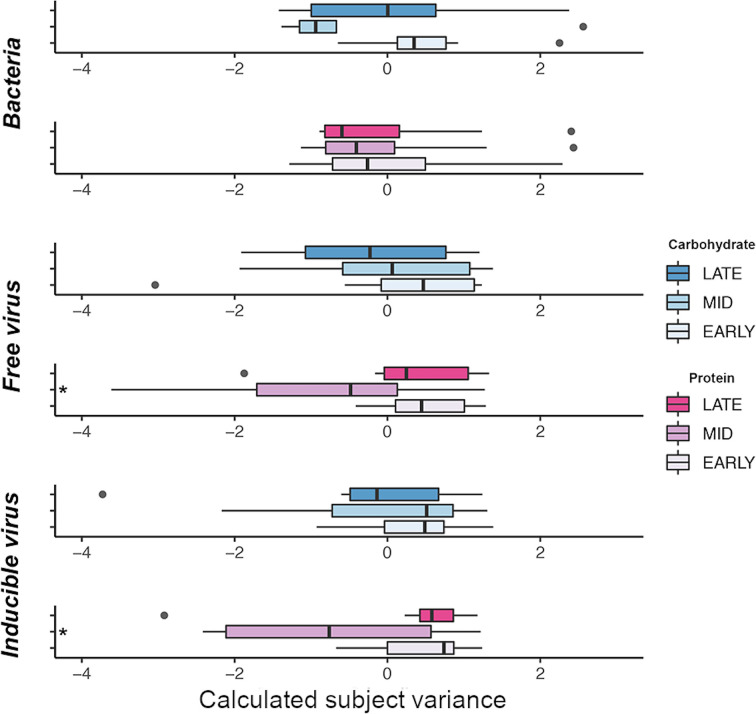
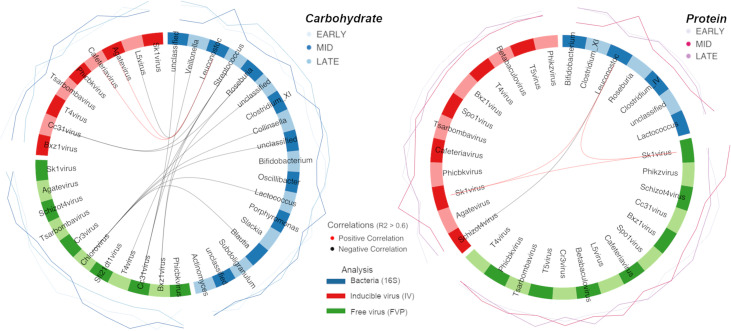
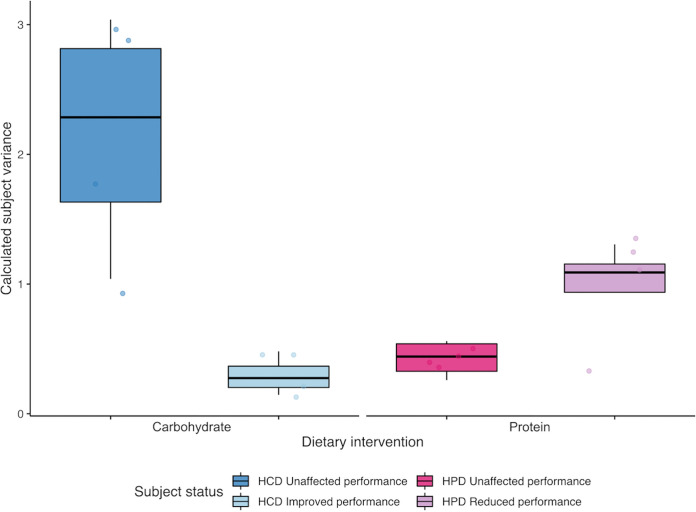
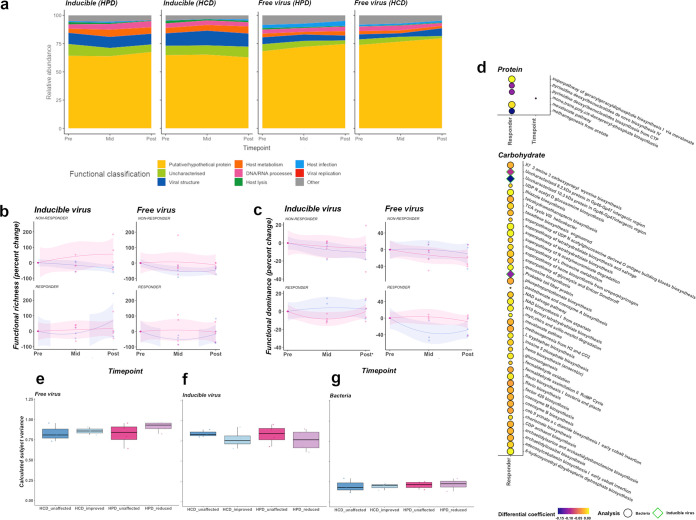
Dietary manipulation with high-protein or high-carbohydrate content are frequently employed during elite athletic training, aiming to enhance athletic performance. Such interventions are likely to impact upon gut microbial content. This study explored the impact of acute high-protein or high-carbohydrate diets on measured endurance performance and associated gut microbial community changes. In a cohort of well-matched, highly trained endurance runners, we measured performance outcomes, as well as gut bacterial, viral (FVP), and bacteriophage (IV) communities in a double-blind, repeated-measures design randomized control trial (RCT) to explore the impact of dietary intervention with either high-protein or high-carbohydrate content. High-dietary carbohydrate improved time-trial performance by +6.5% ( < 0.03) and was associated with expansion of and bacterial spp. Conversely, high dietary protein led to a reduction in performance by -23.3% ( = 0.001). This impact was accompanied by significantly reduced diversity (IV: = 0.04) and altered composition (IV and FVP: = 0.02) of the gut phageome as well as enrichment of both free and inducible and bacterial populations. Greatest performance during dietary modification was observed in participants with less substantial shifts in community composition. Gut microbial stability during acute dietary periodization was associated with greater athletic performance in this highly trained, well-matched cohort. Athletes, and those supporting them, should be mindful of the potential consequences of dietary manipulation on gut flora and implications for performance, and periodize appropriately. Dietary periodization is employed to improve endurance exercise performance but may impact on gut microbial communities. Bacteriophage are implicated in bacterial cell homeostasis and have been identified as biomarkers of disequilibrium in the gut ecosystem possibly brought about through dietary periodization. We find high-carbohydrate and high-protein diets to have opposing impacts on endurance performance in highly trained athlete populations. Reduced performance is linked with disturbance of microbial stasis in the gut. We demonstrate bacteriophage communities are the most sensitive component of the gut microbiota to increased gut stress following dietary manipulation. Athletes undertaking dietary periodization should be aware of potential negative impacts of drastic changes to dietary composition on gut microbial stasis and, in turn, endurance performance.
在精英运动员训练中,经常采用高蛋白或高碳水化合物含量的饮食干预,旨在提高运动表现。这些干预措施可能会影响肠道微生物含量。本研究旨在探讨急性高蛋白或高碳水化合物饮食对耐力表现和相关肠道微生物群落变化的影响。在一组匹配良好、训练有素的耐力跑者中,我们采用双盲、重复测量设计的随机对照试验(RCT)来测量运动表现结果以及肠道细菌、病毒(FVP)和噬菌体(IV)群落,以探索高蛋白质或高碳水化合物含量的饮食干预对肠道微生物群落的影响。高碳水化合物饮食可使计时赛表现提高 6.5%( < 0.03),并与 和 细菌 spp 的扩张有关。相反,高蛋白质饮食导致表现下降 23.3%( = 0.001)。这种影响伴随着肠道噬菌体组多样性显著降低(IV: = 0.04)和组成改变(IV 和 FVP: = 0.02),以及自由和诱导的 和 细菌种群的富集。在饮食调整过程中,参与者的群落组成变化较小,表现最佳。在这个高度训练、匹配良好的队列中,急性饮食周期变化期间肠道微生物的稳定性与更大的运动表现相关。运动员及其支持人员应注意饮食干预对肠道菌群的潜在影响及其对表现的影响,并进行适当的周期化。饮食周期化用于提高耐力运动表现,但可能会影响肠道微生物群落。噬菌体参与细菌细胞内稳态,已被确定为肠道生态系统失衡的生物标志物,可能是通过饮食周期化引起的。我们发现高蛋白和高碳水化合物饮食对高度训练的运动员群体的耐力表现有相反的影响。表现下降与肠道微生物稳定性的干扰有关。我们证明噬菌体群落是肠道微生物群对饮食干预后肠道应激增加最敏感的组成部分。进行饮食周期化的运动员应该意识到饮食成分的剧烈变化对肠道微生物稳定性和耐力表现的潜在负面影响。