Exercise Nutrition & Biochemistry Lab., KyungHee University, Yongin 17104, Korea.
ChunLab, Inc., Seocho-gu, Seoul 06725, Korea.
Nutrients. 2020 Sep 25;12(10):2947. doi: 10.3390/nu12102947.
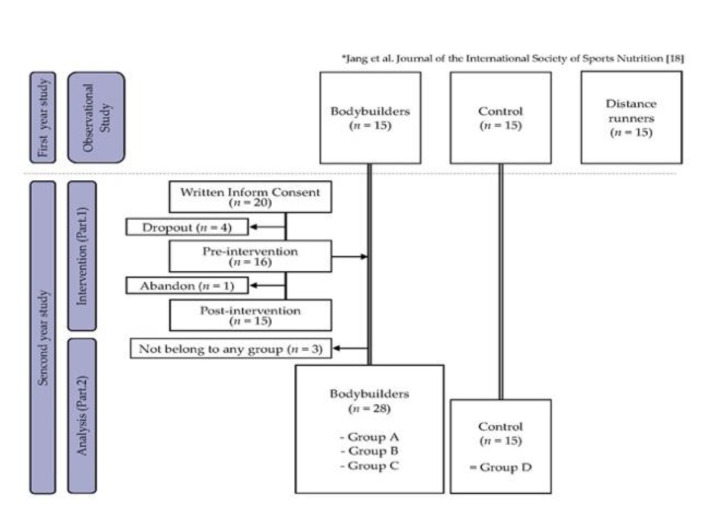
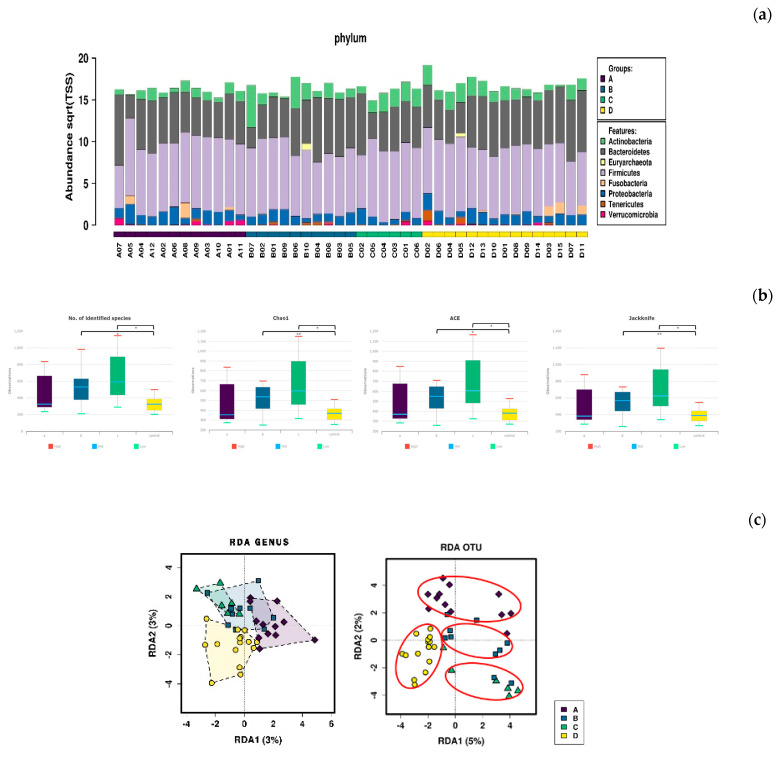
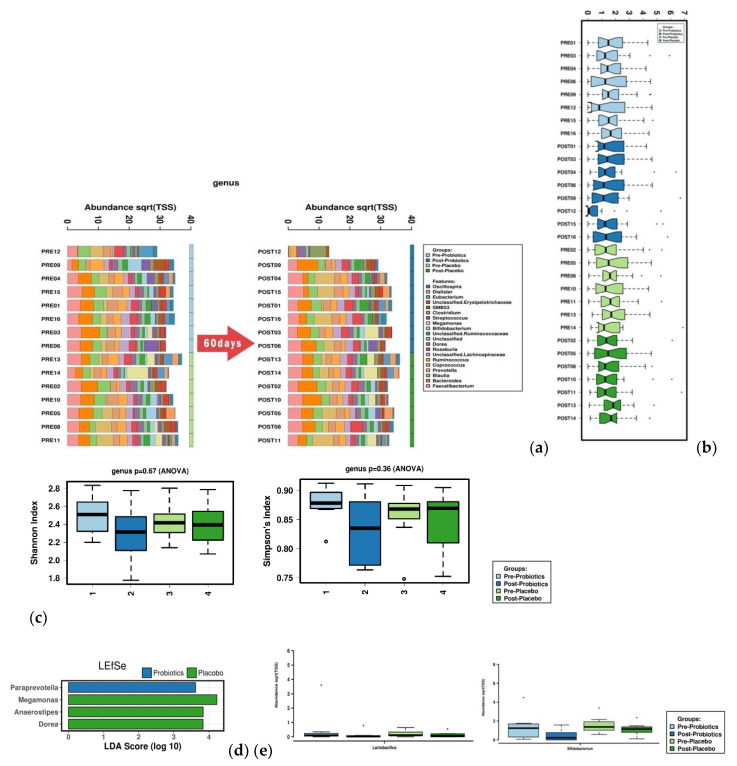
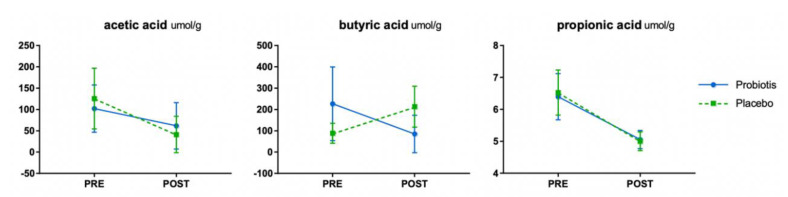
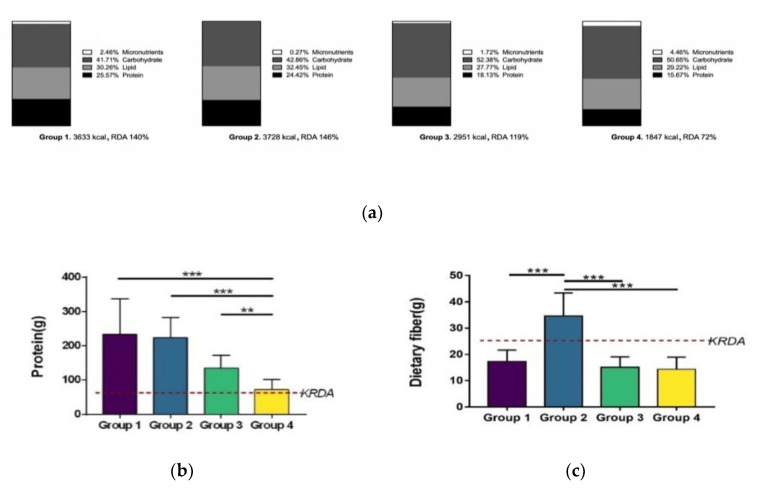
Studies investigating exercise-induced gut microbiota have reported that people who exercise regularly have a healthy gut microbial environment compared with sedentary individuals. In contrast, recent studies have shown that high protein intake without dietary fiber not only offsets the positive effect of exercise on gut microbiota but also significantly lowers the relative abundance of beneficial bacteria. In this study, to resolve this conundrum and find the root cause, we decided to narrow down subjects according to diet. Almost all of the studies had subjects on an ad libitum diet, however, we wanted subjects on a simplified diet. Bodybuilders who consumed an extremely high-protein/low-carbohydrate diet were randomly assigned to a probiotics intake group ( = 8) and a placebo group ( = 7) to find the intervention effect. Probiotics, comprising , , , and were consumed for 60 days. As a result, supplement intake did not lead to a positive effect on the gut microbial environment or concentration of short-chain fatty acids (SCFAs). It has been shown that probiotic intake is not as effective as ergogenic aids for athletes such as bodybuilders with extreme dietary regimens, especially protein and dietary fiber. To clarify the influence of nutrition-related factors that affect the gut microbial environment, we divided the bodybuilders ( = 28) into groups according to their protein and dietary fiber intake and compared their gut microbial environment with that of sedentary male subjects ( = 15). Based on sedentary Korean recommended dietary allowance (KRDA), the bodybuilders' intake of protein and dietary fiber was categorized into low, proper, and excessive groups, as follows: high-protein/restricted dietary fiber ( = 12), high-protein/adequate dietary fiber ( = 10), or adequate protein/restricted dietary fiber ( = 6). We found no significant differences in gut microbial diversity or beneficial bacteria between the high-protein/restricted dietary fiber and the healthy sedentary groups. However, when either protein or dietary fiber intake met the KRDA, gut microbial diversity and the relative abundance of beneficial bacteria showed significant differences to those of healthy sedentary subjects. These results suggest that the positive effect of exercise on gut microbiota is dependent on protein and dietary fiber intake. The results also suggest that the question of adequate nutrition should be addressed before supplementation with probiotics to derive complete benefits from the intervention.
研究表明,与久坐不动的人相比,经常锻炼的人拥有健康的肠道微生物环境。然而,最近的研究表明,高蛋白摄入而没有膳食纤维不仅会抵消运动对肠道微生物的积极影响,还会显著降低有益细菌的相对丰度。在这项研究中,为了解决这个难题并找到根本原因,我们决定根据饮食来缩小研究对象的范围。几乎所有的研究都让研究对象随意饮食,但我们希望他们的饮食简化。我们随机分配了摄入益生菌的组(=8)和安慰剂组(=7),让摄入极高蛋白质/低碳水化合物饮食的健美运动员进行干预。益生菌由、、、和组成,连续摄入 60 天。结果表明,补充剂摄入对肠道微生物环境或短链脂肪酸(SCFA)浓度没有产生积极影响。研究表明,与运动员(如健美运动员)等剧烈饮食方案的运动补剂相比,益生菌的摄入对肠道微生物环境的影响并没有那么有效,特别是对蛋白质和膳食纤维。为了阐明影响肠道微生物环境的营养相关因素的影响,我们根据蛋白质和膳食纤维的摄入量将健美运动员(=28)分为几组,并将他们的肠道微生物环境与久坐男性(=15)进行比较。根据久坐韩国推荐膳食允许量(KRDA),将健美运动员的蛋白质和膳食纤维摄入量分为低、适当和过量组,分别为:高蛋白/限制膳食纤维(=12)、高蛋白/足够膳食纤维(=10)或适当蛋白质/限制膳食纤维(=6)。我们发现,高蛋白/限制膳食纤维组和健康久坐组之间的肠道微生物多样性或有益细菌没有显著差异。然而,当蛋白质或膳食纤维摄入量达到 KRDA 时,肠道微生物多样性和有益细菌的相对丰度与健康久坐组有显著差异。这些结果表明,运动对肠道微生物的积极影响取决于蛋白质和膳食纤维的摄入。这些结果还表明,在补充益生菌之前,应该先解决充足营养的问题,以从干预中获得完全的益处。