Wang Han, Li De-Hua, Wang Jing-Ru, Wang Rong, Liang Chang-Li, Hu Zhong, Liu Jun-He
Biological and Food Engineering, Huanghuai University, Zhumadian, China.
College of Computer and Artificial Intelligence, Huanghuai University, Zhumadian, China.
Front Microbiol. 2024 Dec 3;15:1476073. doi: 10.3389/fmicb.2024.1476073. eCollection 2024.
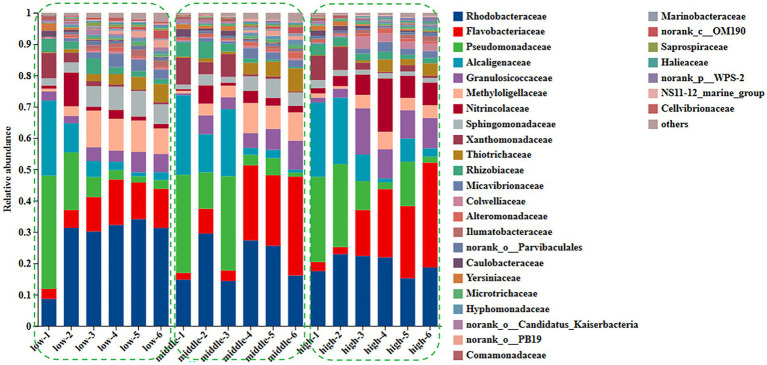
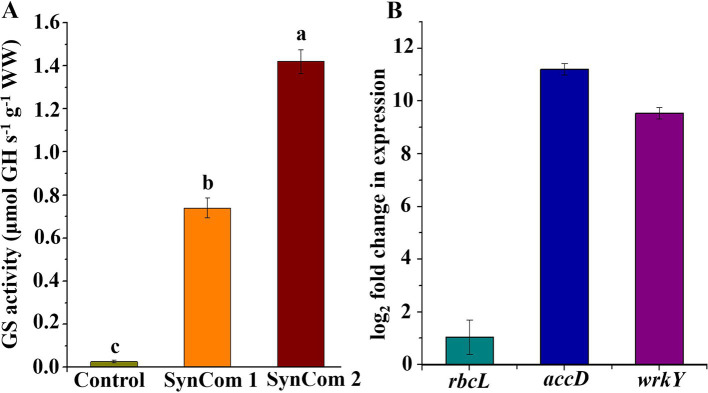
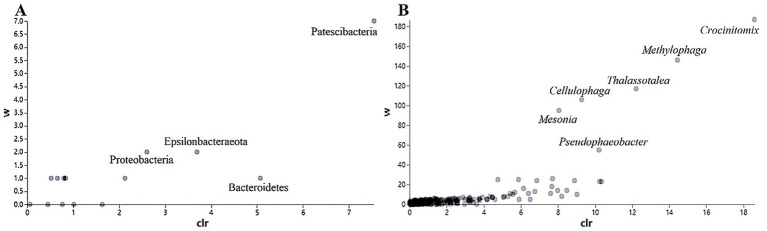
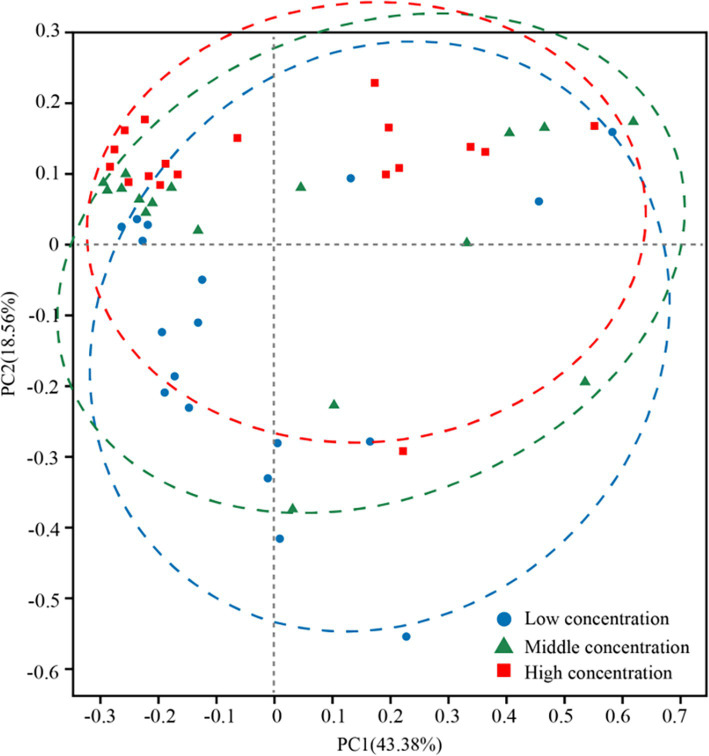
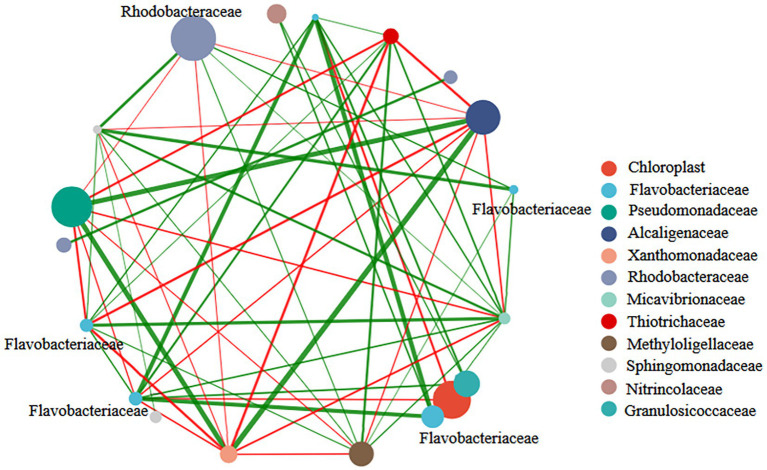
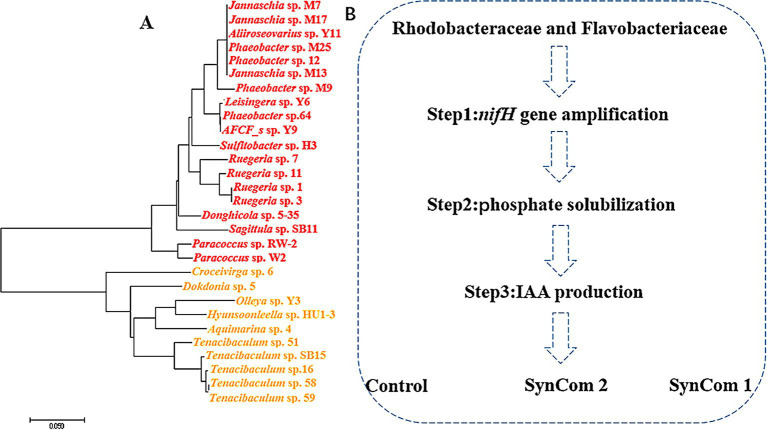
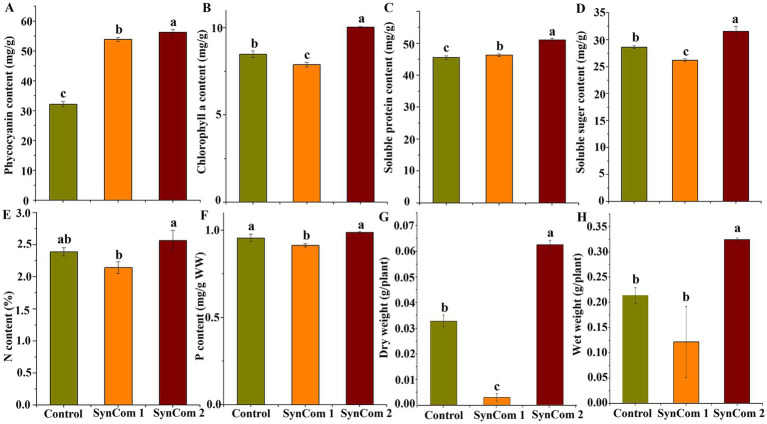
Macroalgae growth depends on biologically available nitrogen, such as ammonium and nitrate, making nitrogen the most common growth-limiting factor for macroalgae. However, the role of surface microorganisms in promoting nitrogen transformation and improving nitrogen utilization by macroalgae remains unclear. In this study, 228 bacterial strains were isolated from the surface of , and high-throughput sequencing revealed significant shifts in the composition of surface bacterial communities under different nitrogen concentrations. Key bacterial families such as Rhodobacteraceae and Flavobacteriaceae were identified as essential for nitrogen cycling. Network analysis indicated that Rhodobacteraceae and Flavobacteriaceae were central nodes in microbial interactions. A synthetic microbial community (SynCom2), comprising four strains, significantly increased the biomass, nitrogen, and phosphorus acquisition of , with soluble sugar, protein, and Chlorophyll level increasing by 23.9-49.2%. Quantitative reverse transcription polymerase chain reaction (RT-qPCR) analysis revealed that compared to untreated control plants, SynCom2 enhanced the expression of key genes associated with photosynthesis (, 1.04-fold), lipid biosynthesis (, 11.21-fold), and growth hormone precursor pathways (, 9.54-fold). These findings suggest that SynCom2 promotes growth by improving nutrient acquisition and activating growth-related genes.
大型藻类的生长依赖于生物可利用氮,如铵和硝酸盐,这使得氮成为大型藻类最常见的生长限制因素。然而,表面微生物在促进氮转化和提高大型藻类氮利用率方面的作用仍不清楚。在本研究中,从[具体对象]表面分离出228株细菌菌株,高通量测序显示不同氮浓度下表面细菌群落组成发生了显著变化。关键细菌科如红杆菌科和黄杆菌科被确定为氮循环所必需。网络分析表明,红杆菌科和黄杆菌科是微生物相互作用的中心节点。由四种菌株组成的合成微生物群落(SynCom2)显著增加了[具体对象]的生物量、氮和磷的获取量,可溶性糖、蛋白质和叶绿素水平提高了23.9 - 49.2%。定量逆转录聚合酶链反应(RT-qPCR)分析表明,与未处理的对照植物相比,SynCom2增强了与光合作用相关的关键基因([基因名称1],1.04倍)、脂质生物合成相关的关键基因([基因名称2],11.21倍)和生长激素前体途径相关的关键基因([基因名称3],9.54倍)的表达。这些发现表明,SynCom2通过改善养分获取和激活与生长相关的基因来促进[具体对象]的生长。