Zhang Wen-Yu, Zhang Xiang-Nan, Zhang Chen-Guang, Jia Xin-Rui, Li Huan, Yue Xuan-Zhi, Wu Duo-Duo, Zhu Jia-Ke, Zhang Wen-Qian, Qin Yu-Han, Fan Yao-Chun
Inner Mongolia Medical University, Inner Mongolia, Hohhot, The People's Republic of China.
Inner Mongolia Center for Disease Control and Prevention (Inner Mongolia Academy of Preventive Medicine), Inner Mongolia, Hohhot, The People's Republic of China.
BMC Public Health. 2024 Dec 18;24(1):3529. doi: 10.1186/s12889-024-20776-3.
By monitoring arsenic levels in rural drinking water in Inner Mongolia Autonomous Region from 2013 to 2022 and evaluating their health risks, this study provides a basis for further developing strategies to promote public health.
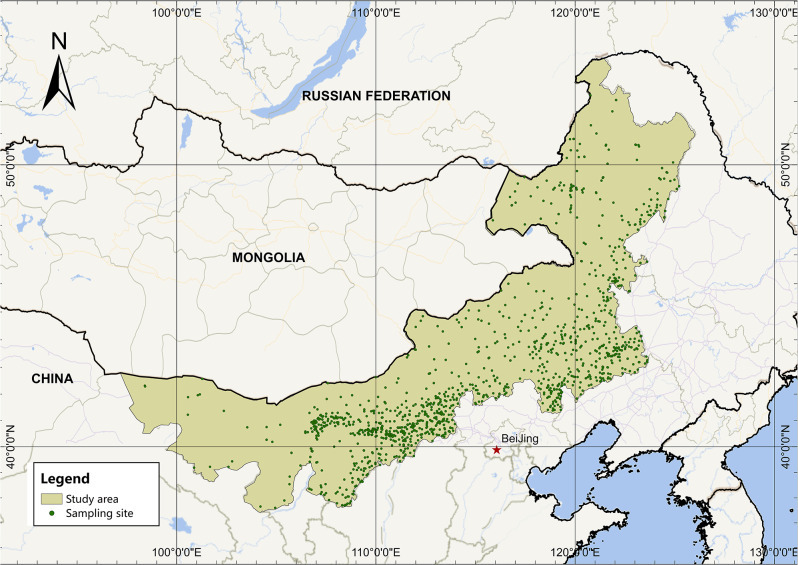
One stable centralized water supply point was randomly selected in each township of Inner Mongolia Autonomous Region. One finished water sample and 1-3 tap water samples were collected at each supply point. Water samples were collected once during the dry season (May) and once during the rainy season (August-September). Mann-Whitney U test was used to compare arsenic concentrations in drinking water from different types of water sources, and Kruskal-Wallis test was used to compare arsenic concentrations in drinking water across different years. Environmental health risk assessment was conducted using the health risk assessment model recommended by the US Environmental Protection Agency (USEPA).
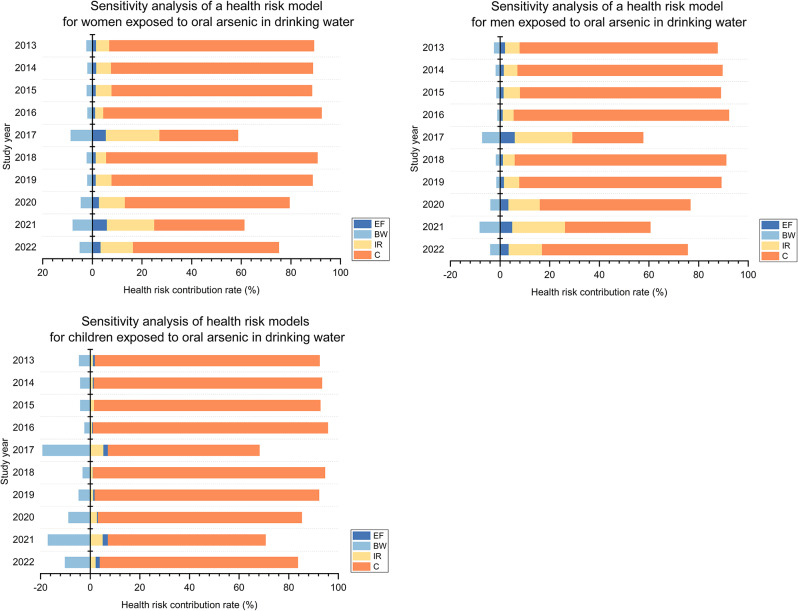
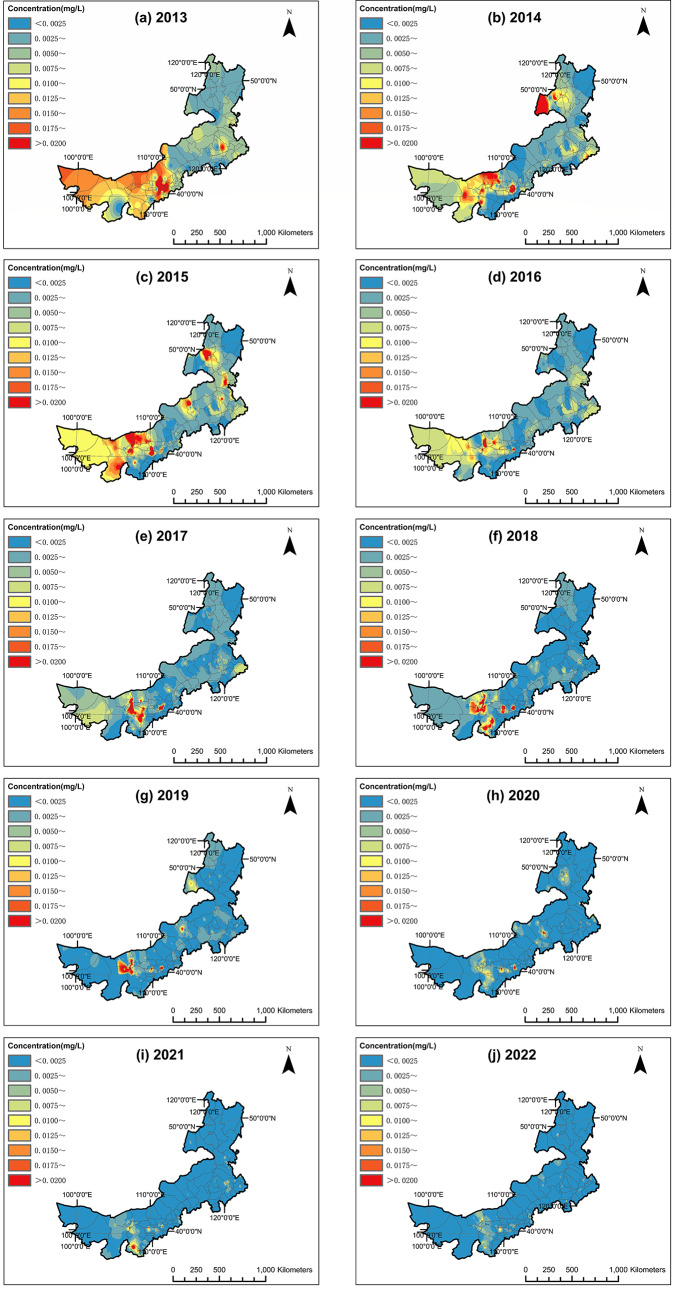
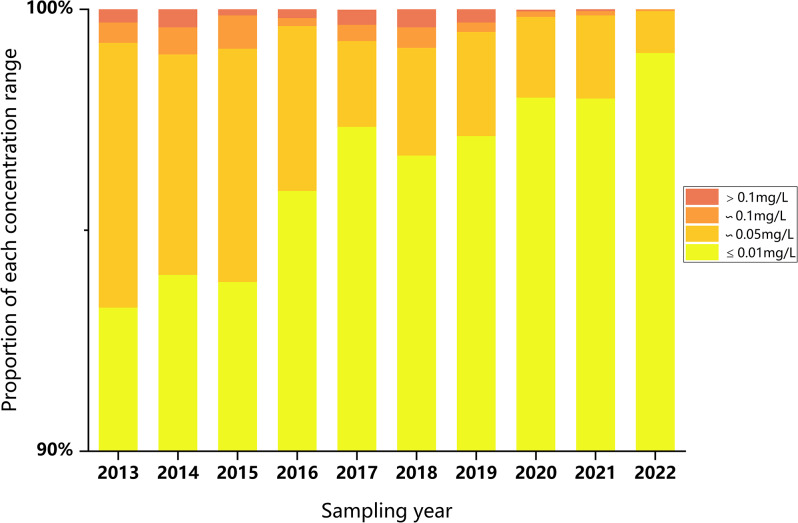
Overall, arsenic concentrations in rural drinking water were higher in the central-western part of Inner Mongolia Autonomous Region compared to the eastern part. From 2013 to 2022, there was a notable decreasing trend in arsenic concentrations in rural drinking water, with over 98% of water samples meeting arsenic standards by 2022. During 2013-2019, arsenic concentrations in drinking water sourced from groundwater were consistently higher than those from surface water sources (P < 0.05). Hazard quotient (HQ) values for the entire population were below 1, and lifetime cancer risk (LCR) values exceeded 1 × 10. Sensitivity analysis indicated that drinking water arsenic concentration contributed the most to health risks for the population.
During 2013-2022, through concerted efforts by the government and the people, excessive arsenic levels in rural drinking water have been significantly reduced, resulting in decreased health risks for the population. However, some carcinogenic risks still exist.Therefore, the next critical step in improving water quality in the region involves further optimizing methods such as coagulation, adsorption, or ion exchange to remove arsenic from drinking water.
通过监测2013年至2022年内蒙古自治区农村饮用水中的砷含量并评估其健康风险,本研究为进一步制定促进公众健康的策略提供了依据。
在内蒙古自治区每个乡镇随机选择一个稳定的集中供水点。在每个供水点采集一份成品水样和1-3份自来水样。在旱季(5月)和雨季(8月至9月)各采集一次水样。采用曼-惠特尼U检验比较不同类型水源饮用水中的砷浓度,采用克鲁斯卡尔-沃利斯检验比较不同年份饮用水中的砷浓度。使用美国环境保护局(USEPA)推荐的健康风险评估模型进行环境卫生风险评估。
总体而言,内蒙古自治区中西部农村饮用水中的砷浓度高于东部地区。2013年至2022年,农村饮用水中的砷浓度呈显著下降趋势,到2022年,超过98%的水样符合砷标准。2013-2019年期间,地下水水源的饮用水中砷浓度始终高于地表水水源(P < 0.05)。整个人口的危害商(HQ)值低于1,终生癌症风险(LCR)值超过1×10。敏感性分析表明,饮用水中的砷浓度对人群健康风险的贡献最大。
2013-2022年期间,通过政府和民众的共同努力,农村饮用水中过量的砷含量已显著降低,从而降低了人群的健康风险。然而,一些致癌风险仍然存在。因此,该地区改善水质的下一步关键举措包括进一步优化诸如混凝、吸附或离子交换等方法,以去除饮用水中的砷。