Wu Dong-Qi, Guo Yan-Feng, Zou Yu, Tang Xiao-Ting, Zhang Wei-Yu, Di Wen-Da
College of Animal Science and Technology, Guangxi University, Nanning, 530004, Guangxi Zhuang Autonomous Region, People's Republic of China.
Parasit Vectors. 2024 Dec 18;17(1):516. doi: 10.1186/s13071-024-06570-5.
Fascioliasis is a zoonotic parasitic disease caused by Fasciola hepatica and Fasciola gigantica, which poses a serious threat to global public health and livestock farming. Fasciola gigantica secretes and excretes various components to manipulate the immune response, thereby enhancing its invasion, migration, and survival in vivo. However, the roles of specific components in immune modulation, such as asparagine endopeptidase, remain unknown.
The transcriptional abundance of members of the asparagine endopeptidase family (also known as the legumain family) from F. gigantica was analyzed. Two highly transcribed asparagine endopeptidases in metacercariae, juveniles and adults were cloned, and their recombinant proteins-recombinant F. gigantica legumain (rFgLGMN-1) and (rFgLGMN-2)-were expressed in prokaryotic expression system. Their regulatory effects on buffalo peripheral blood mononuclear cells (PBMCs), including proliferation, migration, total nitric oxide (NO) production, cytokine secretion, and phagocytosis were explored in vitro.
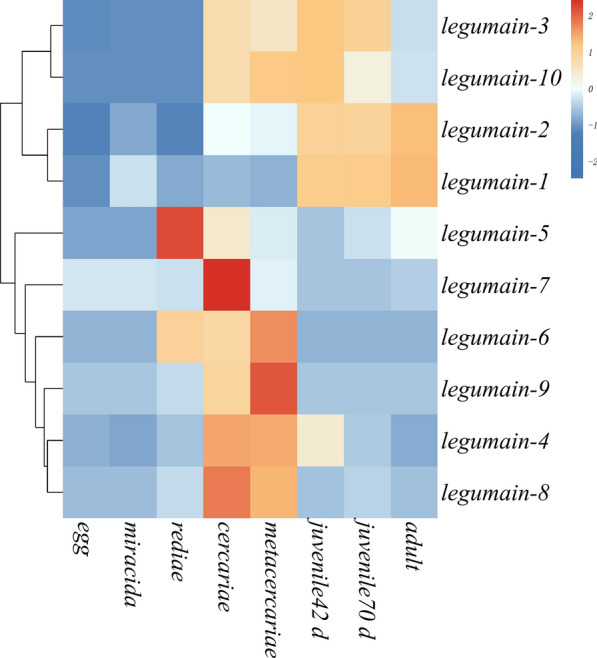
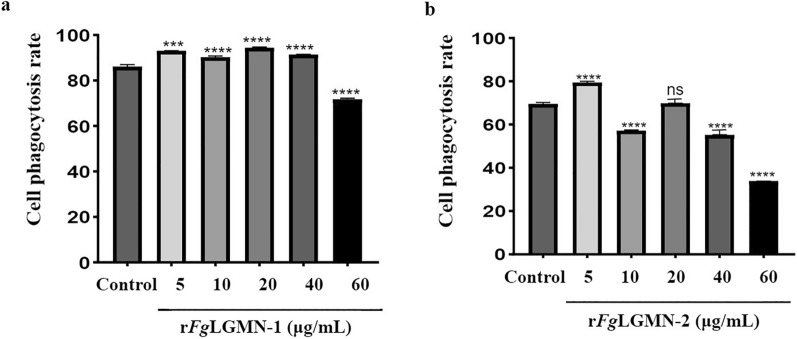
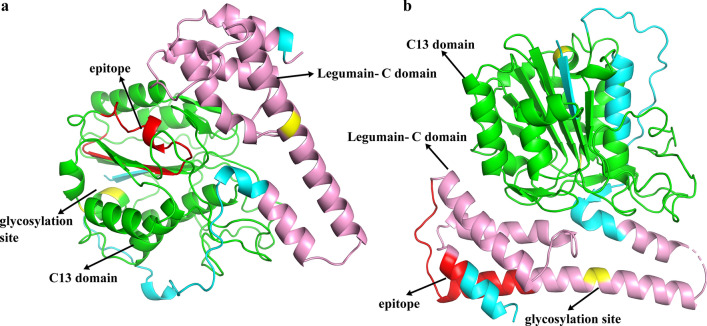
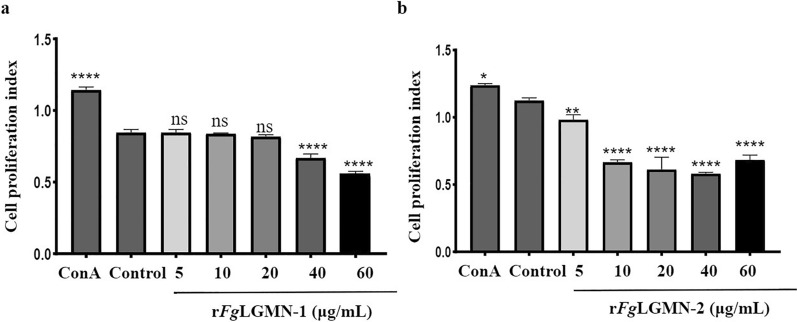
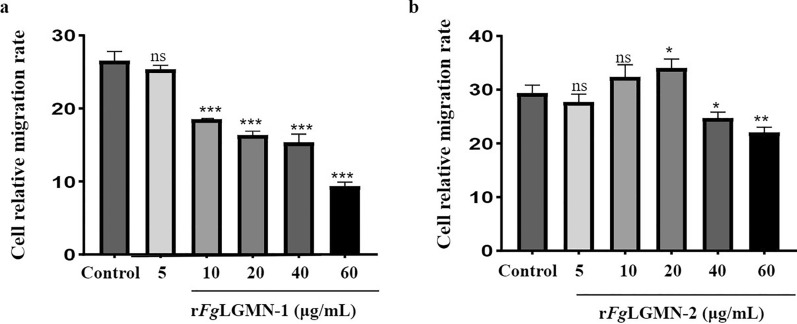
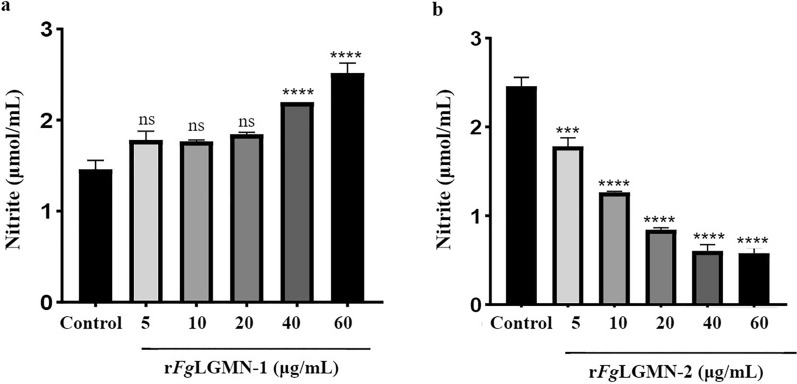
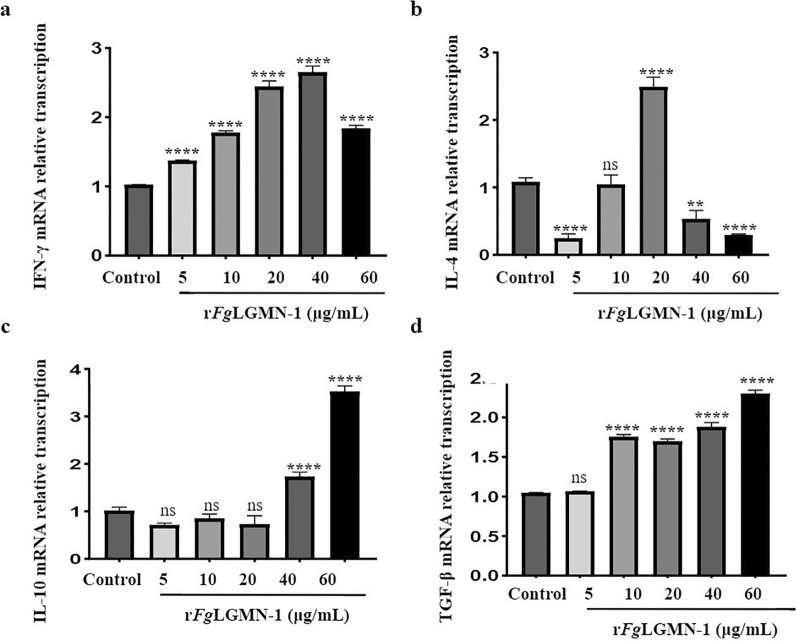
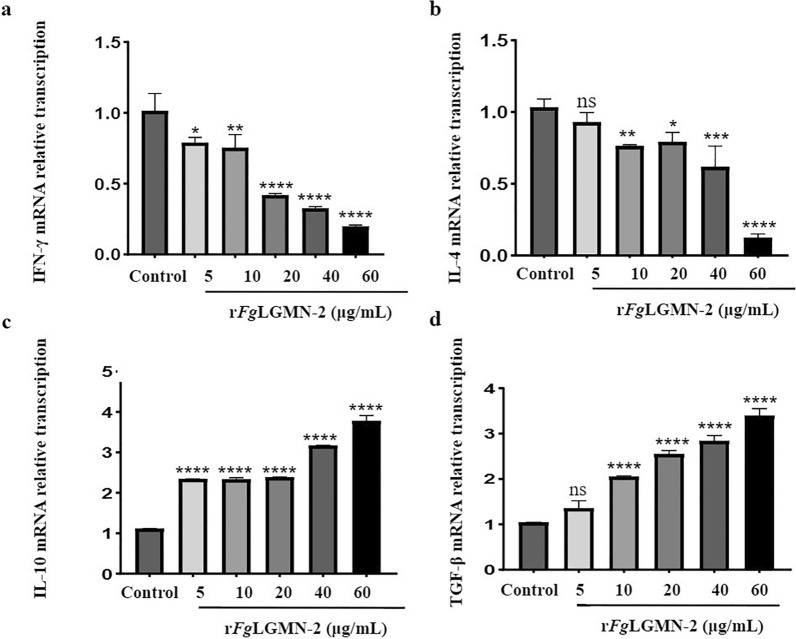
Ten members of the legumain family were detected in F. gigantica, among of which FgLGMN-1 and FgLGMN-2 exhibited high transcription levels in juveniles and adults. The isolation of sequences indicated that FgLGMN-1 encodes 409 amino acids, while FgLGMN-2 encodes 403 amino acids. Both recombinant FgLGMN-1 (rFgLGMN-1) and rFgLGMN-2 were recognized by serum from buffaloes infected with F. gigantica. Both rFgLGMN-1 and rFgLGMN-2 inhibited the proliferation of PBMCs, and rFgLGMN-1 also inhibited the migration of PBMCs. While rFgLGMN-1 increased the production of total NO, rFgLGMN-2 decreased NO production. Both rFgLGMN-1 and rFgLGMN-2 increased the transcription of the cytokines interleukin-10 and transforming growth factor β. The effect of rFgLGMN-1 and rFgLGMN-2 on the phagocytosis of PBMCs varied depending on their concentrations.
rFgLGMN-1 and rFgLGMN-2 modulate several cellular and immunological functions of PBMCs, and exhibited distinct regulatory effects on these in vitro, which indicated that they may play roles in immune modulation and facilitate fluke development. However, due to uncertainties associated with in vitro experiments, further studies are necessary to elucidate the precise functions of these legumains.
肝片吸虫病是一种由肝片吸虫和巨片吸虫引起的人畜共患寄生虫病,对全球公共卫生和畜牧业构成严重威胁。巨片吸虫分泌和排泄各种成分以操纵免疫反应,从而增强其在体内的侵袭、迁移和存活能力。然而,特定成分如天冬酰胺内肽酶在免疫调节中的作用仍不清楚。
分析了巨片吸虫中天冬酰胺内肽酶家族(也称为豆球蛋白家族)成员的转录丰度。克隆了尾蚴、幼虫和成虫中两个高转录的天冬酰胺内肽酶,并在原核表达系统中表达了它们的重组蛋白——重组巨片吸虫豆球蛋白(rFgLGMN-1)和(rFgLGMN-2)。在体外探讨了它们对水牛外周血单个核细胞(PBMC)的调节作用,包括增殖、迁移、总一氧化氮(NO)产生、细胞因子分泌和吞噬作用。
在巨片吸虫中检测到10个豆球蛋白家族成员,其中FgLGMN-1和FgLGMN-2在幼虫和成虫中表现出高转录水平。序列分析表明,FgLGMN-1编码409个氨基酸,而FgLGMN-2编码403个氨基酸。感染巨片吸虫的水牛血清可识别重组FgLGMN-1(rFgLGMN-1)和rFgLGMN-2。rFgLGMN-1和rFgLGMN-2均抑制PBMC的增殖,rFgLGMN-1还抑制PBMC的迁移。rFgLGMN-1增加总NO的产生,而rFgLGMN-2降低NO的产生。rFgLGMN-1和rFgLGMN-2均增加细胞因子白细胞介素-10和转化生长因子β的转录。rFgLGMN-1和rFgLGMN-2对PBMC吞噬作用的影响因浓度而异。
rFgLGMN-1和rFgLGMN-2调节PBMC的多种细胞和免疫功能,并在体外表现出不同的调节作用,这表明它们可能在免疫调节中发挥作用并促进吸虫发育。然而,由于体外实验存在不确定性,需要进一步研究以阐明这些豆球蛋白的确切功能。