Aluthge Nirosh, Adams Seidu, Davila Carmen A, Gocchi Carrasco Nova R, Chiou Kathy S, Abadie Roberto, Bennett Sydney J, Dombrowski Kirk, Major Angel M, Valentín-Acevedo Aníbal, West John T, Wood Charles, Fernando Samodha C
Department of Animal Science, University of Nebraska-Lincoln, Lincoln, NE, United States.
Department of Sociology, University of Nebraska-Lincoln, Lincoln, NE, United States.
Front Microbiol. 2024 Nov 26;15:1470037. doi: 10.3389/fmicb.2024.1470037. eCollection 2024.
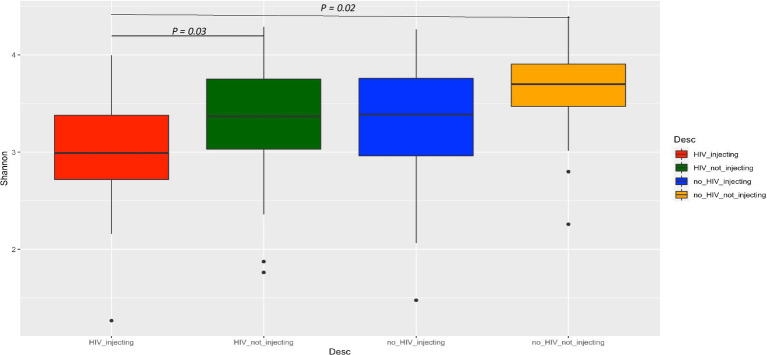
The full extent of interactions between human immunodeficiency virus (HIV) infection, injection drug use, and the human microbiome is unclear. In this study, we examined the microbiomes of HIV-positive and HIV-negative individuals, both drug-injecting and non-injecting, to identify bacterial community changes in response to HIV and drug use. We utilized a well-established cohort of people who inject drugs in Puerto Rico, a region with historically high levels of injection drug use and an HIV incidence rate disproportionately associated with drug use.
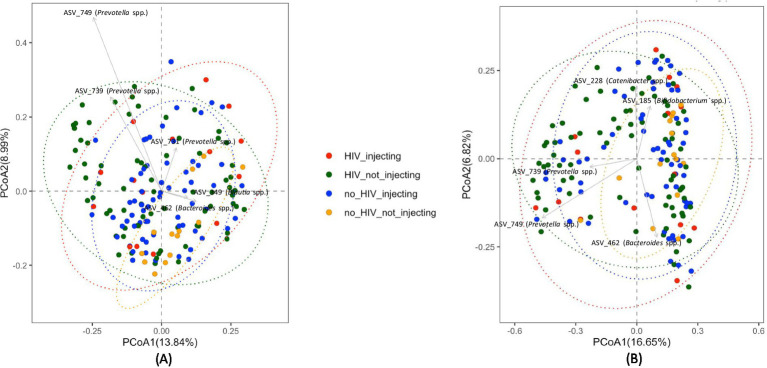
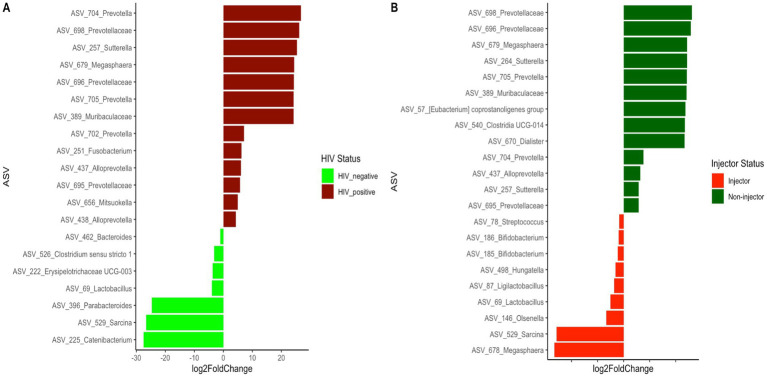
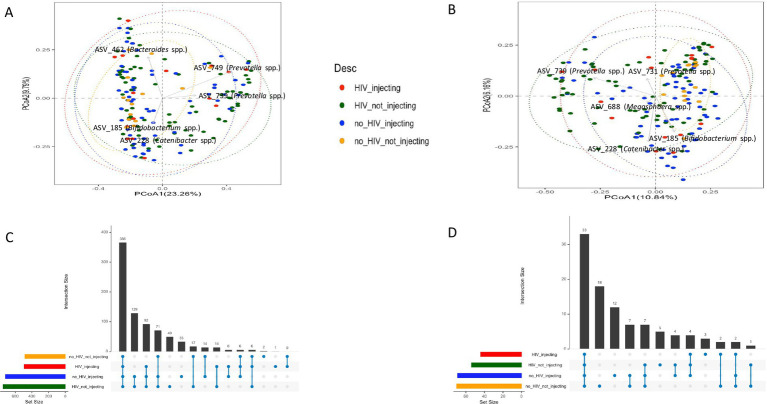
Using amplicon-based 16S rDNA sequencing, we identified amplicon sequence variants (ASVs) that demonstrated significant variations in the composition of microbial communities based on HIV status and drug use.
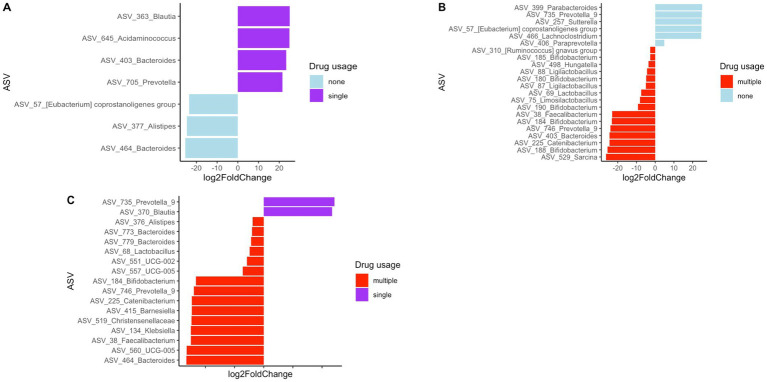
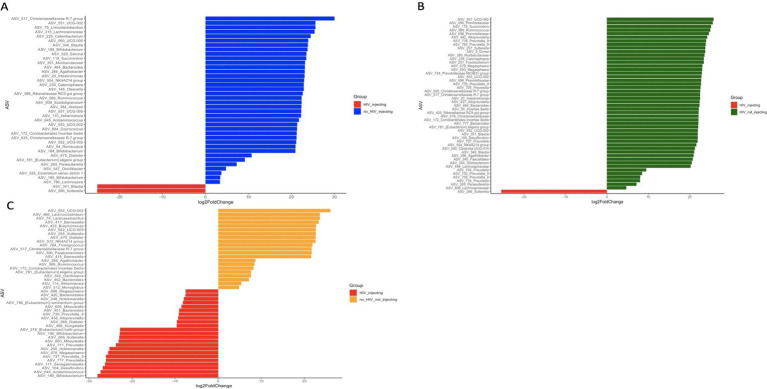
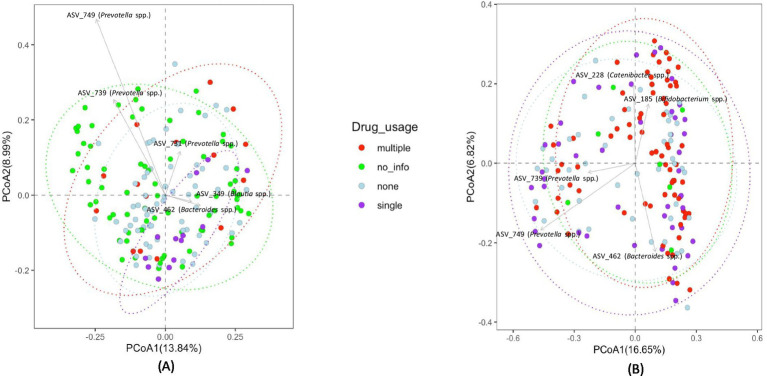
Our findings indicate that the HIV-positive group exhibited a higher abundance of ASVs belonging to the genera , , , , , and . However, Bifidobacteria and ASVs were more abundant in injectors than in non-injectors. We examined the effect of drug use on the gut microbiome in both HIV-infected and non-infected patients, and found that multiple drug use significantly affected the microbial community composition. Analysis of differential of bacterial taxa revealed an enrichment of spp. spp., and spp. in the multiple drug-injecting group. However, in the non-injecting group, spp., spp., spp., spp., spp. The presence of multiple drug-injecting groups was observed to be more prevalent. Our findings provide detailed insight into ASV-level changes in the microbiome in response to HIV and drug use, suggesting that the effect of HIV status and drug injection may have different effects on microbiome composition and in modulating gut bacterial populations.
人类免疫缺陷病毒(HIV)感染、注射吸毒与人类微生物组之间相互作用的全貌尚不清楚。在本研究中,我们检测了注射吸毒和不注射吸毒的HIV阳性和HIV阴性个体的微生物组,以确定因HIV和吸毒而发生的细菌群落变化。我们利用了波多黎各一个成熟的注射吸毒人群队列,该地区历史上注射吸毒水平较高,且HIV发病率与吸毒不成比例地相关。
使用基于扩增子的16S rDNA测序,我们鉴定了基于HIV状态和吸毒情况在微生物群落组成上表现出显著差异的扩增子序列变体(ASV)。
我们的研究结果表明,HIV阳性组中属于 属、 属、 属、 属、 属和 属的ASV丰度较高。然而,双歧杆菌和 属ASV在注射吸毒者中比在非注射吸毒者中更为丰富。我们研究了吸毒对HIV感染和未感染患者肠道微生物组的影响,发现多种药物使用显著影响微生物群落组成。对细菌分类群差异的分析显示,在多种药物注射组中 属、 属和 属有所富集。然而,在非注射组中, 属、 属、 属、 属、 属更为普遍。观察到多种药物注射组的存在更为普遍。我们的研究结果提供了关于微生物组中ASV水平因HIV和吸毒而发生变化的详细见解,表明HIV状态和药物注射的影响可能对微生物组组成和调节肠道细菌种群有不同的作用。