Villoslada-Blanco Pablo, Pérez-Matute Patricia, Íñiguez María, Recio-Fernández Emma, Blanco-Navarrete Pilar, Metola Luis, Ibarra Valvanera, Alba Jorge, de Toro María, Oteo José A
Infectious Diseases, Microbiota and Metabolism Unit. Infectious Diseases Department, Center for Biomedical Research of La Rioja (CIBIR), Logroño, La Rioja, Spain.
Centro de Salud Siete Infantes de Lara, Logroño, La Rioja, Spain.
Infect Dis Ther. 2022 Aug;11(4):1541-1557. doi: 10.1007/s40121-022-00654-4. Epub 2022 May 26.
Human immunodeficiency virus (HIV) infection can be considered a chronic disease thanks to the extended use of antiretroviral treatment (ART). In this context, low-grade chronic inflammation related to gut microbiota (GM) dysbiosis and bacterial translocation (BT) among other factors has been observed despite the use of ART. In addition, different ART regimens have demonstrated differential impacts on GM. However, the role of novel integrase strand transfer inhibitors (INSTIs) has not been investigated yet. The aim of this study was to analyse the effects of INSTIs in first-line of treatment on markers of BT, inflammation, cardiovascular risk, gut permeability and GM composition and derived short-chain fatty acids.
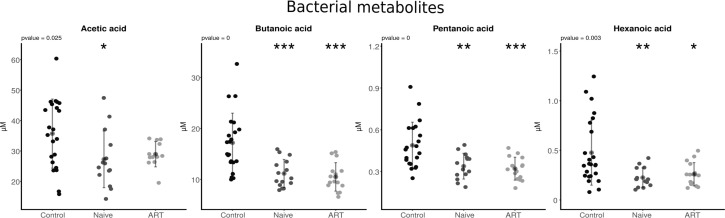
Twenty-six non-HIV-infected volunteers and 30 HIV-infected patients (15 naïve and 15 under INSTIs regimen) were recruited. Blood samples were extracted to analyse biochemical parameters and markers of BT, inflammation, cardiovascular risk, gut permeability and bacterial metabolism. GM composition was analysed using 16S rRNA gene sequencing.
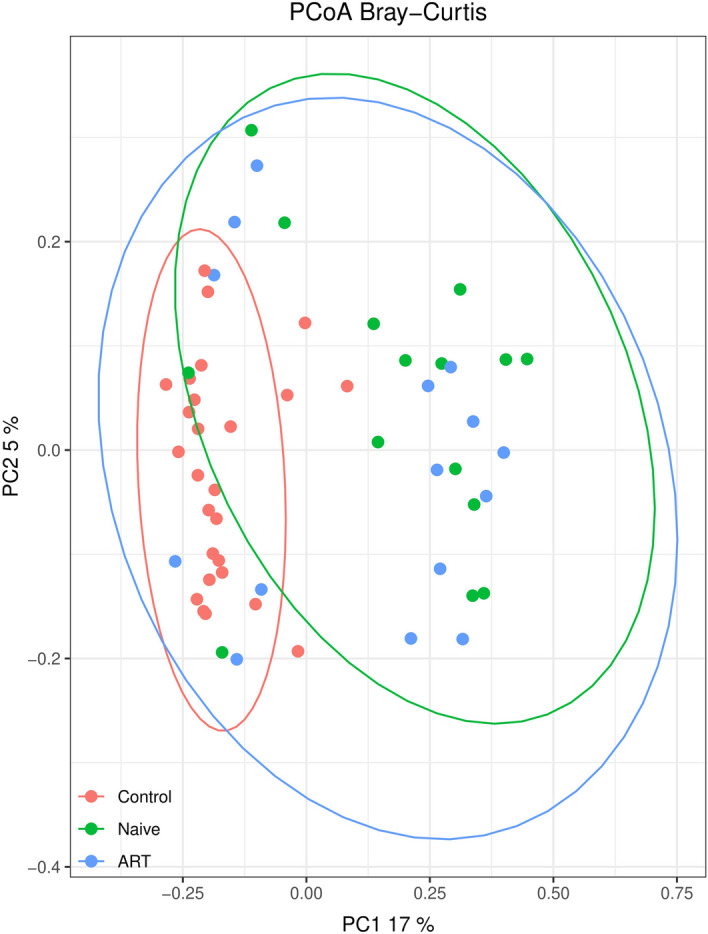
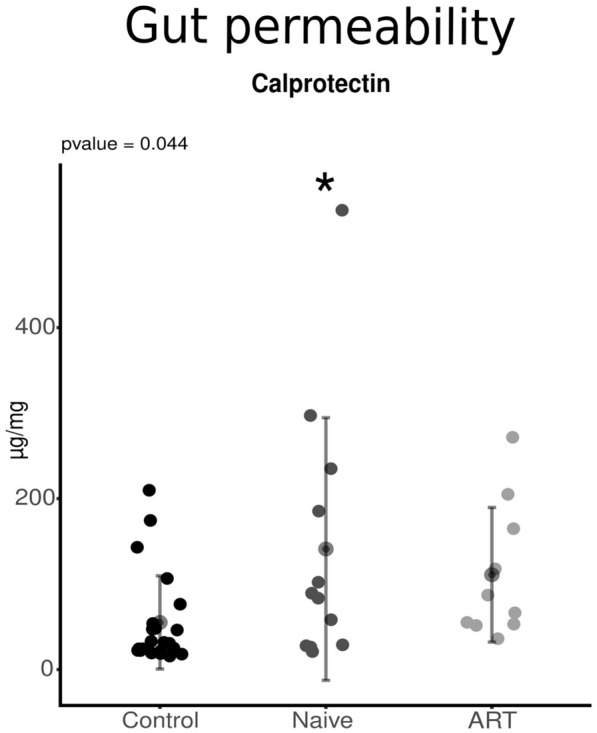
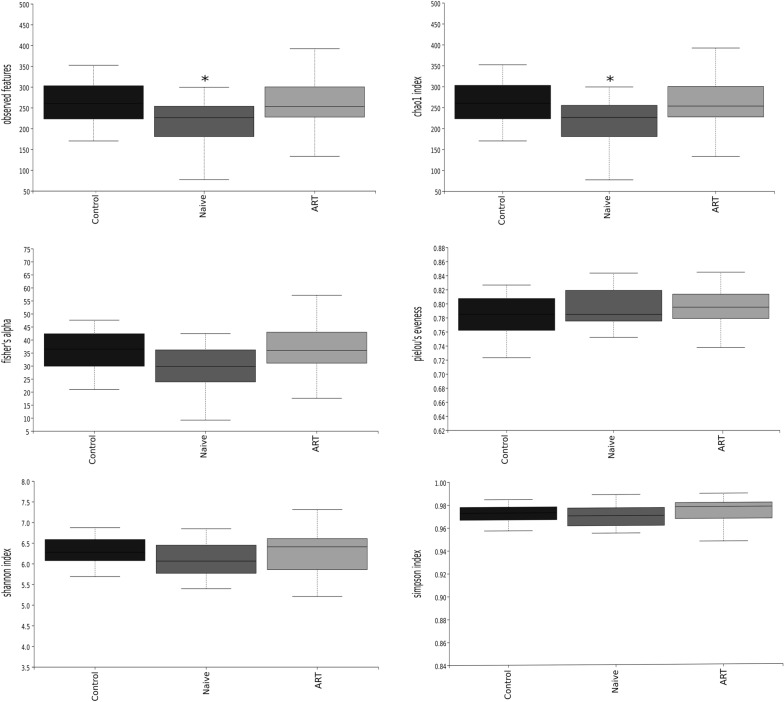
Our results showed that HIV infection increased BT, inflammation, cardiovascular risk and gut permeability, whereas INSTIs counteracted these effects. Regarding GM, the reduction in bacterial richness induced by HIV infection was restored by INSTIs. Beta diversity revealed that HIV-infected people were separated from the control group independently of treatment.
Current antiretroviral regimens based on INSTIs are able to reverse the impact of HIV infection on BT, systemic inflammation, gut permeability and bacterial diversity/richness, reaching similar levels to those observed in an uninfected/control population. These results suggest a protective role of INSTIs in disease progression, subsequent immune activation and in the development of future age-related complications such as cardiovascular events.
由于抗逆转录病毒治疗(ART)的广泛应用,人类免疫缺陷病毒(HIV)感染可被视为一种慢性疾病。在这种情况下,尽管使用了ART,但仍观察到与肠道微生物群(GM)失调和细菌易位(BT)等因素相关的低度慢性炎症。此外,不同的ART方案对GM表现出不同的影响。然而,新型整合酶链转移抑制剂(INSTIs)的作用尚未得到研究。本研究的目的是分析一线治疗中INSTIs对BT、炎症、心血管风险、肠道通透性、GM组成及衍生短链脂肪酸标志物的影响。
招募了26名未感染HIV的志愿者和30名感染HIV的患者(15名初治患者和15名接受INSTIs方案治疗的患者)。采集血样以分析生化参数以及BT、炎症、心血管风险、肠道通透性和细菌代谢的标志物。使用16S rRNA基因测序分析GM组成。
我们的结果表明,HIV感染会增加BT、炎症、心血管风险和肠道通透性,而INSTIs可抵消这些影响。关于GM,INSTIs恢复了HIV感染导致的细菌丰富度降低。β多样性分析显示,无论治疗情况如何,感染HIV的人与对照组是分开的。
目前基于INSTIs的抗逆转录病毒方案能够逆转HIV感染对BT、全身炎症、肠道通透性和细菌多样性/丰富度的影响,达到与未感染/对照人群相似的水平。这些结果表明INSTIs在疾病进展、随后的免疫激活以及未来与年龄相关并发症(如心血管事件)的发生中具有保护作用。