Dangkoub Faezeh, Bemani Naeini Mehri, Akar Shima, Badiee Ali, Jaafari Mahmoud Reza, Sankian Mojtaba, Tafaghodi Mohsen, Mousavi Shaegh Seyed Ali
Department of Pharmaceutical Nanotechnology, School of Pharmacy, Mashhad University of Medical Sciences, Mashhad, Iran.
Nanotechnology Research Center, Pharmaceutical Technology Institute, Mashhad University of Medical Sciences, Mashhad, Iran.
Int J Pharm X. 2024 Nov 29;8:100309. doi: 10.1016/j.ijpx.2024.100309. eCollection 2024 Dec.
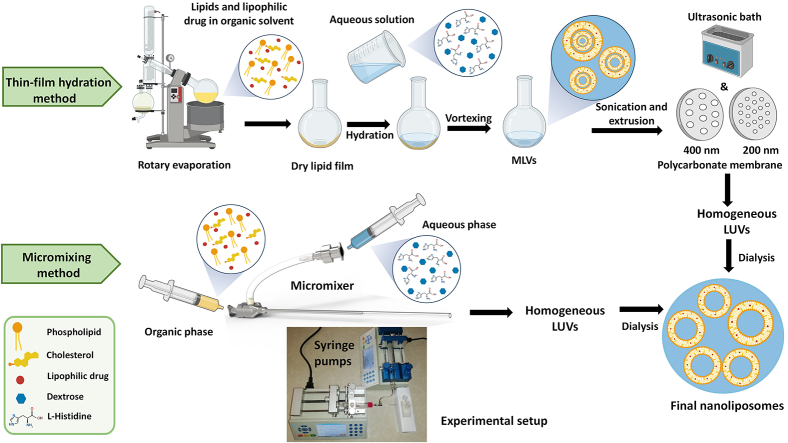
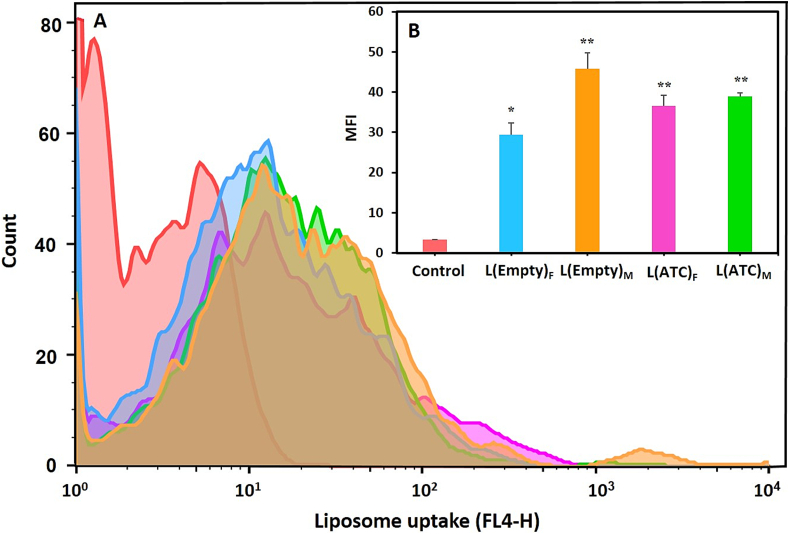
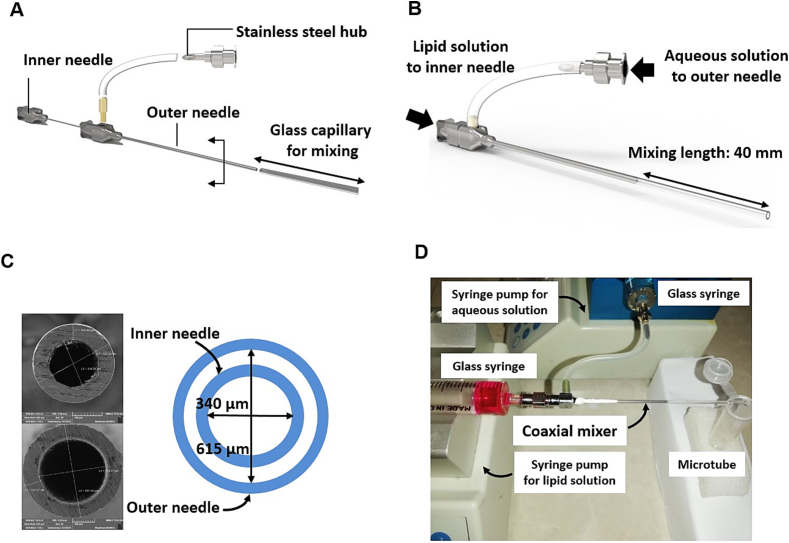
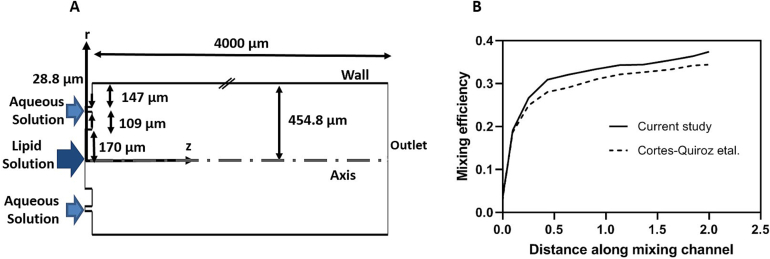
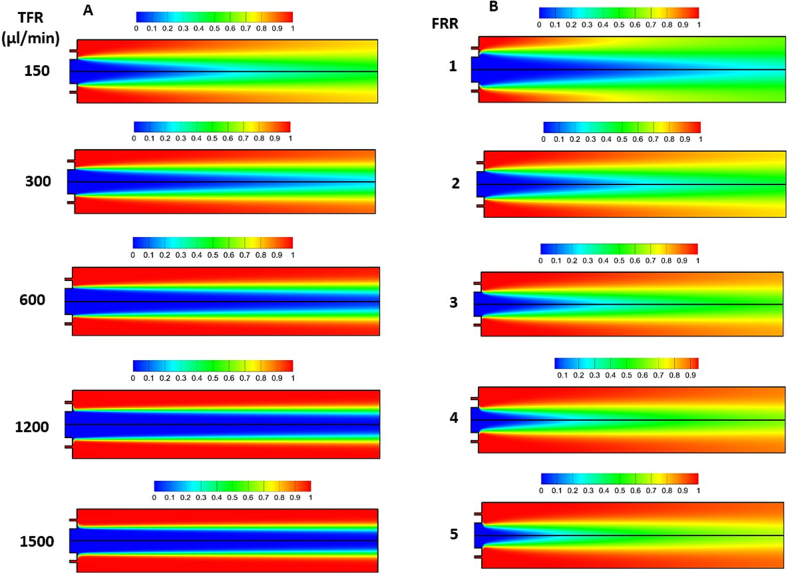
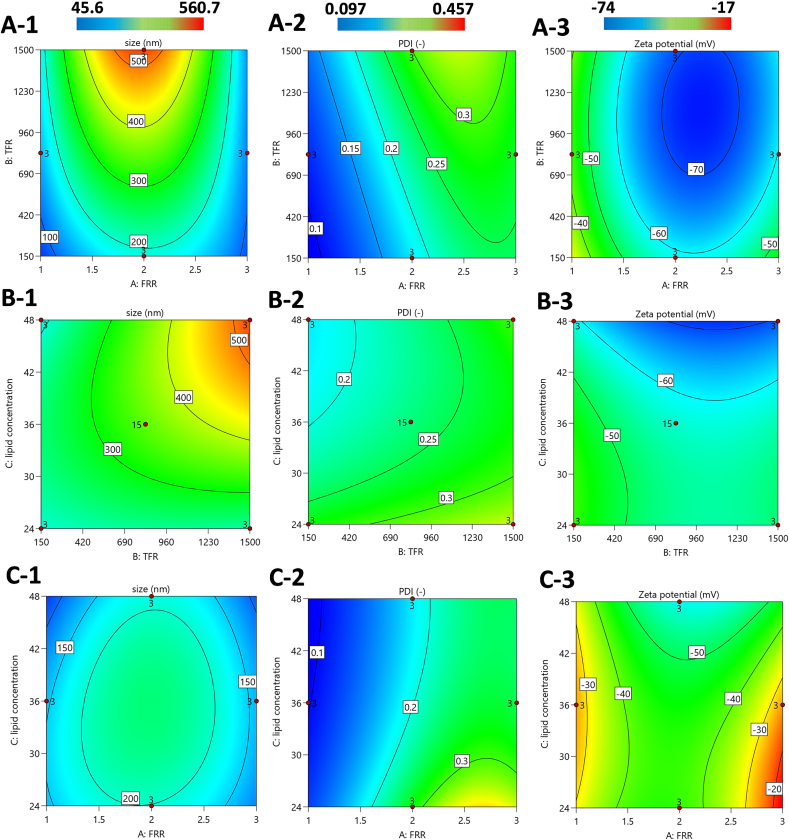
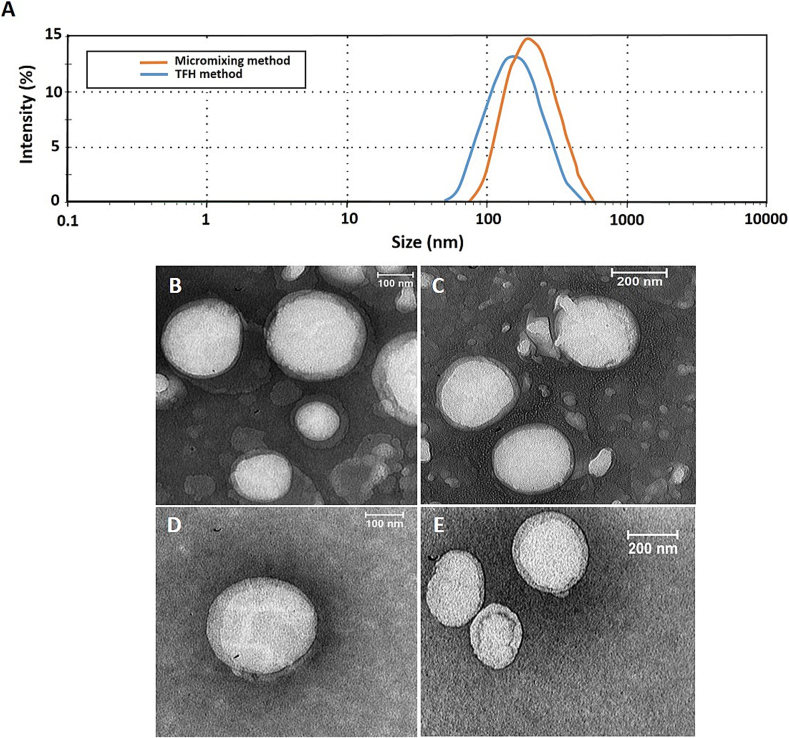
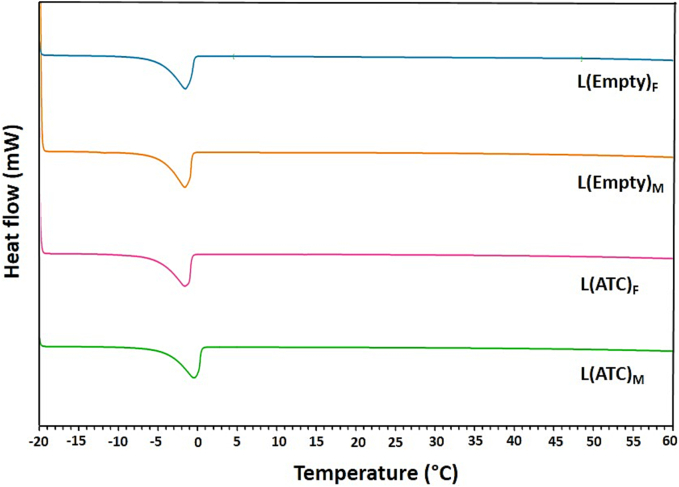
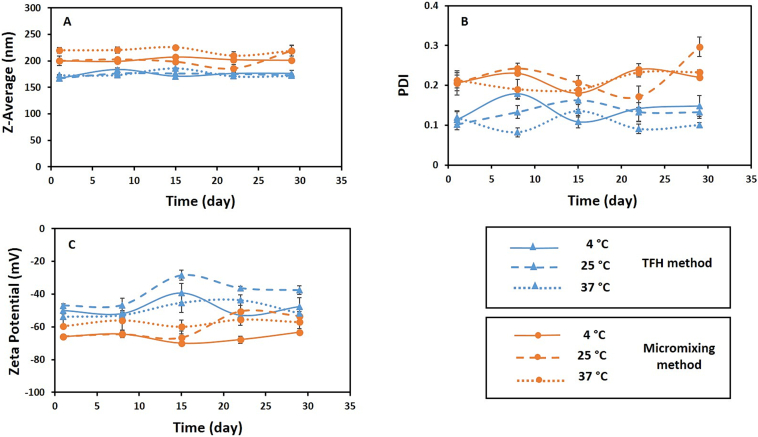
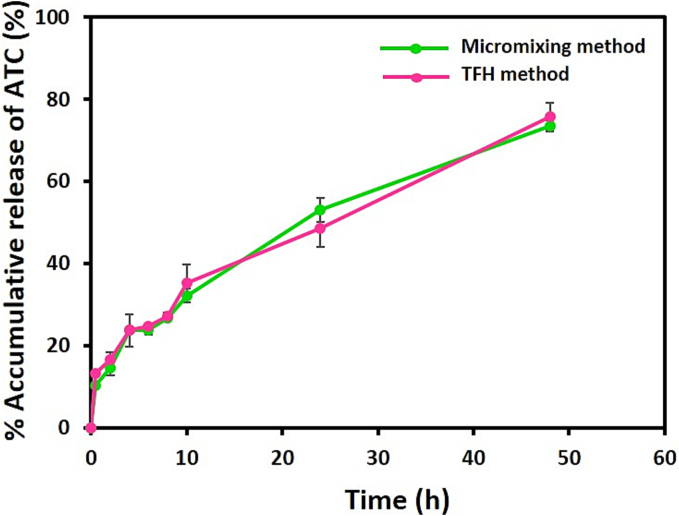
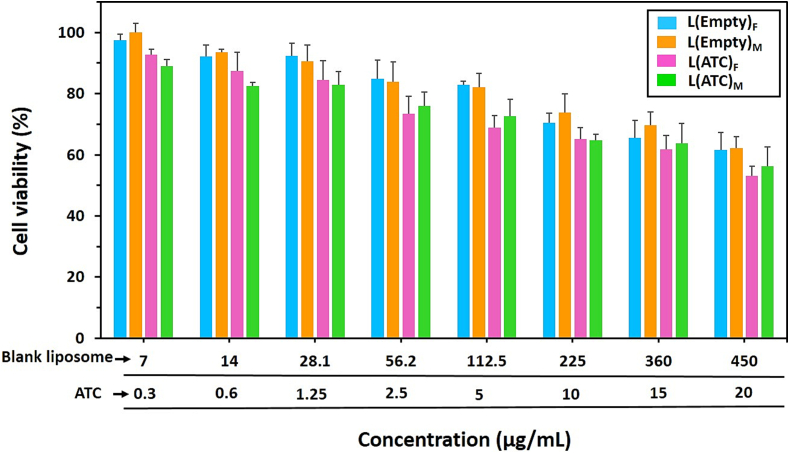
Development of techniques to produce nanoformulations in a controlled and reproducible manner is of great importance for research, clinical trials, and industrial scale-up. This research aimed to introduce a cost-effective micromixing approach for the nanoassembly of liposomes and compared with thin-film hydration (TFH) method. Numerical simulations and design of experiments (DOE) by response surface methodology (RSM) were used to evaluate the effects of input parameters on liposome properties, aiming to identify optimal conditions. Anionic liposomes without or with atorvastatin calcium (ATC) produced using TFH and the micromixing methods showed similar characteristics in size (150-190 nm), PDI (<0.2), and zeta potential (-50 to -60 mV). Both methods achieved about 70 % encapsulation efficiency with similar drug release profile for ATC-containing liposomes. Analysis of stability and DSC thermograms revealed comparable outcomes for liposomes prepared using both techniques. Nanoliposomes produced via both approaches indicated similar in vitro biological performance regarding cellular uptake and cell viability. The micromixing approach presented an alternative method to produce nanoliposomes in a one-step manner with high controllability and reproducibility without requiring specialized equipment. Compatibility of the micromixer with various solvents, including those detrimental to conventional microfluidic materials like PDMS and thermoplastics, enables exploration of a wide range of formulations.
以可控且可重复的方式开发制备纳米制剂的技术对于研究、临床试验和工业放大生产都非常重要。本研究旨在引入一种经济高效的微混合方法用于脂质体的纳米组装,并与薄膜水化(TFH)法进行比较。采用数值模拟和响应面法(RSM)的实验设计(DOE)来评估输入参数对脂质体性质的影响,旨在确定最佳条件。使用TFH法和微混合法制备的不含或含有阿托伐他汀钙(ATC)的阴离子脂质体在尺寸(150 - 190 nm)、多分散指数(<0.2)和zeta电位(-50至-60 mV)方面表现出相似的特征。两种方法对于含ATC的脂质体均实现了约70%的包封率,且药物释放曲线相似。稳定性分析和差示扫描量热(DSC)热谱图显示,使用两种技术制备的脂质体结果相当。通过两种方法生产的纳米脂质体在细胞摄取和细胞活力方面表现出相似的体外生物学性能。微混合方法提供了一种一步法制备纳米脂质体的替代方法,具有高度的可控性和可重复性,且无需专门设备。微混合器与各种溶剂的兼容性,包括那些对传统微流控材料如聚二甲基硅氧烷(PDMS)和热塑性塑料有害的溶剂,使得能够探索广泛的制剂。