Kormos David A, Shetty Nishit J, Gall Elliott T, Prussin Aaron J, Pruden Amy, Marr Linsey C
Department of Civil and Environmental Engineering, Virginia Tech, Blacksburg, Virginia 24061, United States.
Department of Civil, Environmental, and Architectural Engineering, University of Kansas, Lawrence, Kansas 66045, United States.
ACS EST Air. 2024 Oct 28;1(12):1696-1705. doi: 10.1021/acsestair.4c00235. eCollection 2024 Dec 13.
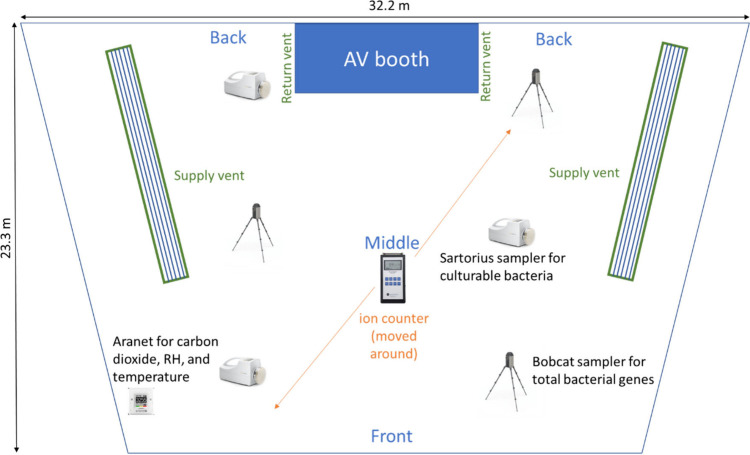
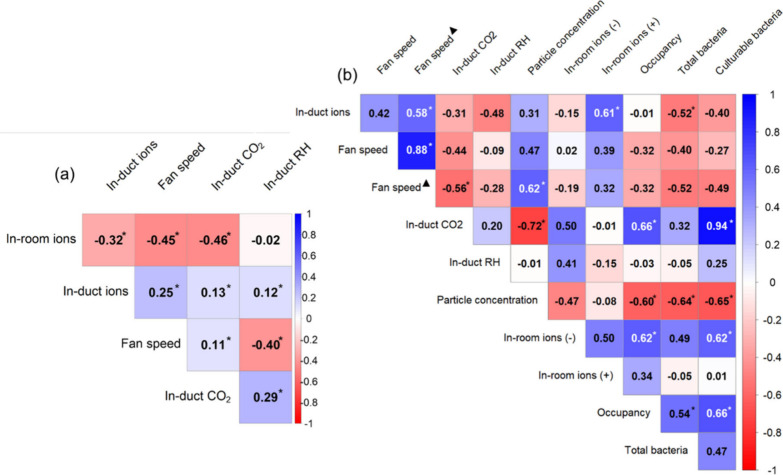
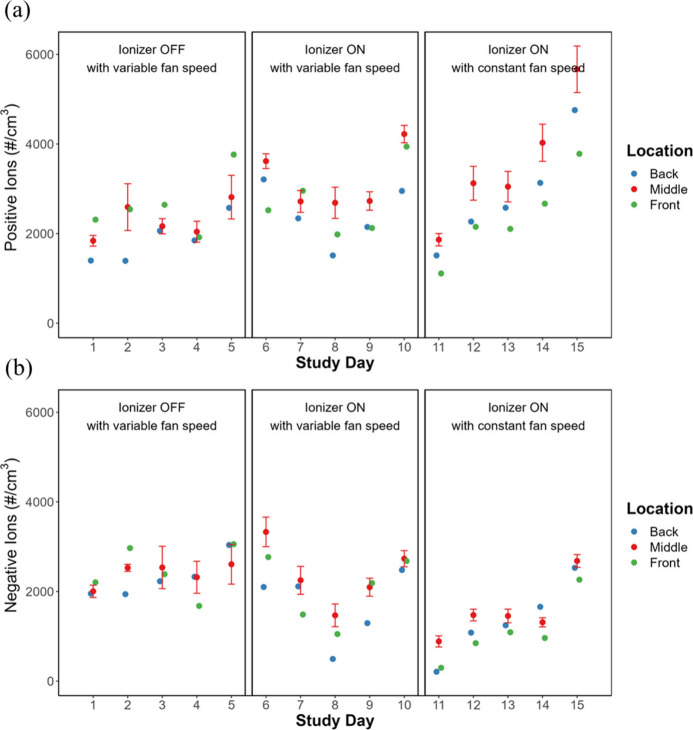
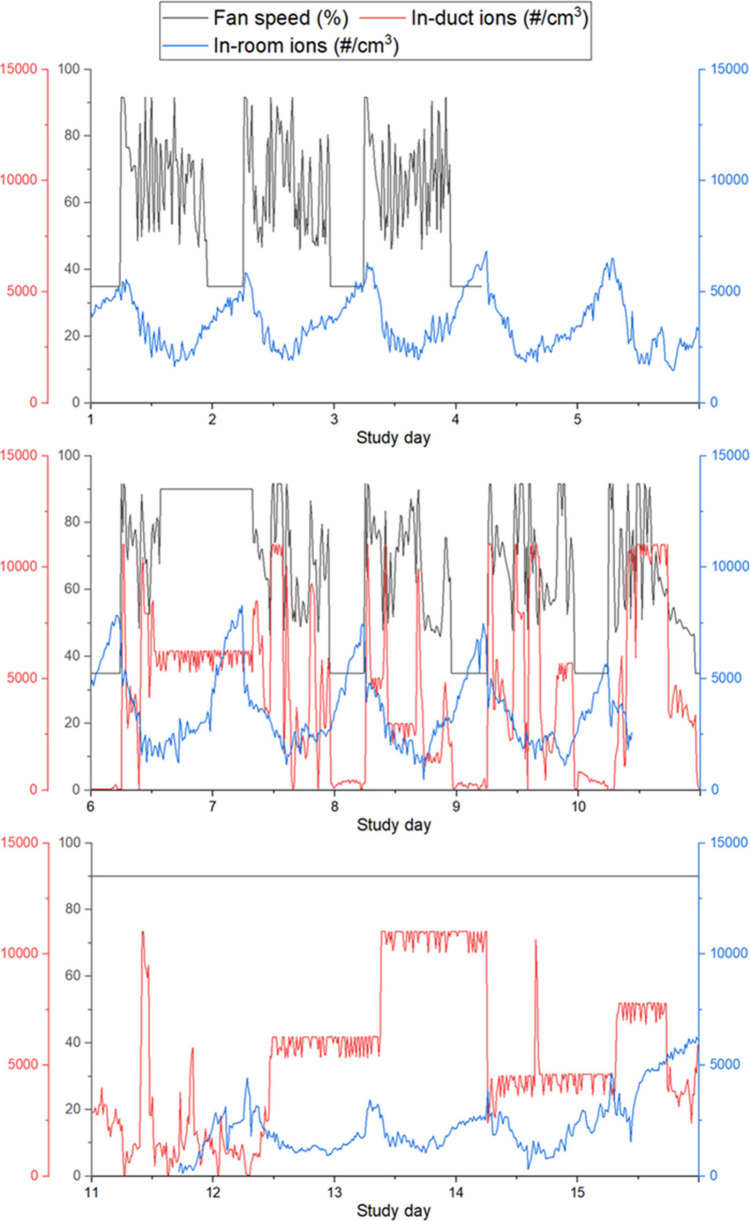
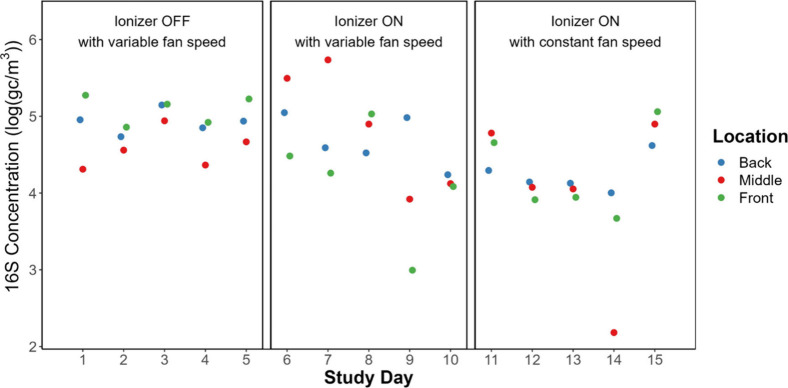
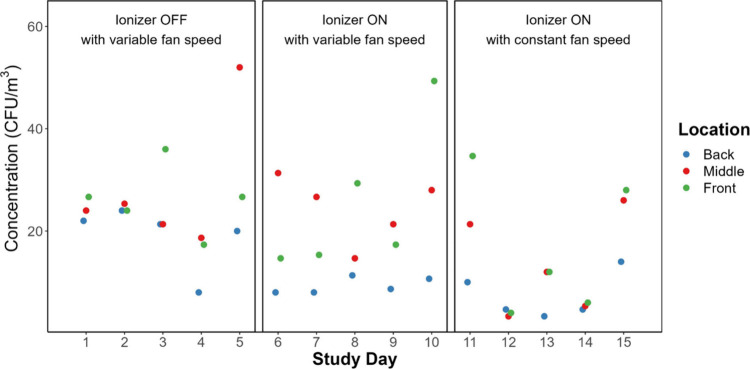
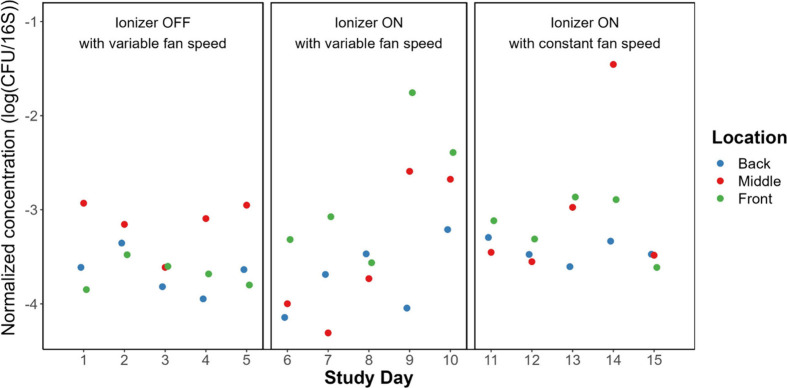
Ionization treatment of indoor air has attracted attention for its potential to inactivate airborne pathogens and reduce disease transmission, yet its real-world effectiveness remains unverified. We evaluated the impact of an in-duct, bipolar ionization system on airborne particles, including culturable bacteria, in a lecture hall. The ionizer was off with variable fan speed for 1 week, on with variable fan speed for a second week, and on with high and constant fan speed for a third week. We measured ion concentrations and aerosol particle concentrations, and we collected bioaerosol samples for analysis of 16S rRNA gene copies representing total bacteria and colony forming units (CFUs) on Tryptic Soy Agar representing culturable bacteria. There were no significant differences in positive, in-room ion concentrations between any weeks; however, negative, in-room ion concentrations were significantly lower when the ionizer was on with constant fan speed. To account for day-to-day variability in total bacteria concentrations, related to occupancy and other factors, we examined the ratio of CFUs to 16S rRNA gene copies (CFU gc) and found no significant differences whether the ionizer was on or off. This result indicates that the ionizer was not effective at reducing levels of culturable airborne bacteria in this study.
室内空气的电离处理因其灭活空气传播病原体和减少疾病传播的潜力而受到关注,但其在实际环境中的有效性仍未得到验证。我们评估了一种管道式双极电离系统对一个讲堂内空气传播颗粒(包括可培养细菌)的影响。在第一周,电离器关闭,风扇速度可变;在第二周,电离器开启,风扇速度可变;在第三周,电离器开启,风扇速度高且恒定。我们测量了离子浓度和气溶胶颗粒浓度,并收集了生物气溶胶样本,用于分析代表总细菌的16S rRNA基因拷贝数以及代表可培养细菌的胰蛋白胨大豆琼脂上的菌落形成单位(CFU)。各周之间室内正离子浓度没有显著差异;然而,当电离器以恒定风扇速度开启时,室内负离子浓度显著降低。为了考虑与人员占用和其他因素相关的总细菌浓度的每日变化,我们检查了CFU与16S rRNA基因拷贝数的比率(CFU/gc),发现无论电离器开启还是关闭,该比率均无显著差异。这一结果表明,在本研究中,电离器在降低空气中可培养细菌水平方面无效。