Vaze Nachiket D, Park Sin, Brooks Ari D, Fridman Alexander, Joshi Suresh G
Center for Surgical Infection and Biofilm, Drexel University College of Medicine, Philadelphia, Pennsylvania, United States of America.
School of Biomedical Engineering, Science and Health Systems, Drexel University, Philadelphia, Pennsylvania, United States of America.
PLoS One. 2017 Feb 6;12(2):e0171434. doi: 10.1371/journal.pone.0171434. eCollection 2017.
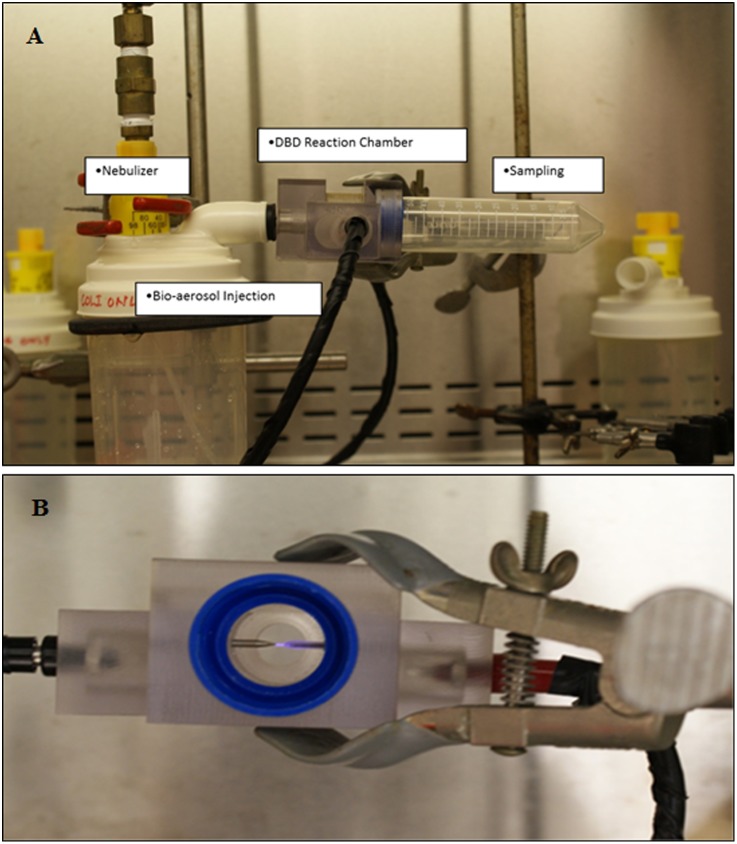
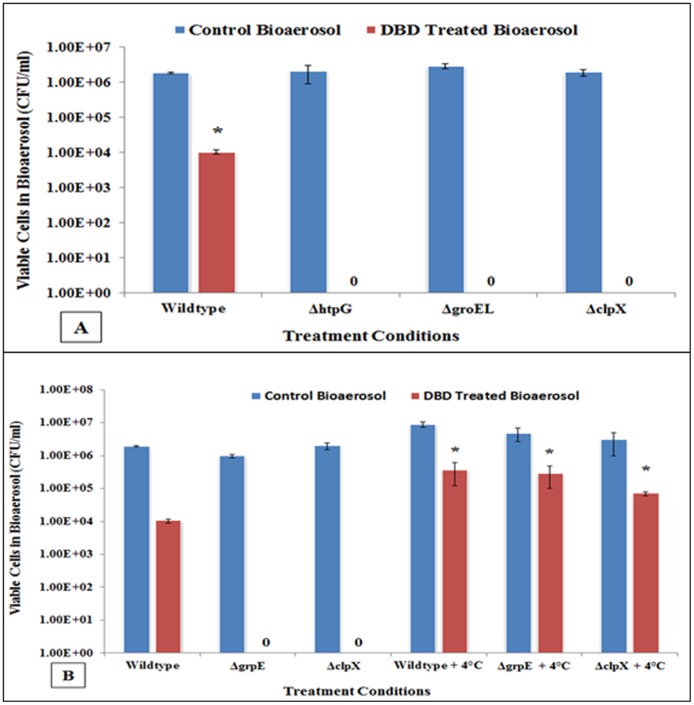
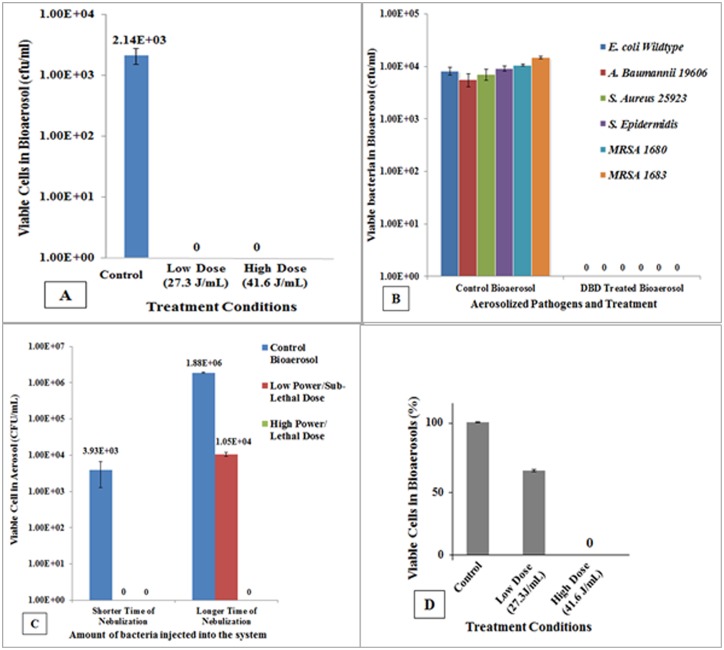
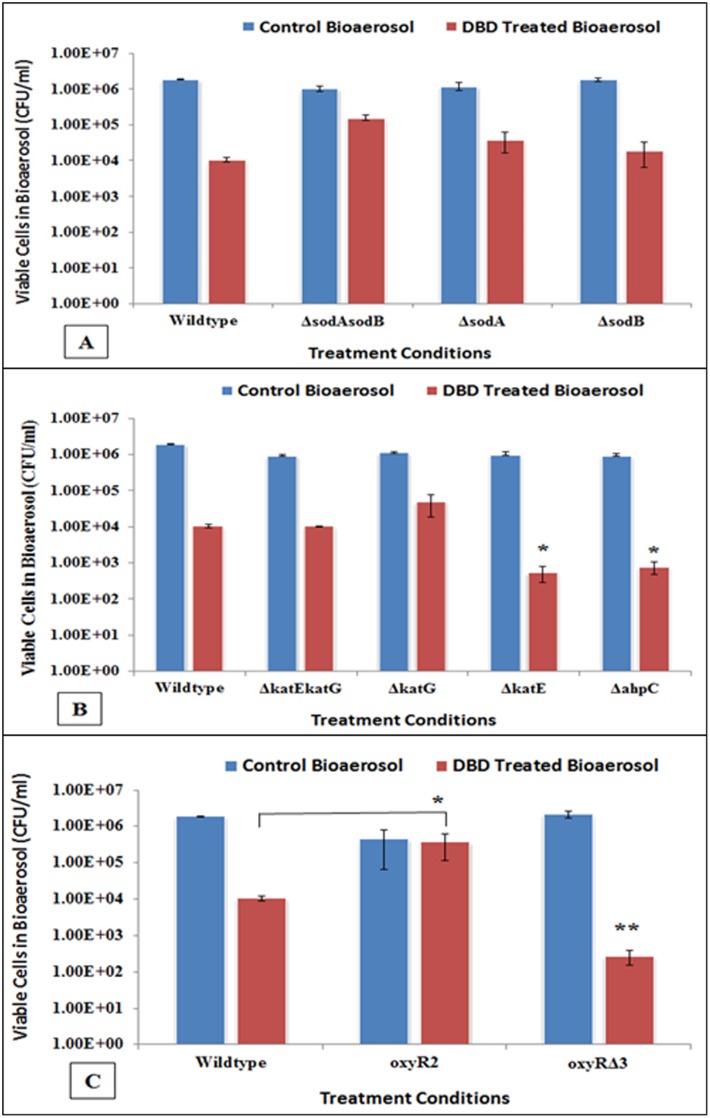
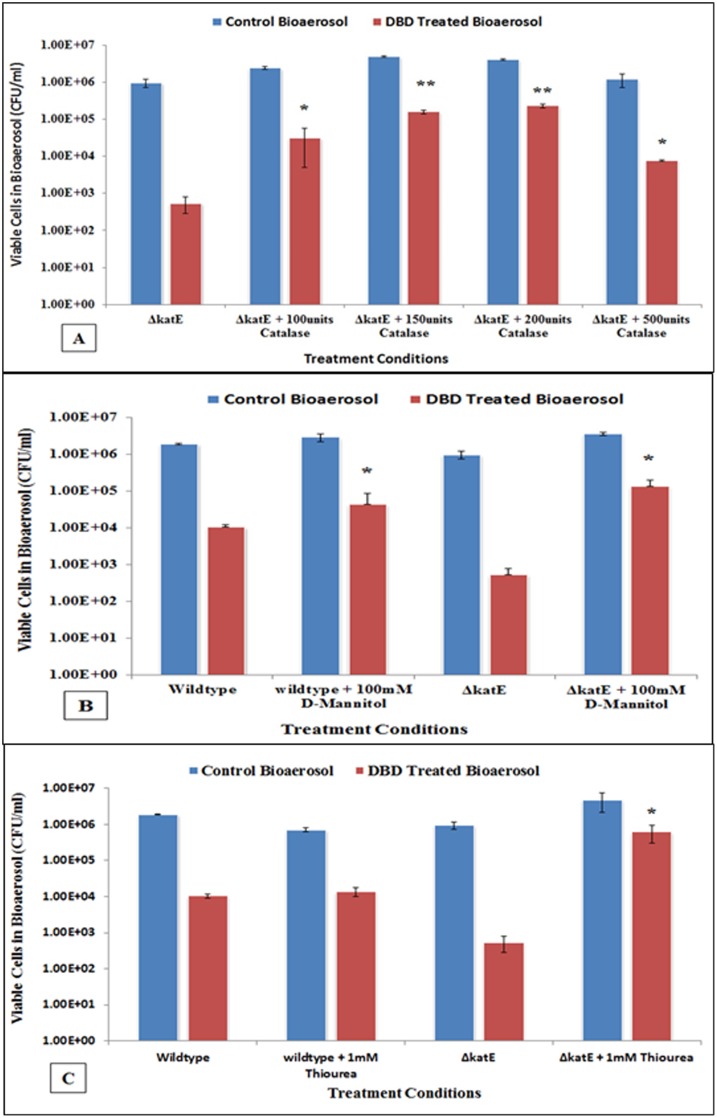
A lab-scale, tunable, single-filament, point-to-point nonthermal dieletric-barrier discharge (DBD) plasma device was built to study the mechanisms of inactivation of aerosolized bacterial pathogens. The system inactivates airborne antibiotic-resistant pathogens efficiently. Nebulization mediated pre-optimized (4 log and 7 log) bacterial loads were challenged to plasma-charged aerosols, and lethal and sublethal doses determined using colony assay, and cell viability assay; and the loss of membrane potential and cellular respiration were determined using cell membrane potential assay and XTT assay. Using the strategies of Escherichia coli wildtype, over-expression mutant, deletion mutants, and peroxide and heat stress scavenging, we analyzed activation of intracellular reactive oxygen species (ROS) and heat shock protein (hsp) chaperons. Superoxide dismutase deletion mutants (ΔsodA, ΔsodB, ΔsodAΔsodB) and catalase mutants ΔkatG and ΔkatEΔkatG did not show significant difference from wildtype strain, and ΔkatE and ΔahpC was found significantly more susceptible to cell death than wildtype. The oxyR regulon was found to mediate plasma-charged aerosol-induced oxidative stress in bacteria. Hsp deficient E. coli (ΔhtpG, ΔgroEL, ΔclpX, ΔgrpE) showed complete inactivation of cells at ambient temperature, and the treatment at cold temperature (4°C) significantly protected hsp deletion mutants and wildtype cells, and indicate a direct involvement of hsp in plasma-charged aerosol mediated E. coli cell death.
构建了一种实验室规模、可调谐、单丝状、点对点非热介质阻挡放电(DBD)等离子体装置,以研究雾化细菌病原体的灭活机制。该系统能有效灭活空气传播的抗生素抗性病原体。将雾化介导的预优化(4个对数和7个对数)细菌负荷施加于等离子体充电的气溶胶上,使用菌落测定法和细胞活力测定法确定致死剂量和亚致死剂量;使用细胞膜电位测定法和XTT测定法确定膜电位和细胞呼吸的丧失。采用大肠杆菌野生型、过表达突变体、缺失突变体以及过氧化物和热应激清除策略,分析细胞内活性氧(ROS)和热休克蛋白(hsp)伴侣的激活情况。超氧化物歧化酶缺失突变体(ΔsodA、ΔsodB、ΔsodAΔsodB)和过氧化氢酶突变体ΔkatG以及ΔkatEΔkatG与野生型菌株相比未显示出显著差异,而发现ΔkatE和ΔahpC比野生型对细胞死亡更敏感。发现oxyR调节子介导等离子体充电气溶胶诱导的细菌氧化应激。Hsp缺陷型大肠杆菌(ΔhtpG、ΔgroEL、ΔclpX、ΔgrpE)在环境温度下细胞完全失活,在低温(4°C)下处理显著保护了hsp缺失突变体和野生型细胞,表明hsp直接参与了等离子体充电气溶胶介导的大肠杆菌细胞死亡。