Yu Zhen, Song Yawen, Wang Jin, Wu Yujing, Wang Hefang, Liu Shuye, Zhu Yu
Nankai University Affinity the Third Central Hospital, Tianjin Third Central Hospital, Tianjin, China.
Qingpu Branch of Zhongshan Hospital Affiliated to Fudan University, Shanghai, China.
Braz J Med Biol Res. 2024 Dec 13;57:e14220. doi: 10.1590/1414-431X2024e14220. eCollection 2024.
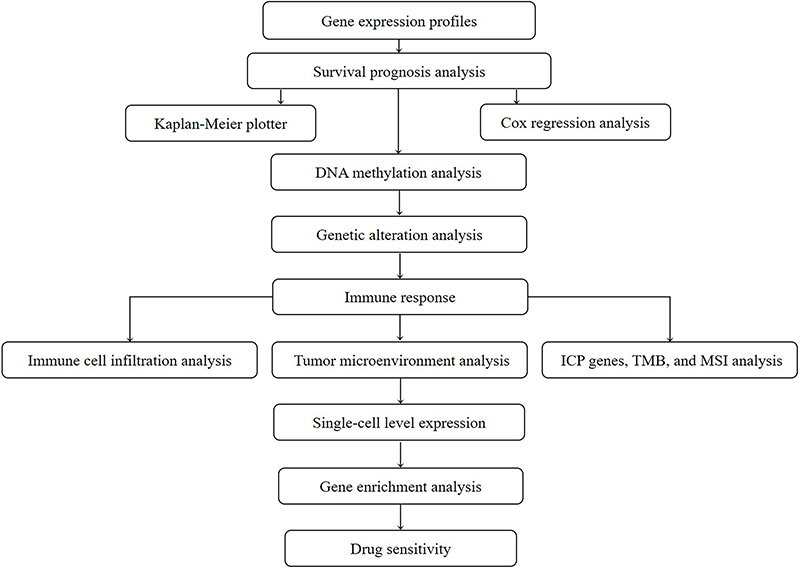
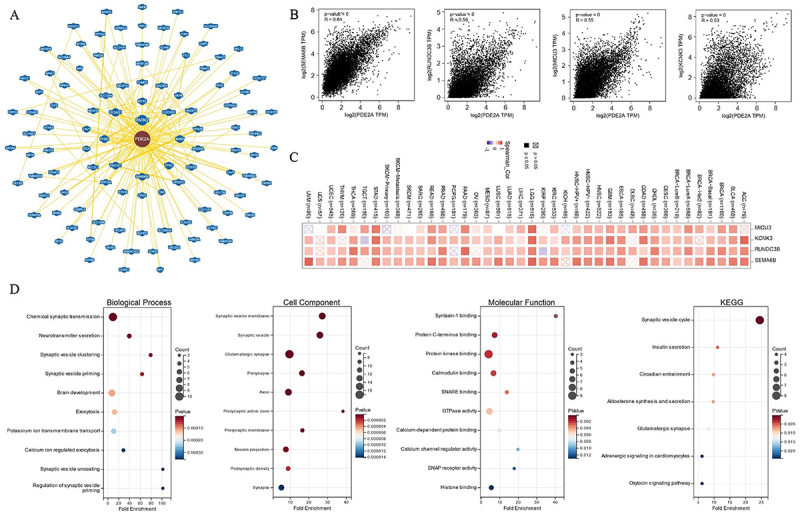
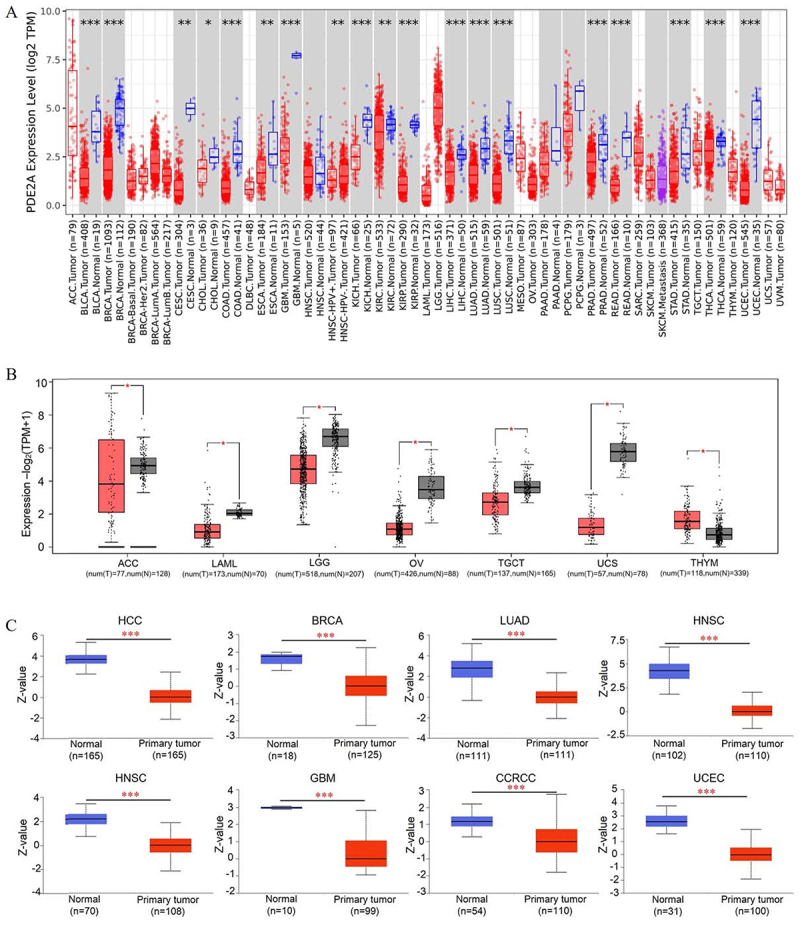
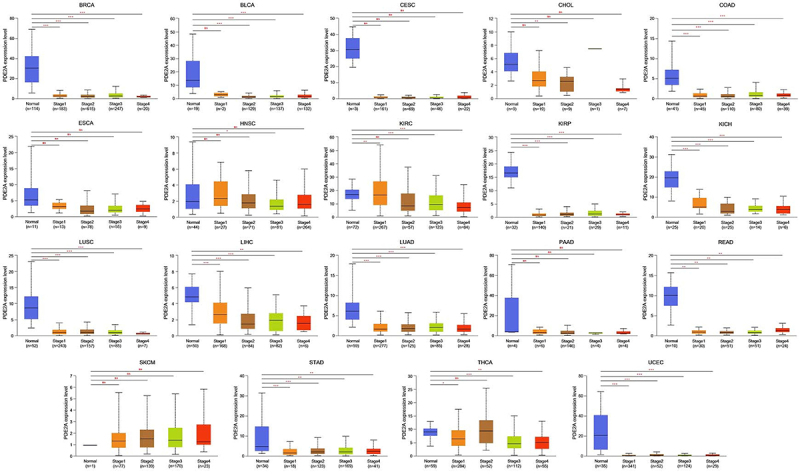
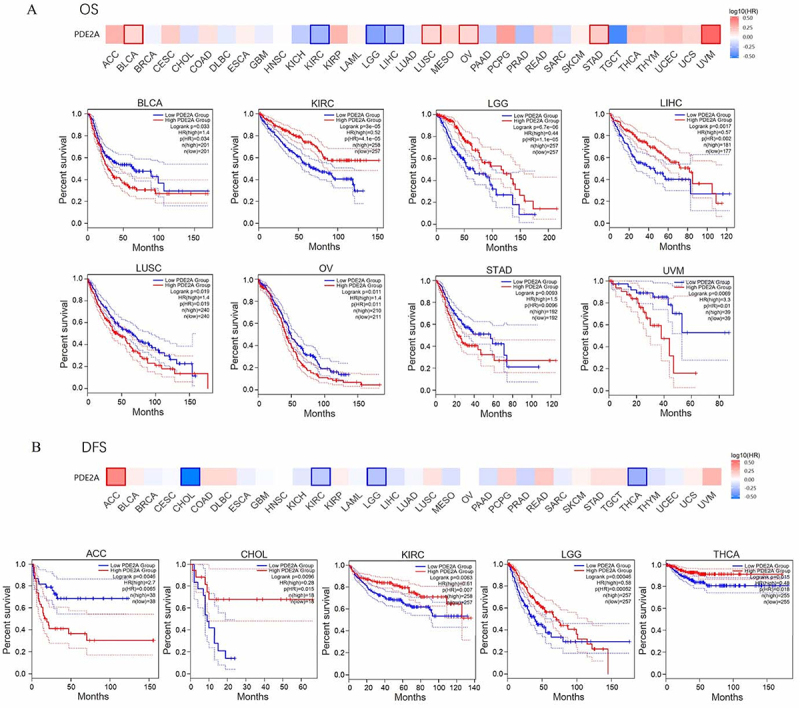
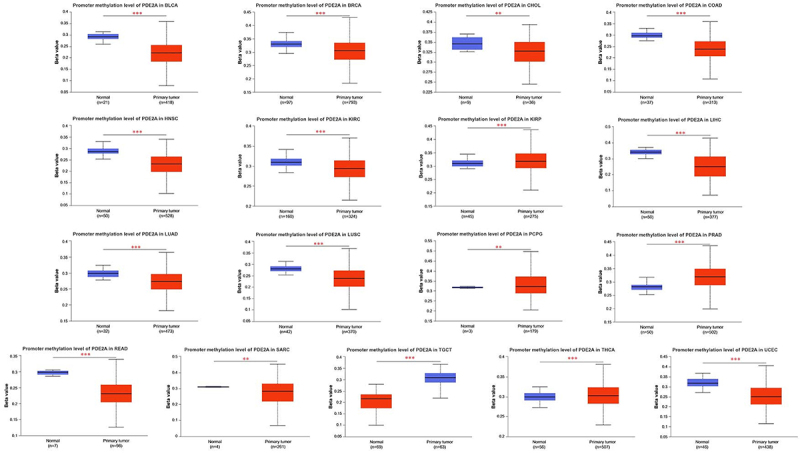
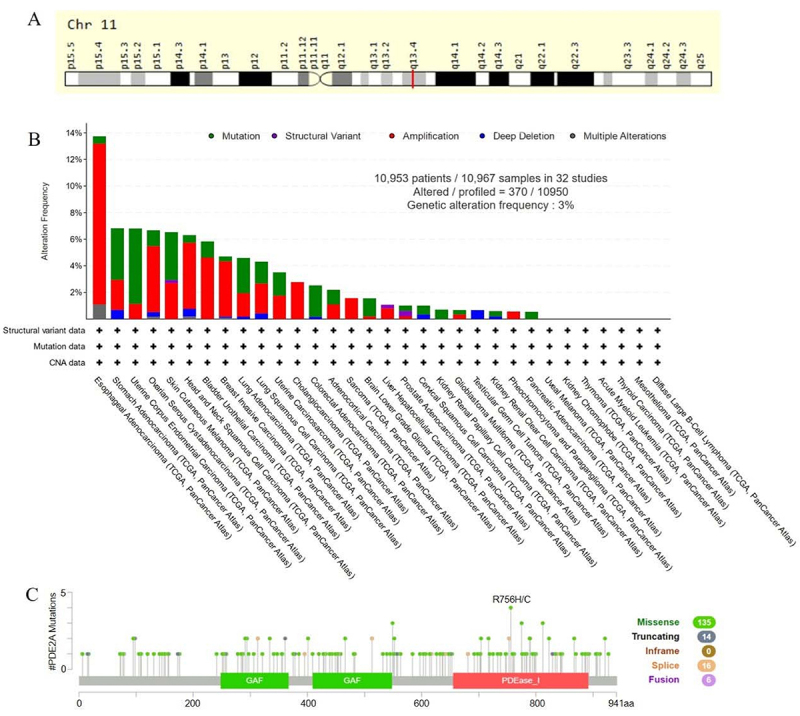
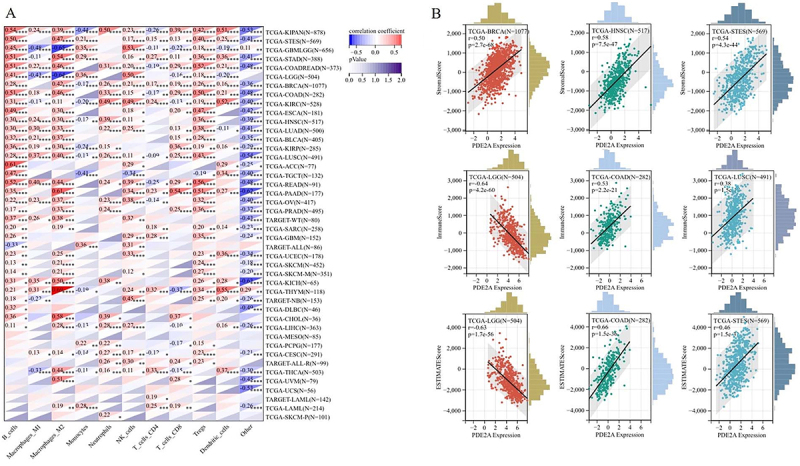
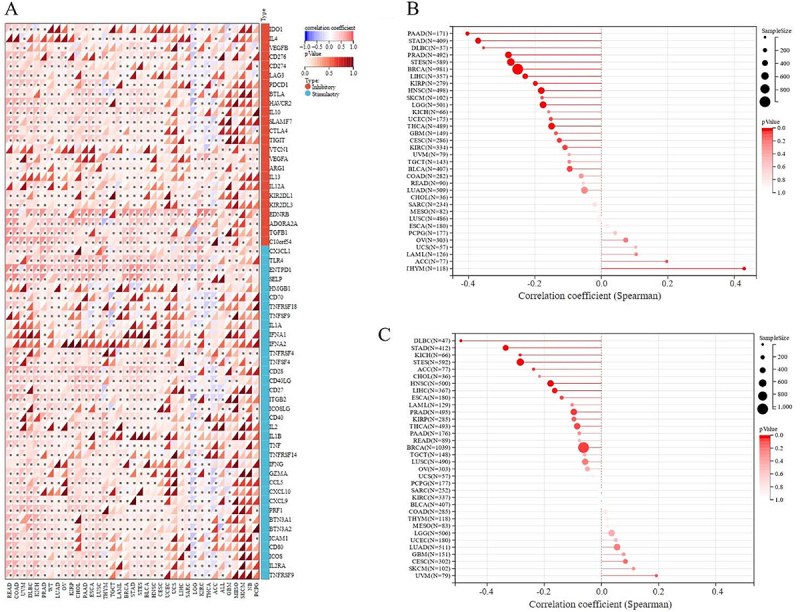
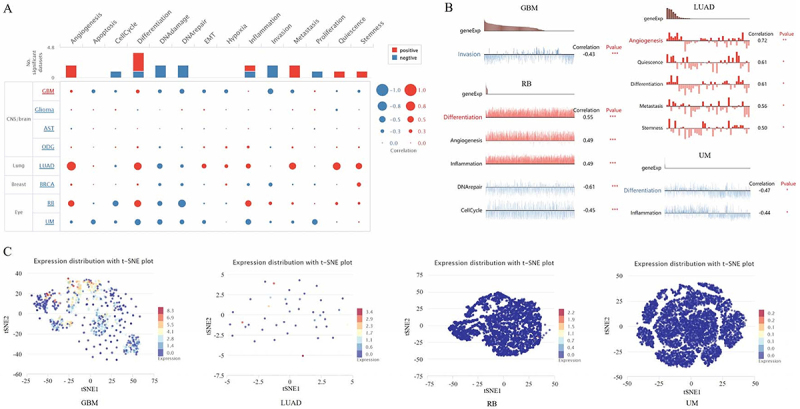
Phosphodiesterase 2A (PDE2A) plays a pivotal role in modulating cyclic nucleotide metabolism. Recent studies have shown that PDE2A is associated with some tumors, but its expression profiles, prognostic significance, and immunological roles in diverse cancer types remain unclear. Utilizing advanced bioinformatics tools, we performed a comprehensive analysis of PDE2A gene expression in multiple human cancers. Our study revealed that PDE2A expression was significantly reduced in the majority of cancer types and clinicopathological stages (I to IV) compared to normal tissues. Additionally, PDE2A expression was closely related to the prognosis of cancers such as stomach adenocarcinoma (STAD), ovarian serous cystadenocarcinoma (OV), and liver hepatocellular carcinoma (LIHC). Cox regression analyses indicated that PDE2A can act as an independent prognostic factor for these cancers. The level of PDE2A DNA methylation was significantly decreased in most cancers. Genetic alterations in PDE2A predominantly manifest in the form of amplifications. Moreover, infiltrating cells and immune checkpoint genes, including PDCD1, exhibited notable correlations with PDE2A expression. Significant associations were observed between PDE2A expression and tumor mutation burden as well as microsatellite instability. Single cell sequencing revealed PDE2A's crucial role in regulating differentiation and angiogenesis of cancer cells. Functional enrichment analysis emphasized the important role of PDE2A in synaptic transmission and tumor development. Aberrant expression of PDE2A influenced the sensitivity of various antitumor and chemotherapy drugs. This research provided a comprehensive analysis of PDE2A in human cancers, highlighting its potential as both a prognostic marker and an immunotherapy target for future research.
磷酸二酯酶2A(PDE2A)在调节环核苷酸代谢中起关键作用。最近的研究表明,PDE2A与某些肿瘤有关,但其在不同癌症类型中的表达谱、预后意义和免疫作用仍不清楚。利用先进的生物信息学工具,我们对多种人类癌症中的PDE2A基因表达进行了全面分析。我们的研究表明,与正常组织相比,大多数癌症类型和临床病理分期(I至IV期)中PDE2A的表达显著降低。此外,PDE2A的表达与胃腺癌(STAD)、卵巢浆液性囊腺癌(OV)和肝细胞癌(LIHC)等癌症的预后密切相关。Cox回归分析表明,PDE2A可以作为这些癌症的独立预后因素。在大多数癌症中,PDE2A的DNA甲基化水平显著降低。PDE2A的基因改变主要以扩增的形式表现。此外,浸润细胞和免疫检查点基因,包括程序性死亡受体1(PDCD1),与PDE2A的表达表现出显著的相关性。PDE2A的表达与肿瘤突变负荷以及微卫星不稳定性之间存在显著关联。单细胞测序揭示了PDE2A在调节癌细胞分化和血管生成中的关键作用。功能富集分析强调了PDE2A在突触传递和肿瘤发展中的重要作用。PDE2A的异常表达影响了各种抗肿瘤和化疗药物的敏感性。这项研究对人类癌症中的PDE2A进行了全面分析,突出了其作为预后标志物和未来研究免疫治疗靶点的潜力。