Wang Shushu, Lu Kachun, Lin Liwen, Li Gaijie, Han Yuxin, Lin Zhichao, Chu Qingmin, Wu Kunsheng, Liu Peijian, Zhou Guiting, Peng Rui, Luo Chuanjin
The First Clinical Medical College, Guangzhou University of Chinese Medicine, Guangzhou, China.
Cardiology Center, The First Affiliated Hospital of Guangzhou University of Chinese Medicine, Guangzhou, China.
PLoS One. 2024 Dec 19;19(12):e0314961. doi: 10.1371/journal.pone.0314961. eCollection 2024.
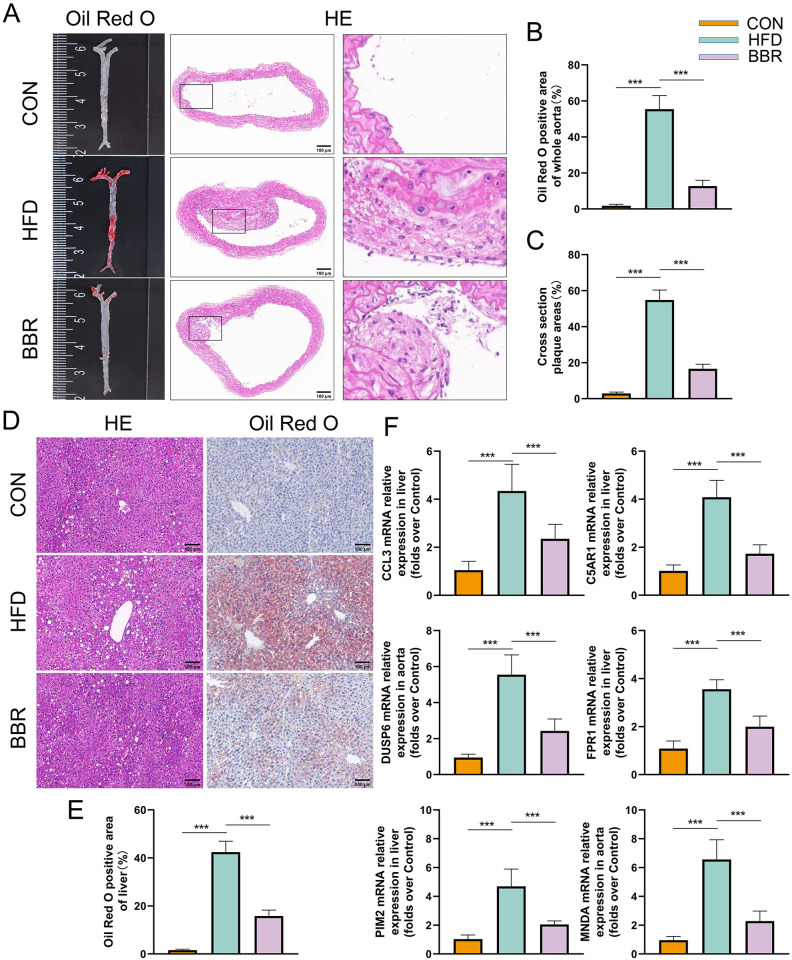
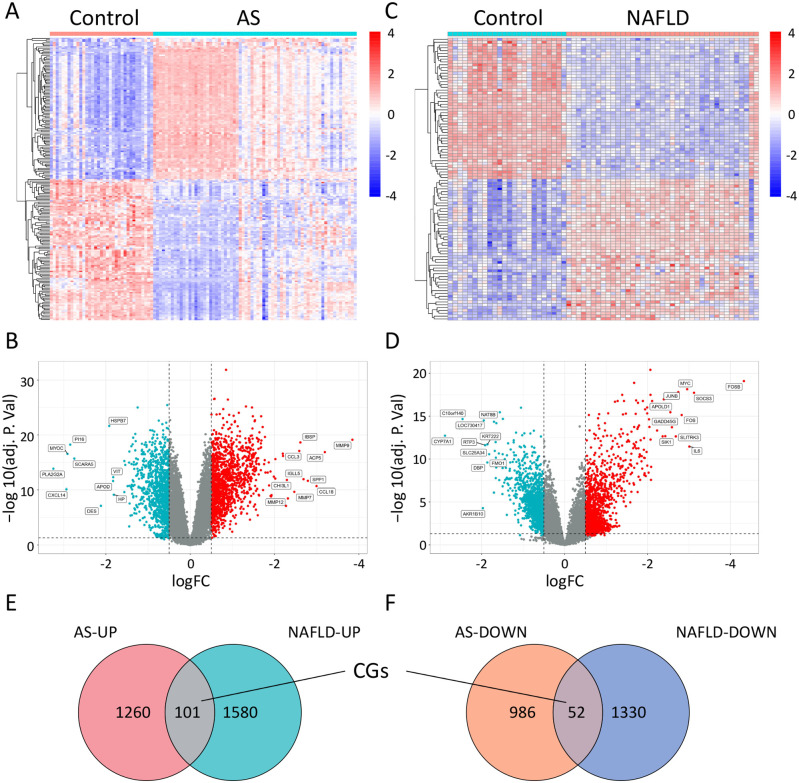
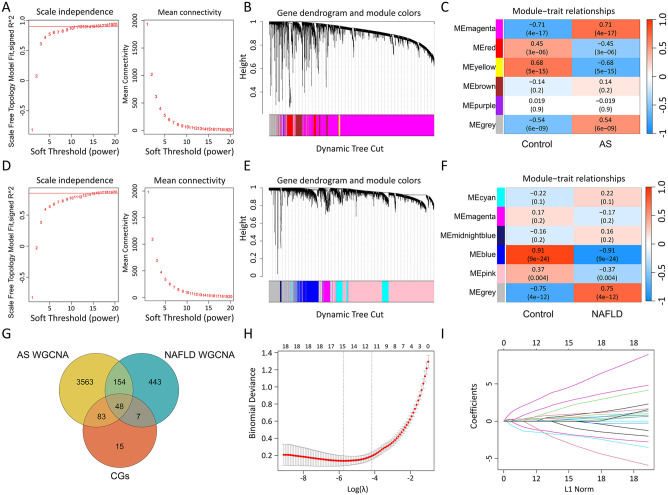
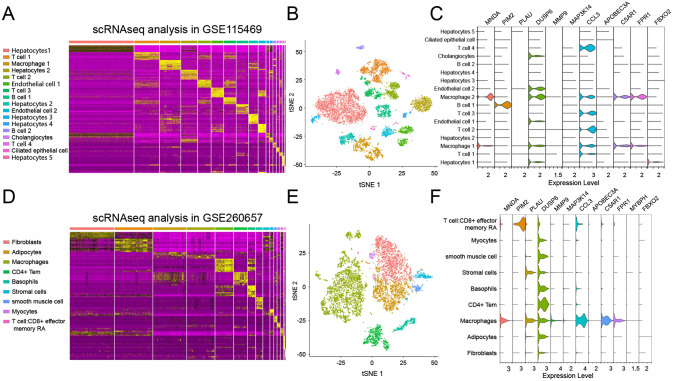
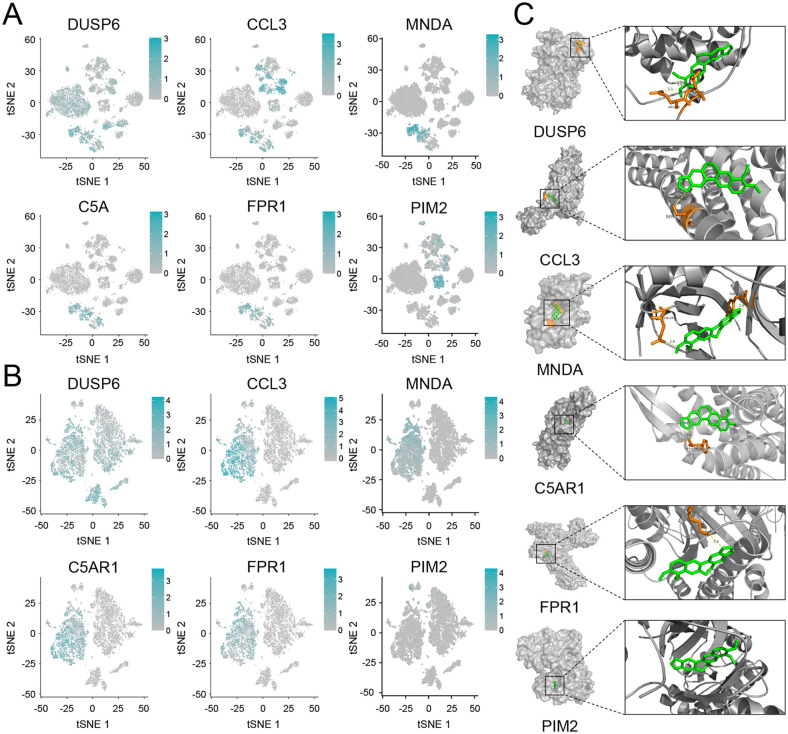
Atherosclerosis (AS) and Non-alcoholic fatty liver disease (NAFLD) are chronic metabolic disorders with high prevalence and significant health impacts. Both conditions share common pathophysiological pathways including abnormal lipid metabolism and inflammation. Berberine (BBR), an isoquinoline alkaloid, is known for its beneficial effects on various metabolic and cardiovascular disorders. This study investigates BBR's impact on AS and NAFLD through bioinformatics analysis and experimental models. This study utilized various bioinformatics methods, including transcriptome analysis, weighted gene co-expression network analysis (WGCNA), machine learning, and molecular docking, to identify key genes and pathways involved in AS and NAFLD. Subsequently an animal model of AS combined with NAFLD was established using ApoE-/- mice fed a high-fat diet. The efficacy and mechanism of action of BBR were verified using methods such as hematoxylin and eosin (HE) staining, Oil Red O staining, and real-time quantitative PCR (RTqPCR). Through transcriptome analysis, WGCNA, and machine learning, this study identified 48 key genes involved in both AS and NAFLD. Function analysis revealed that the implicated genes were significantly involved in pathways like cytokine-cytokine receptor interaction, chemokine signaling, and IL-17 signaling pathway, suggesting their role in inflammation and immune responses. Single cell validation identified six key genes: dual specificity phosphatase 6 (DUSP6), chemokine ligand 3 (CCL3), complement component 5a receptor 1 (C5AR1), formyl peptide receptor 1 (FPR1), myeloid nuclear differentiation antigen (MNDA), and proviral integration site of murine 2(PIM2). Finally, molecular docking and animal experiments showed that BBR significantly reduced lipid deposits and inflammatory markers in liver and aortic tissues. In conclusion, BBR can improve AS combined with NAFLD by regulating genes like MNDA, PIM2, DUSP6, CCL3, C5AR1, and FPR1, with the mechanism related to inflammation control. The findings suggest potential clinical benefits of BBR in reducing the progression of both AS and NAFLD, warranting further investigation.
动脉粥样硬化(AS)和非酒精性脂肪性肝病(NAFLD)是具有高患病率且对健康有重大影响的慢性代谢性疾病。这两种病症具有共同的病理生理途径,包括脂质代谢异常和炎症。小檗碱(BBR)是一种异喹啉生物碱,以其对各种代谢和心血管疾病的有益作用而闻名。本研究通过生物信息学分析和实验模型研究BBR对AS和NAFLD的影响。本研究利用了各种生物信息学方法,包括转录组分析、加权基因共表达网络分析(WGCNA)、机器学习和分子对接,以识别参与AS和NAFLD的关键基因和途径。随后,使用喂食高脂饮食的ApoE-/-小鼠建立了AS合并NAFLD的动物模型。使用苏木精和伊红(HE)染色、油红O染色和实时定量PCR(RTqPCR)等方法验证了BBR的疗效和作用机制。通过转录组分析、WGCNA和机器学习,本研究确定了48个参与AS和NAFLD的关键基因。功能分析表明,这些相关基因显著参与细胞因子-细胞因子受体相互作用、趋化因子信号传导和IL-17信号通路等途径,表明它们在炎症和免疫反应中的作用。单细胞验证确定了六个关键基因:双特异性磷酸酶6(DUSP6)、趋化因子配体3(CCL3)、补体成分5a受体1(C5AR1)、甲酰肽受体1(FPR1)、髓系核分化抗原(MNDA)和小鼠2的原病毒整合位点(PIM2)。最后,分子对接和动物实验表明,BBR显著减少了肝脏和主动脉组织中的脂质沉积和炎症标志物。总之,BBR可通过调节MNDA、PIM2、DUSP6、CCL3、C5AR1和FPR1等基因来改善AS合并NAFLD,其机制与炎症控制有关。这些发现表明BBR在减少AS和NAFLD进展方面具有潜在的临床益处,值得进一步研究。