Zhou Junjie, Zhong Yecheng, Xu Wenhong
College of Physical Education and Health Sciences, Zhejiang Normal University, Jinhua, Zhejiang Province, China.
PLoS One. 2024 Dec 19;19(12):e0314664. doi: 10.1371/journal.pone.0314664. eCollection 2024.
Children and adolescents with intellectual disabilities (IDs) are at risk of falls due to balance problems. One way to palliate balance deficits among this population is via core stability exercises. However, comprehensive studies that examine the effectiveness of core stability exercises in improving balance in this target population are lacking.
This study aims to summarise and quantify the effectiveness of core stability exercises in improving the balance of this target population.
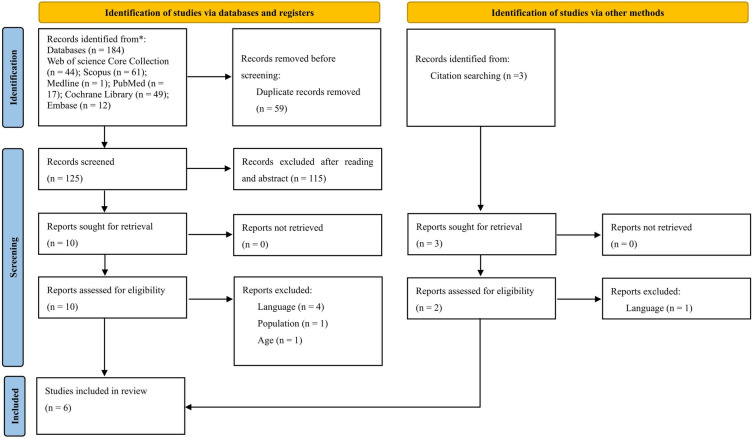
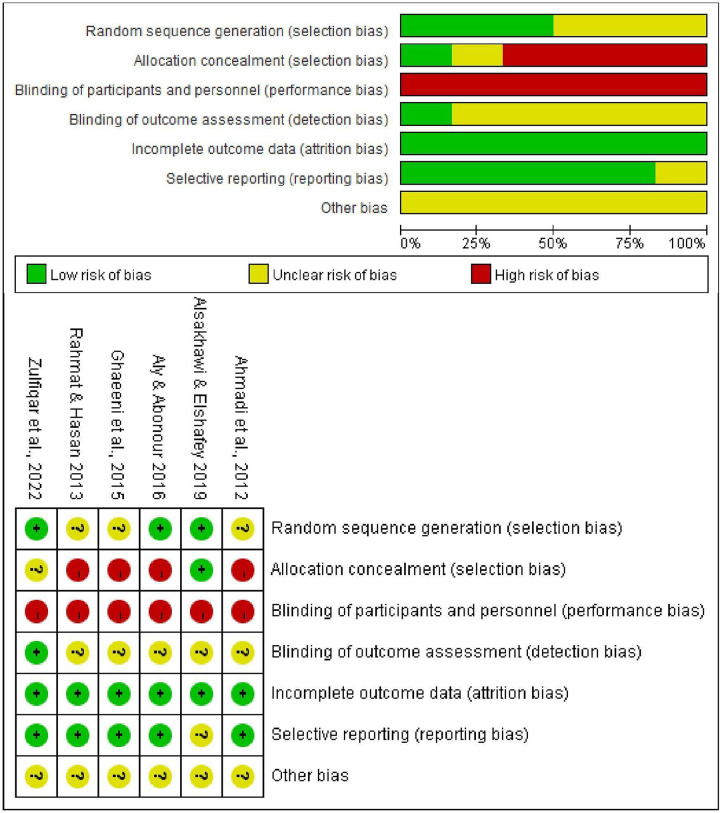
This study followed PRISMA principles and conducted comprehensive searches in six academic databases (PubMed, Web of Science, Medline, Embase, Scopus, and the Cochrane Library) up to June 2023. The inclusion criteria were established via the PICOS framework. The risk of bias was assessed with the Cochrane risk-of-bias tool, and the certainty of the evidence was assessed via the GRADE approach. The meta-analysis was performed via RevMan 5.4, and for data that could not be pooled via meta-analysis, we used a narrative description of the results of each study.
Six studies of 1078 subjects were included. The findings revealed that core stability exercises improved the dynamic balance of children and adolescents with ID but had no significant effect on static (Hedges' g = 1.32, 95% CI [-0.41 to 3.06]) or static‒dynamic (Hedges' g = 1.35, 95% CI [-0.02 to 2.73]) balance compared with the control groups. The quality of evidence based on the GRADE approach was very low.
Core stability exercises may improve dynamic balance in children and adolescents with ID, but given the scarcity of studies included, definitive conclusions cannot yet be drawn. Although pooled analyses also highlighted improvements in static and static-dynamic balance with large effect sizes over active control groups, the results were not statistically significant and should be interpreted with caution given the wide confidence intervals. The heterogeneity among the identified studies and the limited number of eligible studies may reduce the reliability of the results, but these findings emphasise the need for additional research in this domain.
患有智力障碍(ID)的儿童和青少年因平衡问题而有跌倒风险。缓解该人群平衡缺陷的一种方法是通过核心稳定性训练。然而,缺乏全面研究来检验核心稳定性训练对改善该目标人群平衡能力的有效性。
本研究旨在总结并量化核心稳定性训练对改善该目标人群平衡能力的有效性。
本研究遵循PRISMA原则,截至2023年6月在六个学术数据库(PubMed、科学网、医学在线、Embase、Scopus和Cochrane图书馆)中进行了全面检索。纳入标准通过PICOS框架确定。使用Cochrane偏倚风险工具评估偏倚风险,并通过GRADE方法评估证据的确定性。通过RevMan 5.4进行荟萃分析,对于无法通过荟萃分析合并的数据,我们使用了对每项研究结果的叙述性描述。
纳入了六项涉及1078名受试者的研究。研究结果显示,与对照组相比,核心稳定性训练改善了患有ID的儿童和青少年的动态平衡,但对静态(Hedges' g = 1.32,95% CI [-0.41至3.06])或静态 - 动态(Hedges' g = 1.35,95% CI [-0.02至2.73])平衡没有显著影响。基于GRADE方法的证据质量非常低。
核心稳定性训练可能会改善患有ID的儿童和青少年的动态平衡,但鉴于纳入的研究较少,尚无法得出明确结论。尽管汇总分析也突出了与积极对照组相比,静态和静态 - 动态平衡有较大效应量的改善,但结果无统计学意义,鉴于置信区间较宽,应谨慎解释。已识别研究之间的异质性以及符合条件的研究数量有限可能会降低结果的可靠性,但这些发现强调了该领域进一步研究的必要性。