Ben Sedrine Imen, Werghi Sirine, Hachef Afifa, Maalaoui Ahlem, Zarkouna Rahma, Akriche Samah, Hannachi Hedia, Zehdi Salwa, Fakhfakh Hatem, Gorsane Faten
Laboratory of Molecular Genetics, Immunology and Biotechnology (LR99ES12), Faculty of Sciences of Tunis, University of Tunis El Manar, Tunis, 2092, Tunisia.
Laboratory of Materials Chemistry, Faculty of Sciences of Bizerte, Zarzouna, Bizerte, 7021, Tunisia.
Sci Rep. 2024 Dec 20;14(1):30572. doi: 10.1038/s41598-024-80798-0.
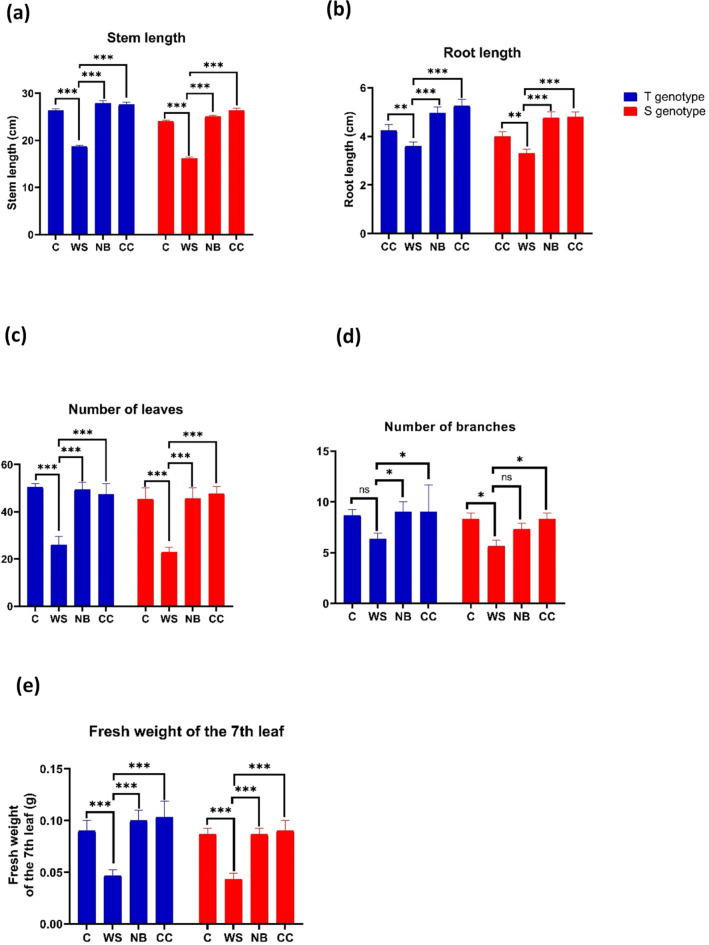
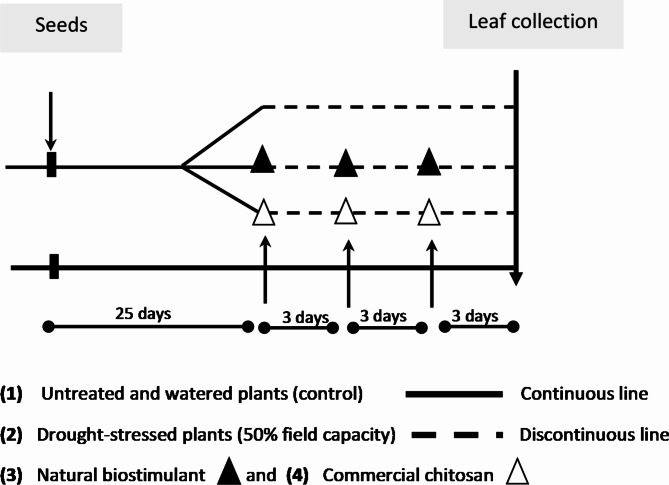
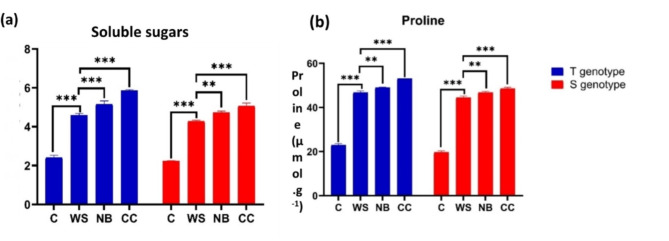
To manage the adverse effects of garbage pollution and avoid using chemicals, a natural extract of seafood shells was obtained and explored for its beneficial role. Physical characterization highlighted that its active compounds correspond to chitin and its derivative, chitosan. The ability of the extracted biostimulant to foster tomato tolerance was tested on drought-stressed plants. Along with changes in morphological parameters, the accumulation of chlorophyll and carotenoids was improved. The biostimulant also mediates the accumulation of osmoprotectants and an increased leaf water content. Furthermore, the biostimulant effectively promotes tolerance by increasing drought-stress SIERF84 Transcription factor and decreasing both SIARF4 and SlWRKY81 transcript levels, which in turn, mediates stomatal closure. In addition, the up-regulation of key genes related to NO uptake (NTR1.1/2) and assimilation (NR) coupled with the downregulation of ammonium transporters' genes (AMT1.1/2), allowed the uptake of NO over NH in the tolerant genotype which is likely to be associated with drought tolerance. Overall, the biostimulant was effective in alleviating water stress and showed similar effects to commercial chitosan. Besides the benefits of a circular economy framework, this biostimulant-based approach is innovative to promote a sustainable eco-agriculture, in the face of persistent water scarcity.
为了应对垃圾污染的不利影响并避免使用化学物质,人们获取了一种海鲜壳天然提取物,并探究了其有益作用。物理表征表明,其活性成分是几丁质及其衍生物壳聚糖。在干旱胁迫的植株上测试了提取的生物刺激剂增强番茄耐受性的能力。除了形态参数的变化外,叶绿素和类胡萝卜素的积累也有所改善。该生物刺激剂还能调节渗透保护剂的积累并增加叶片含水量。此外,该生物刺激剂通过增加干旱胁迫相关的SIERF84转录因子并降低SIARF4和SlWRKY81转录水平来有效提高耐受性,进而介导气孔关闭。此外,与耐铵转运蛋白基因(AMT1.1/2)下调相关的、与NO吸收(NTR1.1/2)和同化(NR)相关的关键基因的上调,使得耐逆基因型中NO的吸收超过NH,这可能与耐旱性有关。总体而言,该生物刺激剂在缓解水分胁迫方面是有效的,并且与商业壳聚糖显示出相似的效果。除了循环经济框架的益处外,这种基于生物刺激剂的方法在面对持续的水资源短缺时,对于促进可持续生态农业具有创新性。