Yamazaki Tadashi, Bari Md Wasim, Kishigami Satoshi
Department of Integrated Applied Life Science, Integrated Graduate School of Medicine, Engineering, and Agricultural Sciences, University of Yamanashi, Yamanashi 400-8510, Japan.
Faculty of Life and Environmental Sciences, University of Yamanashi, Yamanashi 400-8510, Japan.
J Reprod Dev. 2025 Feb 5;71(1):49-54. doi: 10.1262/jrd.2024-089. Epub 2024 Dec 22.
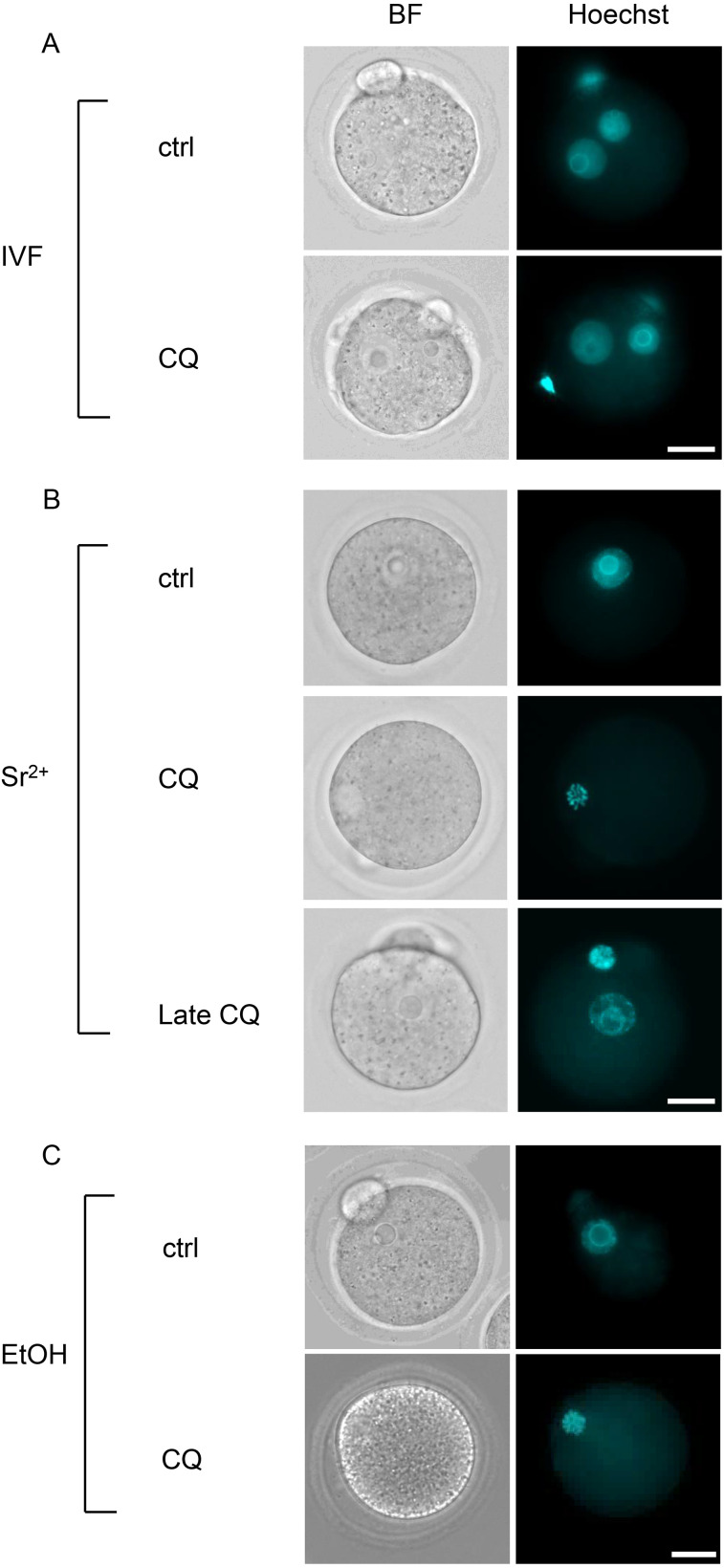
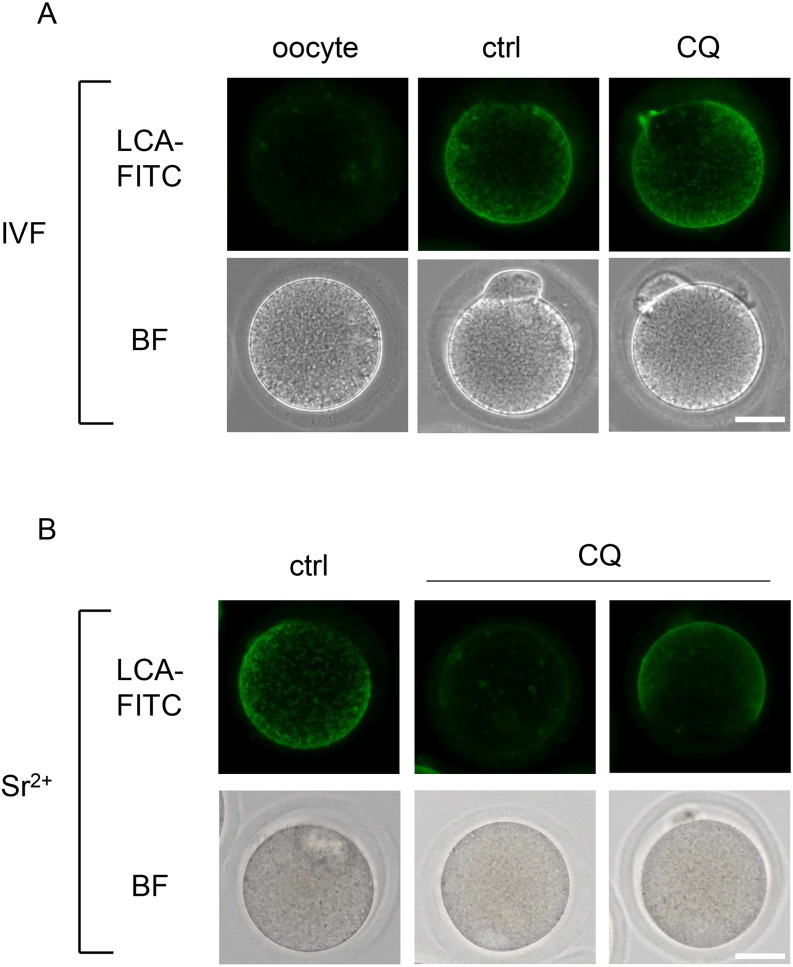
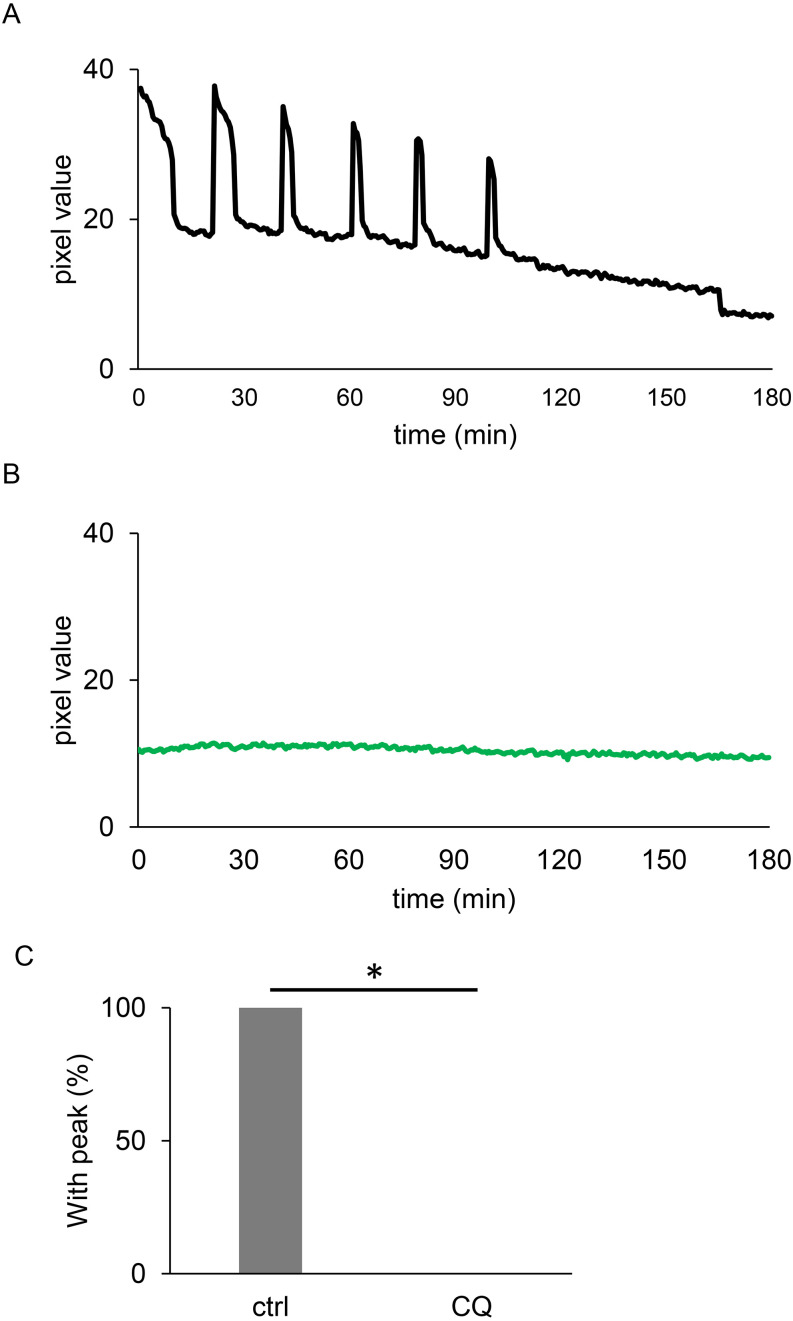
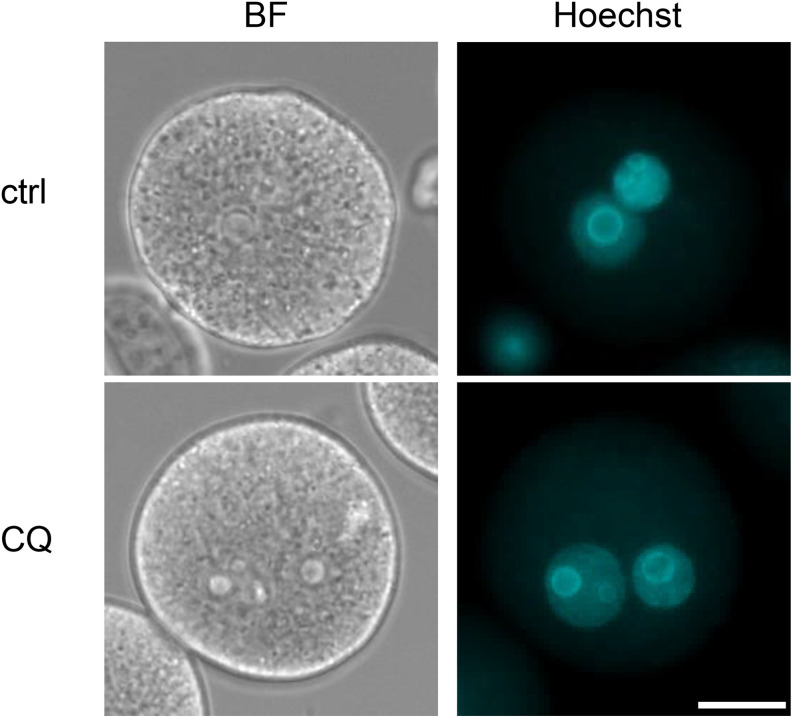
Calcium release from the endoplasmic reticulum via sperm-derived phospholipase C zeta is crucial for oocyte activation during fertilization. Chloroquine (CQ) inhibits the increase in cytoplasmic calcium. This study investigated the effects of CQ on fertilization and oocyte activation. Oocytes were collected from ICR mice, and in vitro fertilization and artificial oocyte activation with strontium ions (Sr) and ethanol were performed in the presence of 50 µM CQ. Pronuclear formation was assessed via Hoechst33242 nuclear staining, cortical granule release was evaluated using lens culinaris agglutinin-fluorescein isothiocyanate staining, and cytosolic calcium levels were measured using fluorescence microscopy with Cal-520 AM. In the presence of CQ, no pronuclei were formed even 8 h after Sr-induced oocyte activation. Furthermore, cortical granule release in CQ-treated oocytes was significantly suppressed, although not completely inhibited, and no increase in cytosolic calcium was detected. CQ also inhibited pronuclear formation during ethanol-induced oocyte activation. In in vitro fertilization, although the fertilization rate was decreased in the CQ-treated group, in which CQ treatment was continuously applied during insemination, pronuclear formation and cortical granule release were observed. The decrease in the fertilization rate was likely attributable to reduced sperm motility and decreased penetration of the zona pellucida. The findings indicate that the oocyte activation pathways triggered by ethanol/Sr and sperm are distinguishable by CQ, and that CQ can be used as a selective inhibitor of oocyte activation induced by Sr or ethanol treatment.
通过精子衍生的磷脂酶Cζ从内质网释放钙对于受精过程中卵母细胞的激活至关重要。氯喹(CQ)可抑制细胞质钙的增加。本研究调查了CQ对受精和卵母细胞激活的影响。从ICR小鼠收集卵母细胞,并在50 μM CQ存在的情况下进行体外受精以及用锶离子(Sr)和乙醇进行人工卵母细胞激活。通过Hoechst33242核染色评估原核形成,使用刀豆球蛋白A - 异硫氰酸荧光素染色评估皮质颗粒释放,并使用Cal - 520 AM荧光显微镜测量细胞质钙水平。在CQ存在的情况下,即使在Sr诱导的卵母细胞激活8小时后也未形成原核。此外,CQ处理的卵母细胞中的皮质颗粒释放虽然没有被完全抑制,但被显著抑制,并且未检测到细胞质钙的增加。CQ还抑制乙醇诱导的卵母细胞激活过程中的原核形成。在体外受精中,尽管在授精期间持续进行CQ处理的CQ处理组受精率降低,但观察到了原核形成和皮质颗粒释放。受精率的降低可能归因于精子活力降低和透明带穿透能力下降。这些发现表明,CQ可区分乙醇/Sr和精子触发的卵母细胞激活途径,并且CQ可用作Sr或乙醇处理诱导的卵母细胞激活的选择性抑制剂。