Yachimura Toshiaki, Wang Hanbo, Imoto Yusuke, Yoshida Momoko, Tasaki Sohei, Kojima Yoji, Yabuta Yukihiro, Saitou Mitinori, Hiraoka Yasuaki
Mathematical Science Center for Co-creative Society, Tohoku University, Sendai, 980-0845, Japan.
Department of Anatomy and Cell Biology, Graduate School of Medicine, Kyoto University, Yoshida-Konoe-cho, Sakyo-ku, Kyoto, 606-8501, Japan.
BMC Bioinformatics. 2024 Dec 23;25(1):388. doi: 10.1186/s12859-024-05988-z.
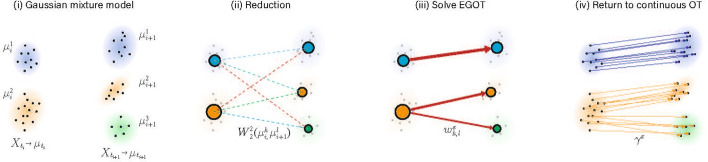
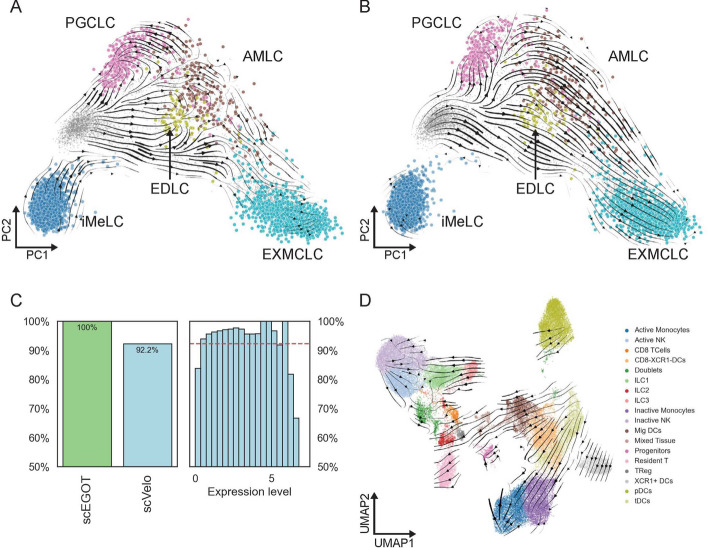
Time-series scRNA-seq data have opened a door to elucidate cell differentiation, and in this context, the optimal transport theory has been attracting much attention. However, there remain critical issues in interpretability and computational cost.
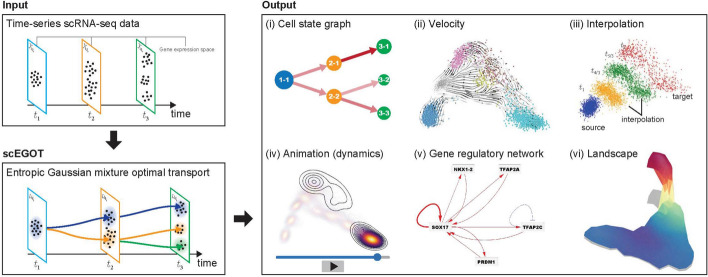
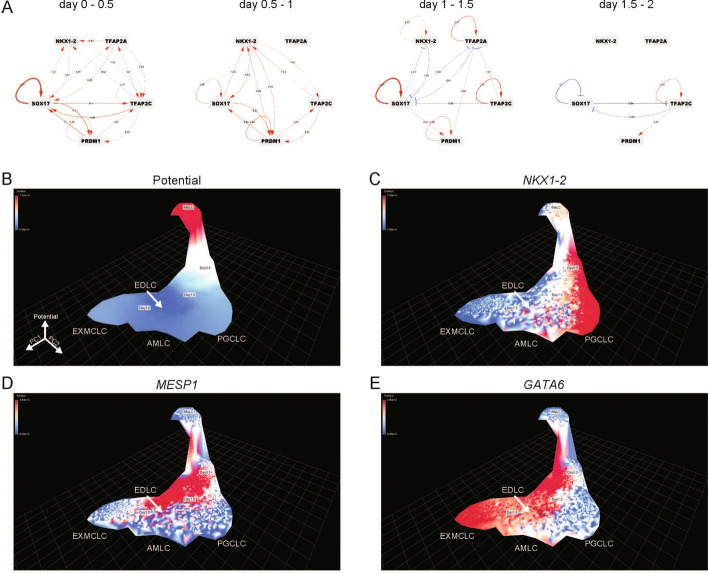
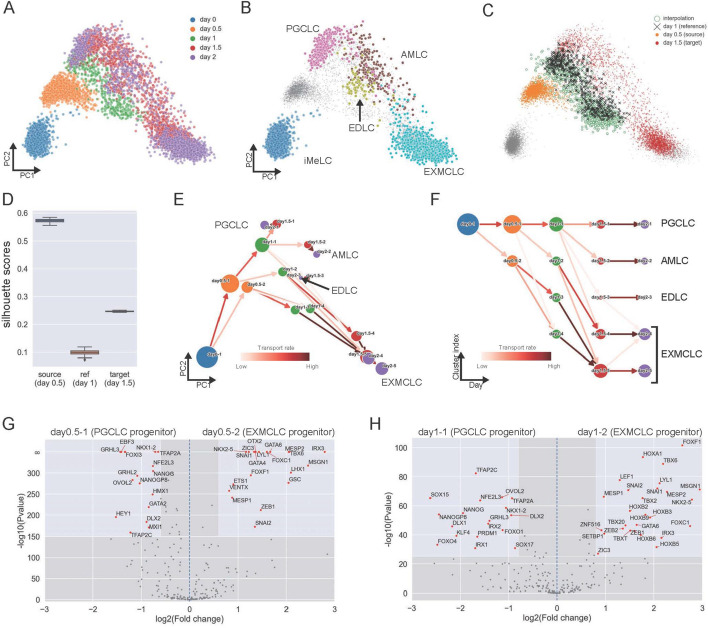
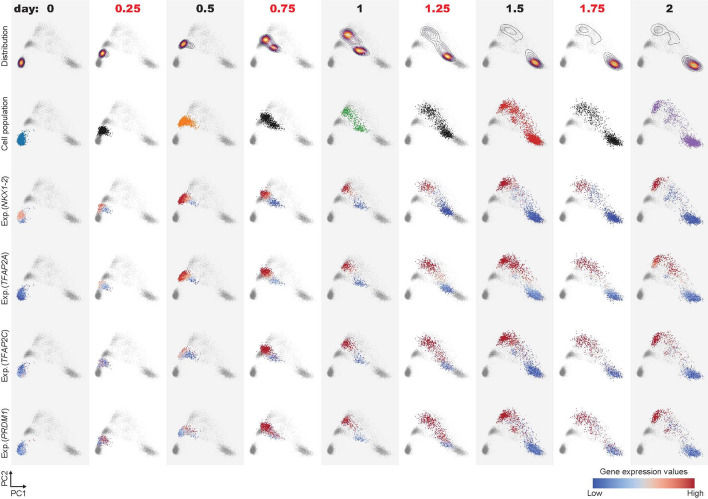
We present scEGOT, a comprehensive framework for single-cell trajectory inference, as a generative model with high interpretability and low computational cost. Applied to the human primordial germ cell-like cell (PGCLC) induction system, scEGOT identified the PGCLC progenitor population and bifurcation time of segregation. Our analysis shows TFAP2A is insufficient for identifying PGCLC progenitors, requiring NKX1-2. Additionally, MESP1 and GATA6 are also crucial for PGCLC/somatic cell segregation.
These findings shed light on the mechanism that segregates PGCLC from somatic lineages. Notably, not limited to scRNA-seq, scEGOT's versatility can extend to general single-cell data like scATAC-seq, and hence has the potential to revolutionize our understanding of such datasets and, thereby also, developmental biology.
时间序列单细胞RNA测序(scRNA-seq)数据为阐明细胞分化打开了一扇门,在此背景下,最优传输理论备受关注。然而,在可解释性和计算成本方面仍存在关键问题。
我们提出了scEGOT,这是一个用于单细胞轨迹推断的综合框架,作为一种具有高可解释性和低计算成本的生成模型。应用于人类原始生殖细胞样细胞(PGCLC)诱导系统时,scEGOT确定了PGCLC祖细胞群体和分离的分支时间。我们的分析表明,TFAP2A不足以识别PGCLC祖细胞,还需要NKX1-2。此外,MESP1和GATA6对于PGCLC/体细胞分离也至关重要。
这些发现揭示了将PGCLC与体细胞谱系分离的机制。值得注意的是,scEGOT的通用性不仅限于scRNA-seq,还可以扩展到scATAC-seq等一般单细胞数据,因此有可能彻底改变我们对这类数据集以及发育生物学的理解。