Pereira Rita, Tomás Diana, Silva Manuela
Instituto Superior de Agronomia, Universidade de Lisboa, Tapada da Ajuda, Lisboa, Portugal.
LEAF-Linking Landscape, Environment, Agriculture and Food Research Center, Instituto Superior de Agronomia, Universidade de Lisboa, Tapada da Ajuda, Lisboa, Portugal.
Front Plant Sci. 2024 Dec 4;15:1459283. doi: 10.3389/fpls.2024.1459283. eCollection 2024.
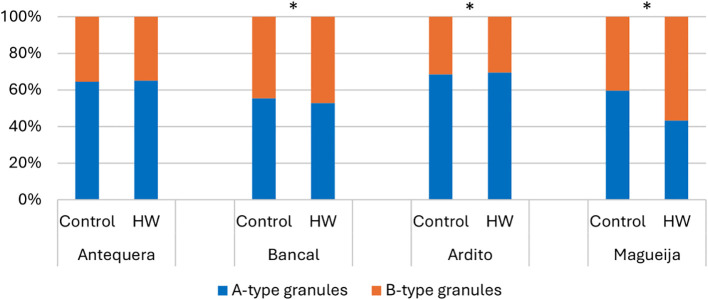
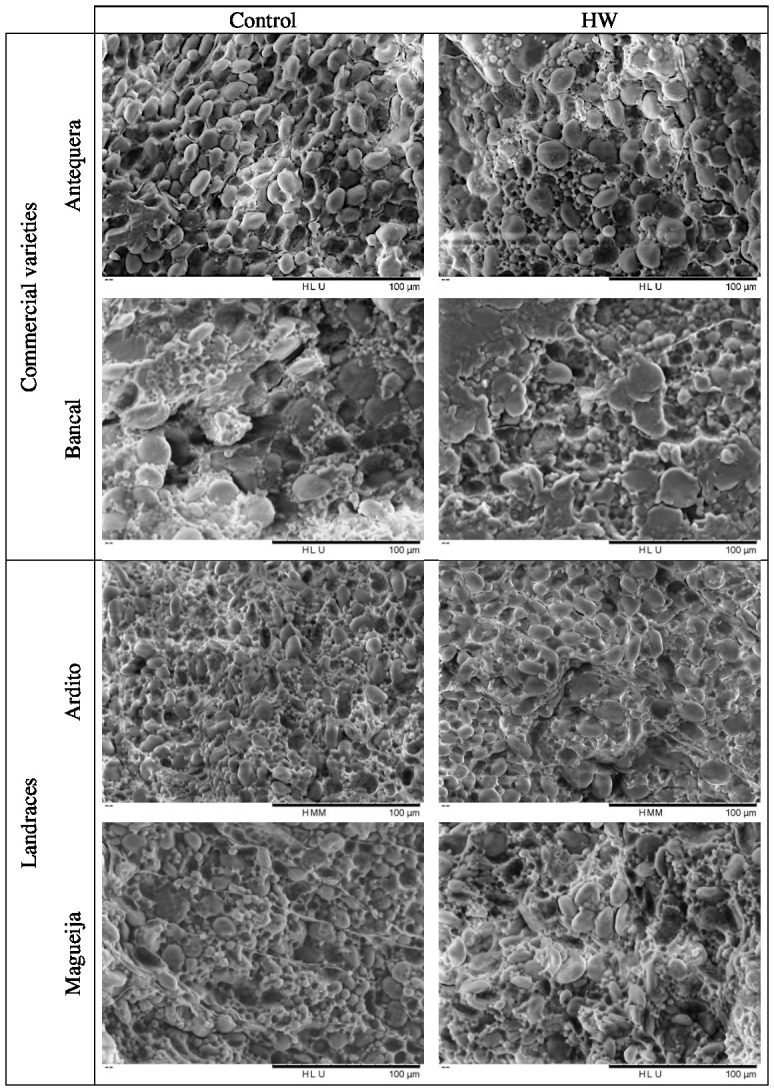
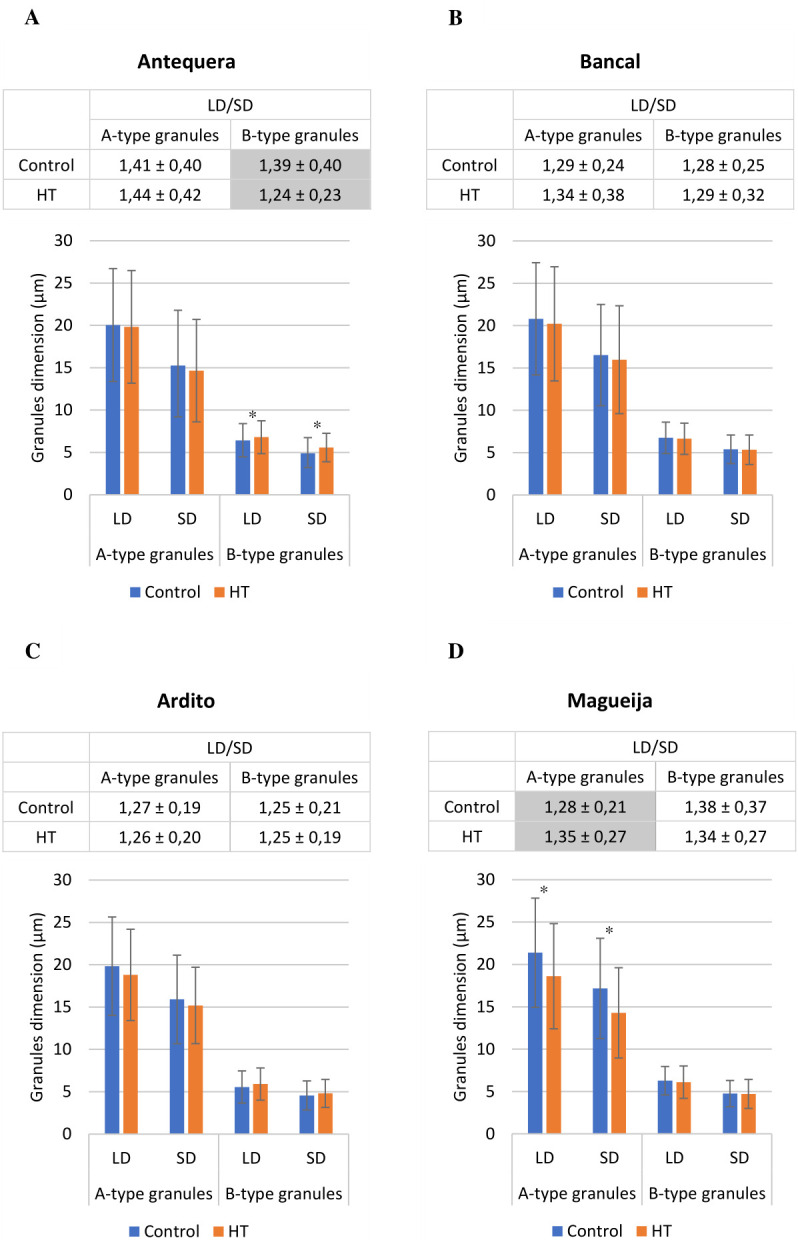
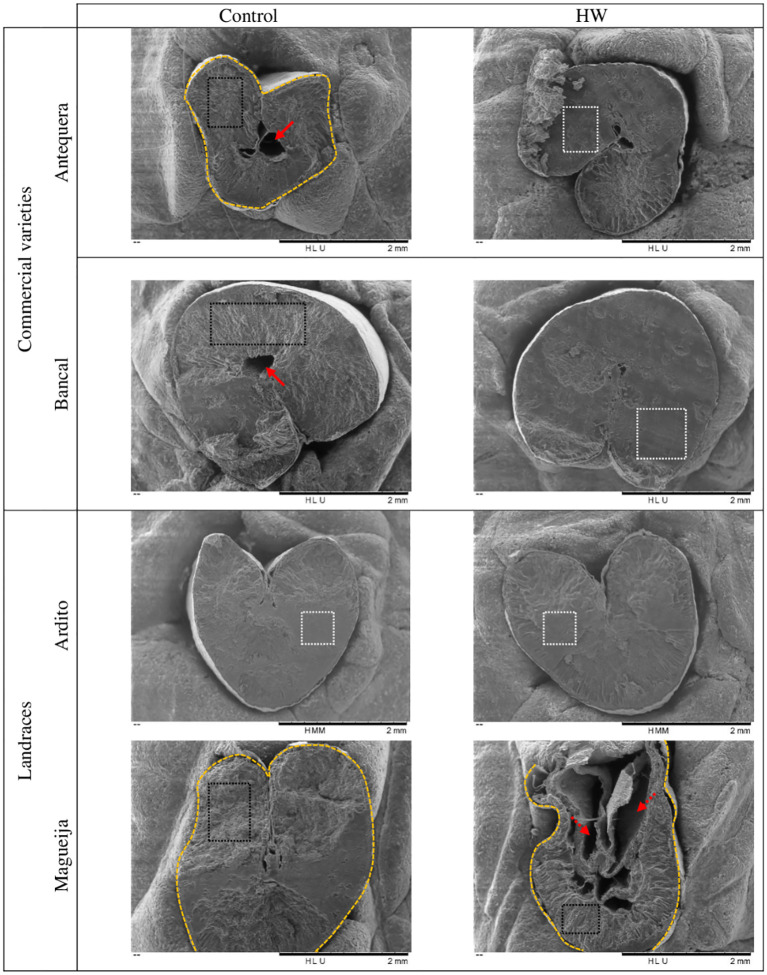
Wheat is an essential staple food, and its production and grain quality are affected by extreme temperature events. These effects are even more relevant considering the increasing food demand for a growing world population and the predicted augmented frequency of heat waves. This study investigated the impact of simulated heat wave (HW) conditions imposed during grain filling on starch granule characteristics, endosperm ultrastructure, and transcriptomic modulation of genes involved in starch synthesis and degradation. All these evaluations were performed with four different genotypes, two commercial wheat varieties (Antequera and Bancal), and two traditional landraces (Ardito and Magueija). Starch granule size distribution and shape were significantly altered by HW treatment, revealing an increase of A-type granules in Ardito and an opposite effect in Magueija and Bancal, while Antequera remained stable. Analysis of the largest (LD) and smallest (SD) granule diameters also revealed genotype-specific changes, with Magueija showing a shift toward more spherical A-type granules after the HW treatment. Scanning electron microscopy confirmed alterations in endosperm morphology, including increased vitreousness in Bancal and substantial increase of endosperm cavities and grain size reduction in Magueija under HW stress. The transcriptomic analysis confirmed the stability of Antequera under HW, in contrast with the other genotypes where differential gene expression related to starch metabolism was detected. These effects were particularly severe in Magueija with the downregulation of genes encoding for enzymes involved in amylopectin synthesis (both starch synthases and starch-branching enzyme) and upregulation of α-amylase-encoding genes. These findings contribute to the understanding of heat stress effects on wheat grain quality, emphasize the importance of genetic diversity in HW responses, and suggest potential avenues for breeding climate-resilient wheat varieties.
小麦是一种重要的主食,其产量和谷物品质受极端温度事件影响。鉴于全球人口增长带来的粮食需求增加以及预计热浪发生频率上升,这些影响更为显著。本研究调查了灌浆期模拟热浪(HW)条件对淀粉颗粒特性、胚乳超微结构以及参与淀粉合成和降解的基因转录组调控的影响。所有这些评估均使用四种不同基因型进行,即两个商业小麦品种(安特克拉和班卡尔)以及两个传统地方品种(阿迪托和马圭亚)。HW处理显著改变了淀粉颗粒大小分布和形状,阿迪托中A型颗粒增加,而马圭亚和班卡尔则呈现相反效果,安特克拉保持稳定。对最大(LD)和最小(SD)颗粒直径的分析也揭示了基因型特异性变化,HW处理后马圭亚的A型颗粒向更球形转变。扫描电子显微镜证实了胚乳形态的改变,包括班卡尔的玻璃质化增加以及HW胁迫下马圭亚的胚乳腔大幅增加和籽粒大小减小。转录组分析证实了安特克拉在HW条件下的稳定性,与之形成对比的是,其他基因型检测到与淀粉代谢相关的差异基因表达。这些影响在马圭亚尤为严重,参与支链淀粉合成的酶(淀粉合酶和淀粉分支酶)编码基因下调,而α-淀粉酶编码基因上调。这些发现有助于理解热胁迫对小麦籽粒品质的影响,强调遗传多样性在HW响应中的重要性,并为培育抗气候变化小麦品种提供了潜在途径。