Lira Réjelos Charles Aguiar, Pratali Raphael de Rezende, Daher Murilo Tavares, Pokorny Gabriel Henrique, Amaral Rodrigo Augusto do, Herrero Carlos Fernando Pereira da Silva
Faculdade de Medicina de Ribeirão Preto, Universidade de São Paulo, Ribeirão Preto, SP, Brasil.
Hospital do Servidor Público Estadual de São Paulo, São Paulo, SP, Brasil.
Rev Bras Ortop (Sao Paulo). 2024 Dec 21;59(6):e861-e867. doi: 10.1055/s-0044-1792115. eCollection 2024 Dec.
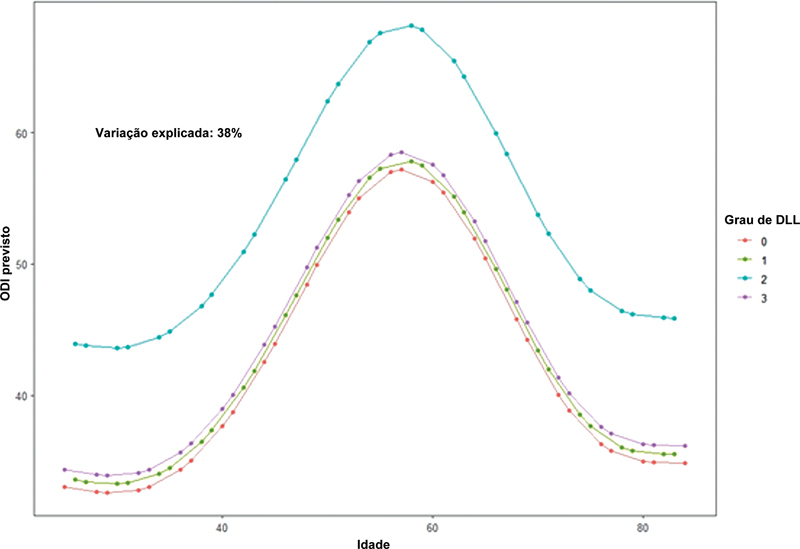
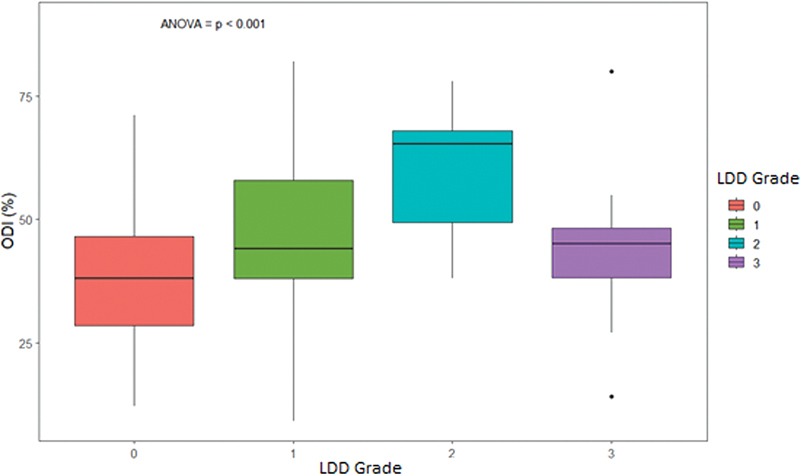
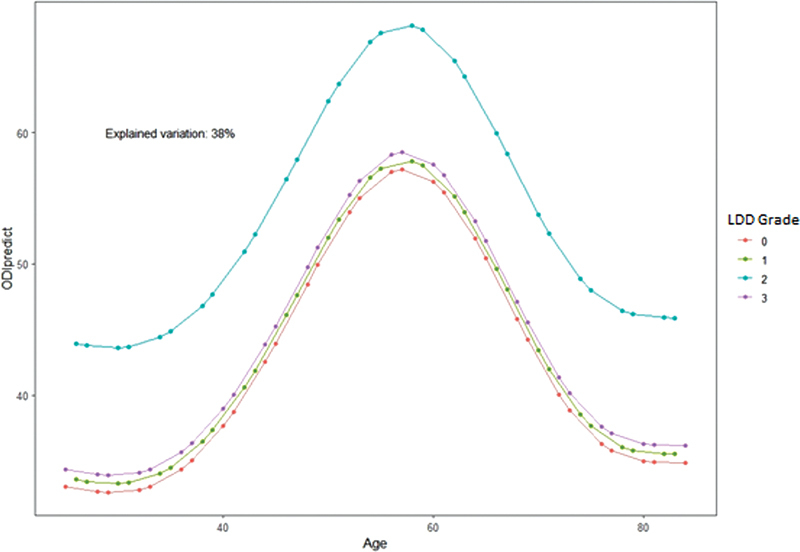
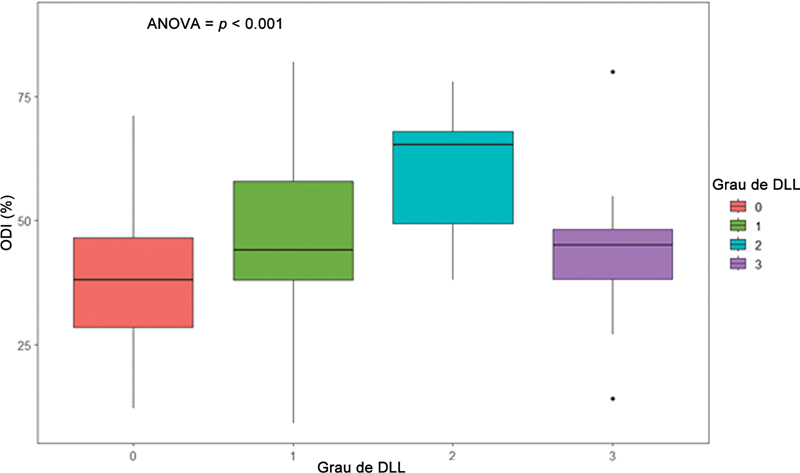
To evaluate the correlation between a radiographic scale of lumbar degenerative disease and the Oswestry Disability Index (ODI). A cross-sectional study in which the ODI quality of life questionnaire and the radiographic parameters for the classification of lumbar degenerative disease into different grades were compared to try to establish a relationship between them. The relationship between the radiographic parameters and quality of life indicators does not behave homogeneously, considering the different grades of the lumbar grading scale. Grade-2 lumbar degenerative disease showed a statistically significant relationship with the worsening of the ODI quality of life score. The lumbar degenerative disease grading scale used in the present study showed a relevant clinical potential, as it presented a significant relationship with the quality of life measured by the ODI score in part of the groups evaluated.
评估腰椎退行性疾病的影像学分级与奥斯维斯特残疾指数(ODI)之间的相关性。 一项横断面研究,比较了ODI生活质量问卷和将腰椎退行性疾病分为不同等级的影像学参数,试图建立它们之间的关系。 考虑到腰椎分级量表的不同等级,影像学参数与生活质量指标之间的关系表现并不一致。2级腰椎退行性疾病与ODI生活质量评分恶化呈统计学显著关系。 本研究中使用的腰椎退行性疾病分级量表显示出相关的临床潜力,因为在部分评估组中,它与通过ODI评分测量的生活质量呈现出显著关系。