Zheng Hao, Wang Jie, Zheng Yijia, Hong Xiaofan, Wang Luxi
First School of Clinical Medicine, Wenzhou Medical University, Wenzhou, China.
Wenzhou Medical University, Wenzhou, China.
Front Mol Biosci. 2024 Dec 6;11:1502509. doi: 10.3389/fmolb.2024.1502509. eCollection 2024.
A growing body of evidence suggests a potential connection between myocardial infarction (MI) and lung cancer (LC). However, the underlying pathogenesis and molecular mechanisms remain unclear. This research aims to identify common genes and pathways between MI and LC through bioinformatics analysis.
Two public datasets (GSE166780 and GSE8569) were analyzed to identify differentially expressed genes (DEGs). Common DEGs were enriched using Gene Ontology (GO) and the Kyoto Encyclopedia of Genes and Genomes (KEGG). Hub genes were identified and their diagnostic performance was evaluated. Gene co-expression networks, as well as regulatory networks involving miRNA-hub genes and TF-hub genes, were also constructed. Finally, candidate drugs were predicted.
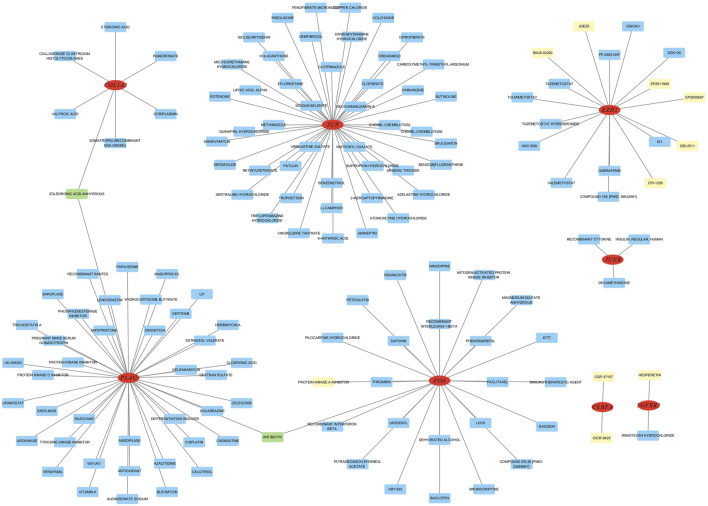
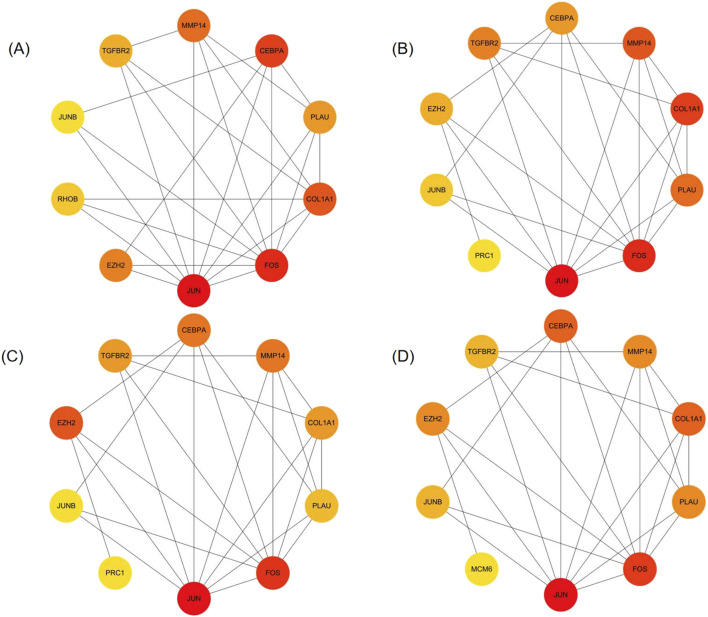
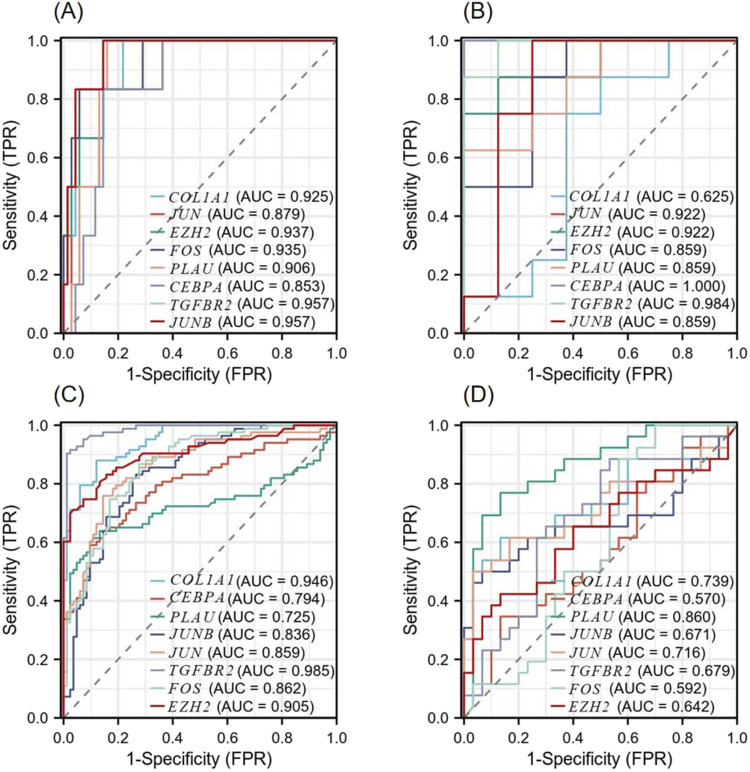
Among the datasets, 34 common trend DEGs were identified. Enrichment analysis linked these DEGs to key biological processes, cellular components, and molecular functions. Eight hub genes (, , , , , , , ) were identified, demonstrating promising diagnostic accuracy. Key transcription factors associated with these hub genes include , , , , , and , while key miRNAs include hsa-mir-101-3p, hsa-mir-124-3p, hsa-mir-29c-3p, hsa-mir-93-5p, and hsa-mir-155-5p. Additionally, potential therapeutic drugs were identified, with zoledronic acid anhydrous showing potential value in reducing the co-occurrence of the two diseases.
This study identified eight common signature genes shared between NSCLC and AMI. Validation datasets confirmed the diagnostic value of key hub genes and . These findings suggest that shared hub genes may serve as novel therapeutic targets for patients with both diseases. Ten candidate drugs were predicted, with zoledronic acid showing potential for targeting dual hub genes, offering a promising therapeutic approach for the comorbidity of lung cancer and myocardial infarction.
越来越多的证据表明心肌梗死(MI)与肺癌(LC)之间存在潜在联系。然而,其潜在的发病机制和分子机制仍不清楚。本研究旨在通过生物信息学分析确定MI和LC之间的共同基因和通路。
分析两个公共数据集(GSE166780和GSE8569)以鉴定差异表达基因(DEG)。使用基因本体论(GO)和京都基因与基因组百科全书(KEGG)对共同的DEG进行富集。鉴定出枢纽基因并评估其诊断性能。还构建了基因共表达网络以及涉及miRNA-枢纽基因和TF-枢纽基因的调控网络。最后,预测了候选药物。
在数据集中,鉴定出34个具有共同趋势的DEG。富集分析将这些DEG与关键生物学过程、细胞成分和分子功能联系起来。鉴定出八个枢纽基因(,,,,,,,),显示出有前景的诊断准确性。与这些枢纽基因相关的关键转录因子包括,,,,,和,而关键miRNA包括hsa-mir-101-3p、hsa-mir-124-3p、hsa-mir-29c-3p、hsa-mir-93-5p和hsa-mir-155-5p。此外,鉴定出潜在的治疗药物,无水唑来膦酸在降低两种疾病的共发率方面显示出潜在价值。
本研究确定了非小细胞肺癌(NSCLC)和急性心肌梗死(AMI)之间共享的八个共同特征基因。验证数据集证实了关键枢纽基因和的诊断价值。这些发现表明,共享的枢纽基因可能成为这两种疾病患者的新型治疗靶点。预测了十种候选药物,唑来膦酸显示出靶向双枢纽基因的潜力,为肺癌和心肌梗死的合并症提供了一种有前景的治疗方法。