Afanvi Hounakey M, Esperance Broalet Maman You, Niemtiah Ouattara, James Yaovi, Doukoure Brahima, Tako Neme Antoine, Metowogo Kossi, Eklu-Gadegbeku Kwashi, Aklikokou Kodjo
Laboratory of Biology and Health, Neuroscience Unit, Felix Houphouët-Boigny University of Abidjan, BP V34, Abidjan 01, Ivory Coast.
Anatomy Laboratory, Medical Science Training and Research Unit, Alassane Ouattara University of Bouake, BP V 18 01, Bouake, Ivory Coast.
Vet Med Int. 2024 Dec 13;2024:3349981. doi: 10.1155/vmi/3349981. eCollection 2024.
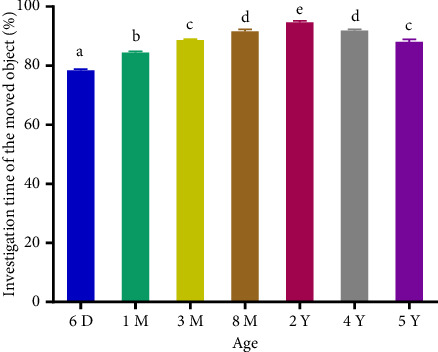
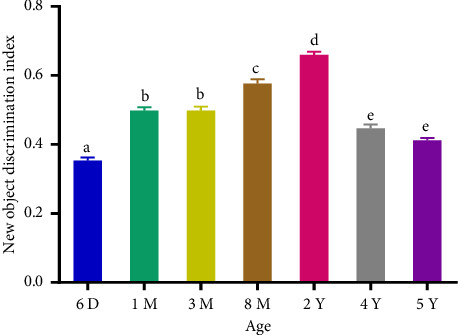
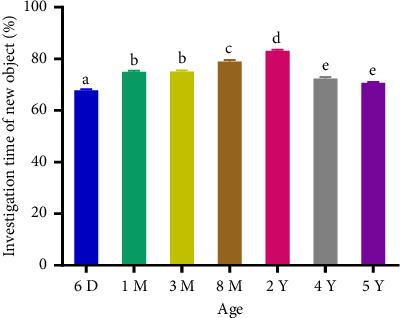
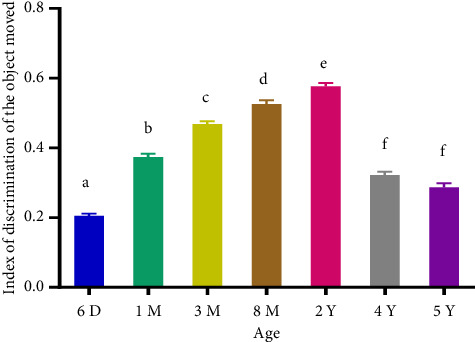
The African grasscutter (AGC) () is the second largest rodent in sub-Saharan Africa. It is bred for its organoleptic and culinary properties but also serves as a research model. The aim of this study was to investigate the relationship between age-related changes in brain weight, brain volume, and spatial and nonspatial memory performance in the AGC. A total of forty-two (42) captive-derived AGCs were divided into seven age groups: 6 neonates (6 days), 6 juveniles (1 month), 6 pubertals (3 months), 6 subadults (8 months), 6 young adults (2 years), 6 middle adults (4 years), and 6 old adults (5 years). The subjects were given a series of tests to assess their spatial memory (location test) and their nonspatial memory (object recognition test). Brain samples were then collected using basic neuroanatomical techniques. The weight and volume of the brain samples were determined and their encephalization quotient (EQ) was also calculated. The results showed that spatial and nonspatial memory in AGC develops into adulthood and then declines with age. Mean brain weight increased from neonates to mid-adulthood (5.20 ± 0.31 g-11.76 ± 0.23 g) and decreased in older AGC (11.75 ± 0.22 g). In contrast, the mean weight of the olfactory bulb (OB) increased from neonates to young adults (0.28 ± 0.02 g-0.80 ± 0.03 g) and the cerebellum increased from neonates to older (0.59 ± 0 0.01 g-1.86 ± 0.06 g). Finally, the EQ decreased with age (0.73 ± 0.05-0.29 ± 0.01). Mean brain volume increased with age from neonates to young adult (5 mL-11.25 mL). Conversely, the mean volume of the OB and cerebellum increases from neonates to older age (0.33 ± 0.03 mL-0.95 ± 0.04 mL). This study shows that spatial and nonspatial memory declines during the aging process in AGC. Neonates and juveniles have higher cognitive abilities than adults and older AGC. The weight of the brain, OB, and cerebellum increases from neonates to adult and decreases slightly from middle to old adults. However, the volume of the OB and cerebellum increases with age.
非洲巨鼠是撒哈拉以南非洲第二大啮齿动物。因其感官特性和烹饪价值而被养殖,同时也作为一种研究模型。本研究的目的是调查非洲巨鼠脑重量、脑体积的年龄相关变化与空间及非空间记忆表现之间的关系。总共42只圈养繁殖的非洲巨鼠被分为七个年龄组:6只新生鼠(6天)、6只幼鼠(1个月)、6只青春期鼠(3个月)、6只亚成体鼠(8个月)、6只青年鼠(2岁)、6只中年鼠(4岁)和6只老年鼠(5岁)。对这些实验对象进行了一系列测试,以评估它们的空间记忆(位置测试)和非空间记忆(物体识别测试)。然后使用基本神经解剖技术采集脑样本。测定脑样本的重量和体积,并计算它们的脑化指数(EQ)。结果表明,非洲巨鼠的空间和非空间记忆在成年期前发育,然后随年龄下降。平均脑重量从新生鼠到成年中期增加(5.20±0.31克 - 11.76±0.23克),在老年非洲巨鼠中减少(11.75±0.22克)。相比之下,嗅球(OB)的平均重量从新生鼠到青年鼠增加(0.28±0.02克 - 0.80±0.03克),小脑从新生鼠到老年鼠增加(0.59±0.01克 - 1.86±0.06克)。最后,EQ随年龄下降(0.73±0.05 - 0.29±0.01)。平均脑体积从新生鼠到青年鼠随年龄增加(5毫升 - 11.25毫升)。相反,嗅球和小脑的平均体积从新生鼠到老年鼠增加(0.33±0.03毫升 - 0.95±0.04毫升)。本研究表明,非洲巨鼠衰老过程中空间和非空间记忆下降。新生鼠和幼鼠比成年和老年非洲巨鼠具有更高的认知能力。脑、嗅球和小脑的重量从新生鼠到成年期增加,从中年期到老年期略有下降。然而,嗅球和小脑的体积随年龄增加。