Birkenbihl Colin, de Jong Johann, Yalchyk Ilya, Fröhlich Holger
Department of Bioinformatics, Fraunhofer Institute for Algorithms and Scientific Computing (SCAI), Sankt Augustin 53757, Germany.
Bonn-Aachen International Center for IT, Rheinische Friedrich-Wilhelms-Universität Bonn, Bonn 53115, Germany.
Brain Commun. 2024 Dec 16;6(6):fcae445. doi: 10.1093/braincomms/fcae445. eCollection 2024.
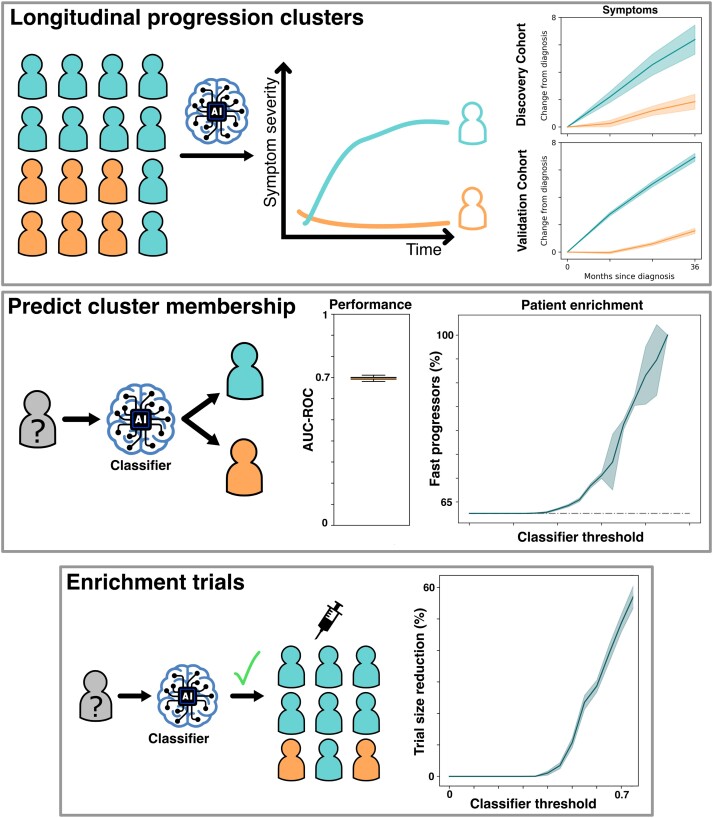
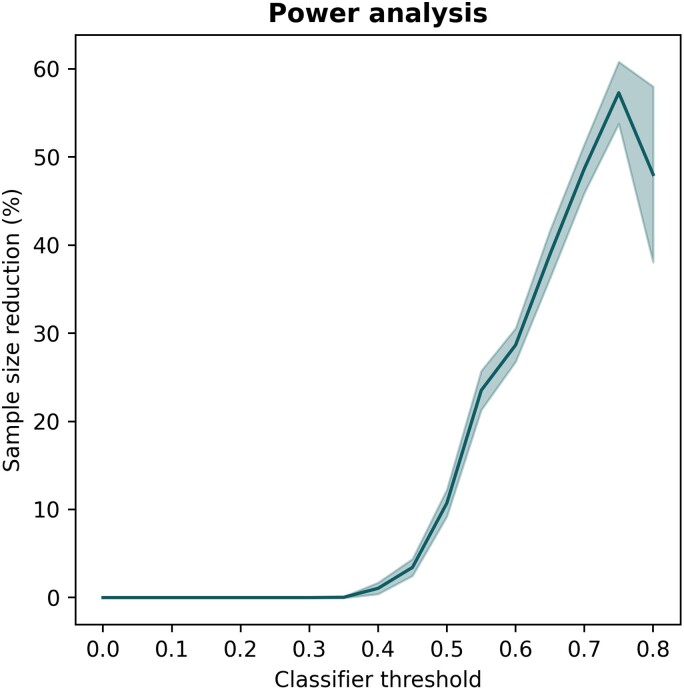
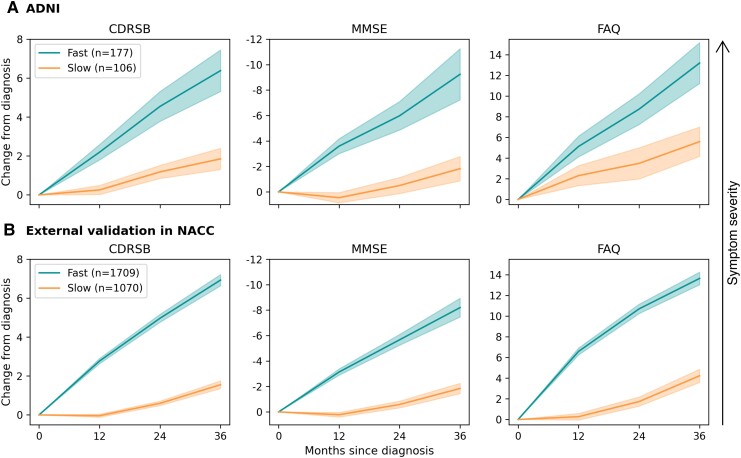
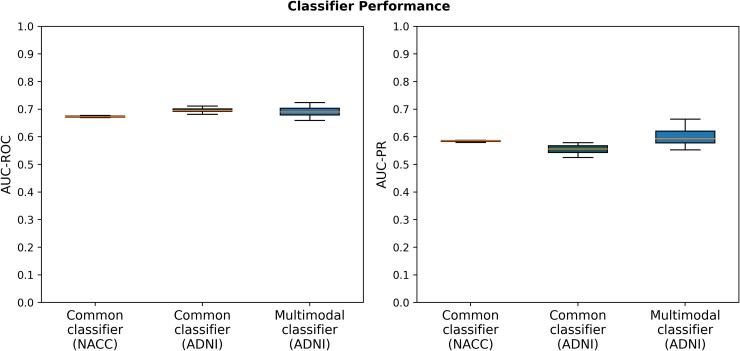
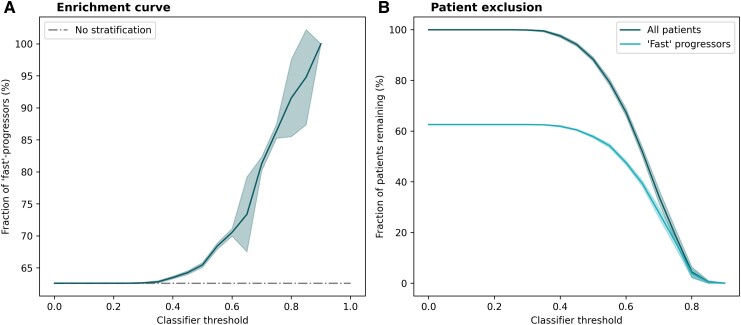
Dementia probably due to Alzheimer's disease is a progressive condition that manifests in cognitive decline and impairs patients' daily life. Affected patients show great heterogeneity in their symptomatic progression, which hampers the identification of efficacious treatments in clinical trials. Using artificial intelligence approaches to enable clinical enrichment trials serves a promising avenue to identify treatments. In this work, we used a deep learning method to cluster the multivariate disease trajectories of 283 early dementia patients along cognitive and functional scores. Two distinct subgroups were identified that separated patients into 'slow' and 'fast' progressing individuals. These subgroups were externally validated and independently replicated in a dementia cohort comprising 2779 patients. We trained a machine learning model to predict the progression subgroup of a patient from cross-sectional data at their time of dementia diagnosis. The classifier achieved a prediction performance of 0.70 ± 0.01 area under the receiver operating characteristic curve in external validation. By emulating a hypothetical clinical trial conducting patient enrichment using the proposed classifier, we estimate its potential to decrease the required sample size. Furthermore, we balance the achieved enrichment of the trial cohort against the accompanied demand for increased patient screening. Our results show that enrichment trials targeting cognitive outcomes offer improved chances of trial success and are more than 13% cheaper compared with conventional clinical trials. The resources saved could be redirected to accelerate drug development and expand the search for remedies for cognitive impairment.
可能由阿尔茨海默病引起的痴呆是一种进行性疾病,表现为认知能力下降,影响患者的日常生活。受影响的患者在症状进展方面表现出很大的异质性,这阻碍了在临床试验中确定有效治疗方法。使用人工智能方法开展临床富集试验是确定治疗方法的一条有前景的途径。在这项研究中,我们使用深度学习方法,根据认知和功能评分对283例早期痴呆患者的多变量疾病轨迹进行聚类。确定了两个不同的亚组,将患者分为“进展缓慢”和“进展快速”的个体。这些亚组在一个包含2779例患者的痴呆队列中得到了外部验证和独立重复验证。我们训练了一个机器学习模型,以便根据痴呆诊断时的横断面数据预测患者的进展亚组。在外部验证中,该分类器在受试者工作特征曲线下的预测性能为0.70±0.01。通过模拟一项使用所提出的分类器进行患者富集的假设性临床试验,我们估计了其减少所需样本量的潜力。此外,我们在实现试验队列富集的同时,平衡了随之而来的对增加患者筛查的需求。我们的结果表明,针对认知结果的富集试验提高了试验成功的机会,与传统临床试验相比,成本降低了13%以上。节省下来的资源可以重新用于加速药物开发和扩大对认知障碍治疗方法的探索。