Li Yuan, Zhang Bolun, Li Dengke, Zhang Yu, Xue Yang, Hu Kaijin
State Key Laboratory of Oral and Maxillofacial Reconstruction and Regeneration, National Clinical Research Center for Oral Diseases, Shaanxi Clinical Research Center for Oral Diseases, Department of Oral and Maxillofacial Surgery, School of Stomatology, The Fourth Military Medical University, Xi'an, China.
Department of Stomatology, School of Stomatology, The Third Affiliated Hospital, Xi'an Medical University, Xi'an, China.
Mediators Inflamm. 2024 Dec 16;2024:9983323. doi: 10.1155/mi/9983323. eCollection 2024.
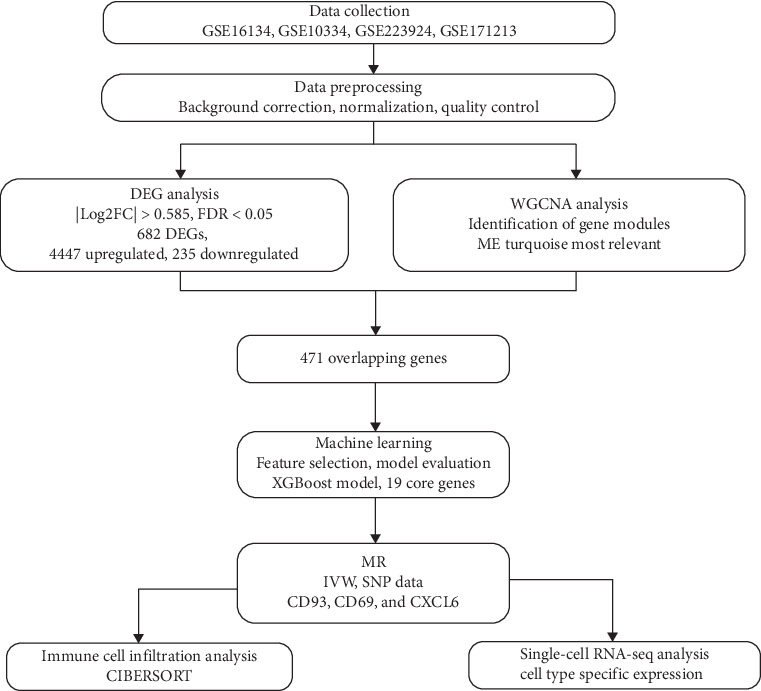
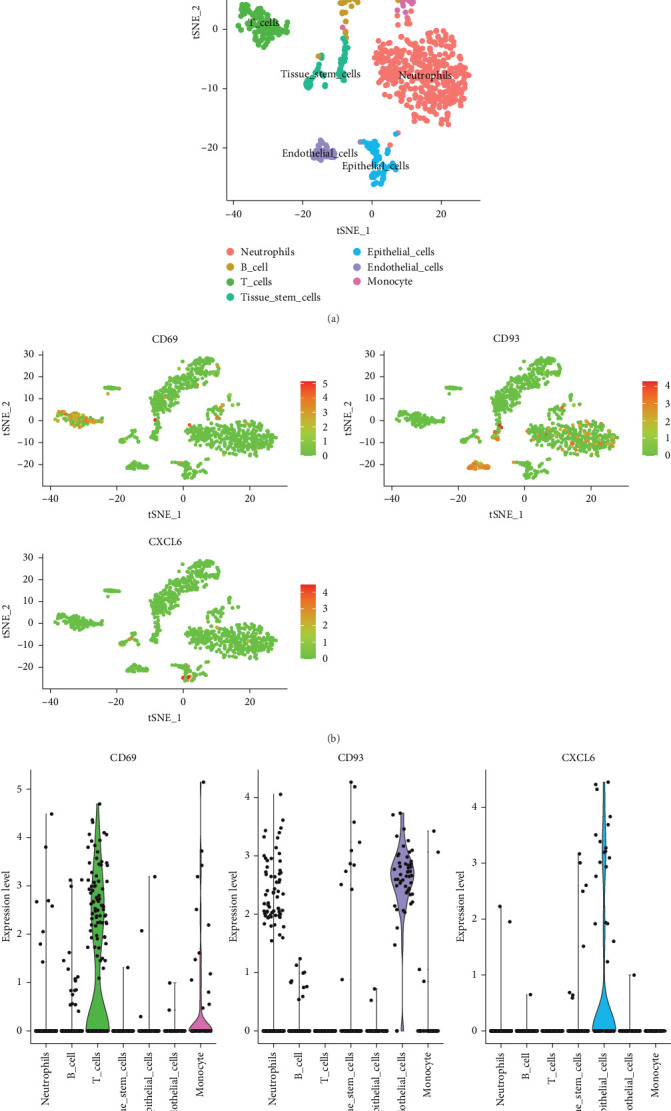
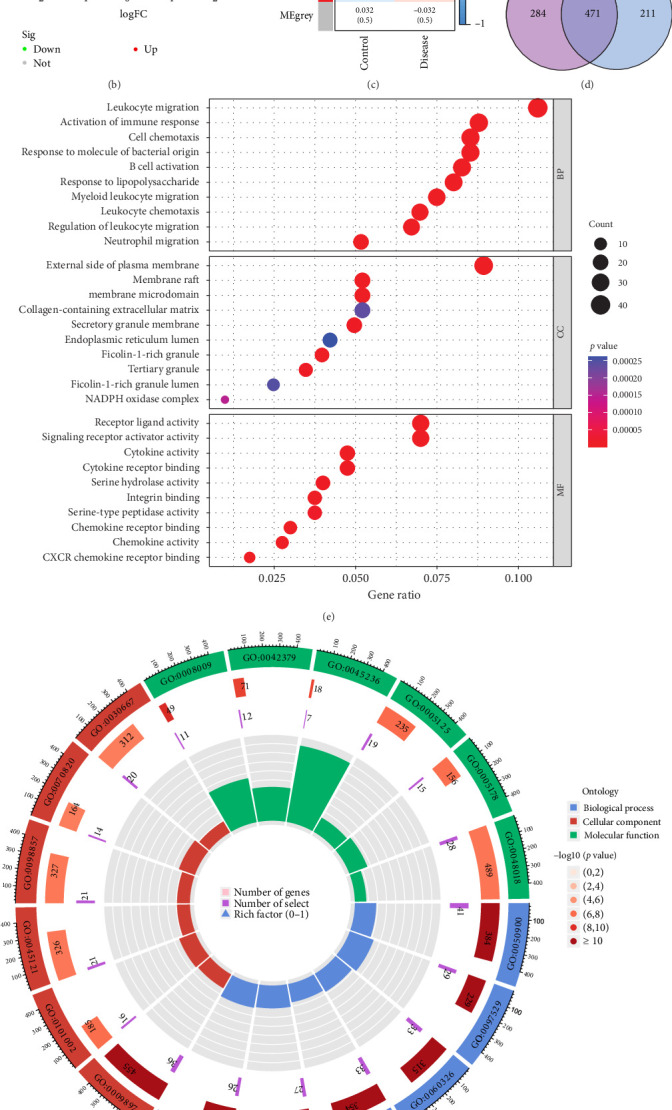
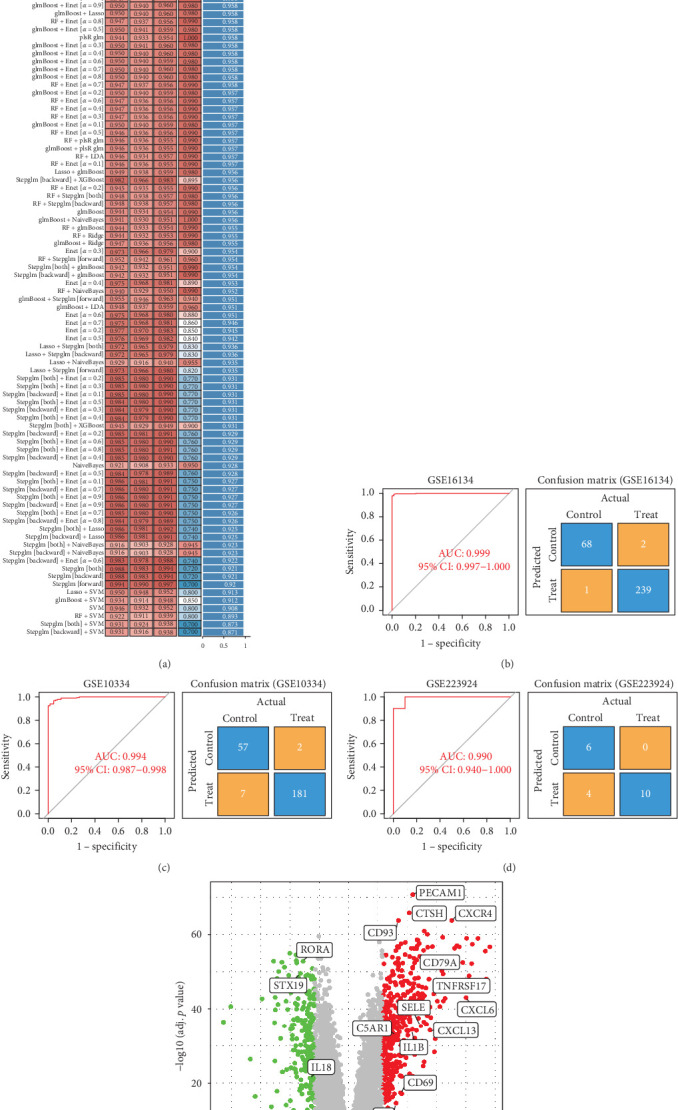
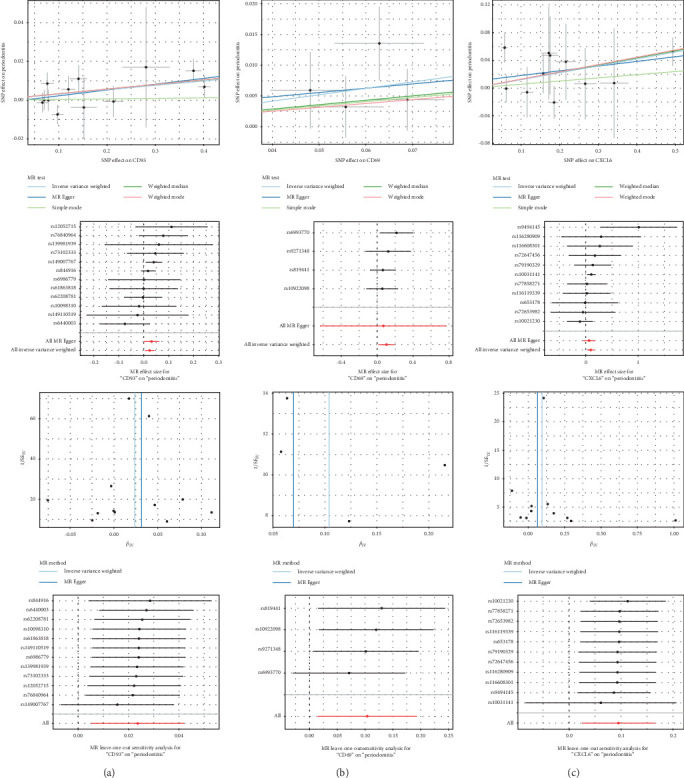
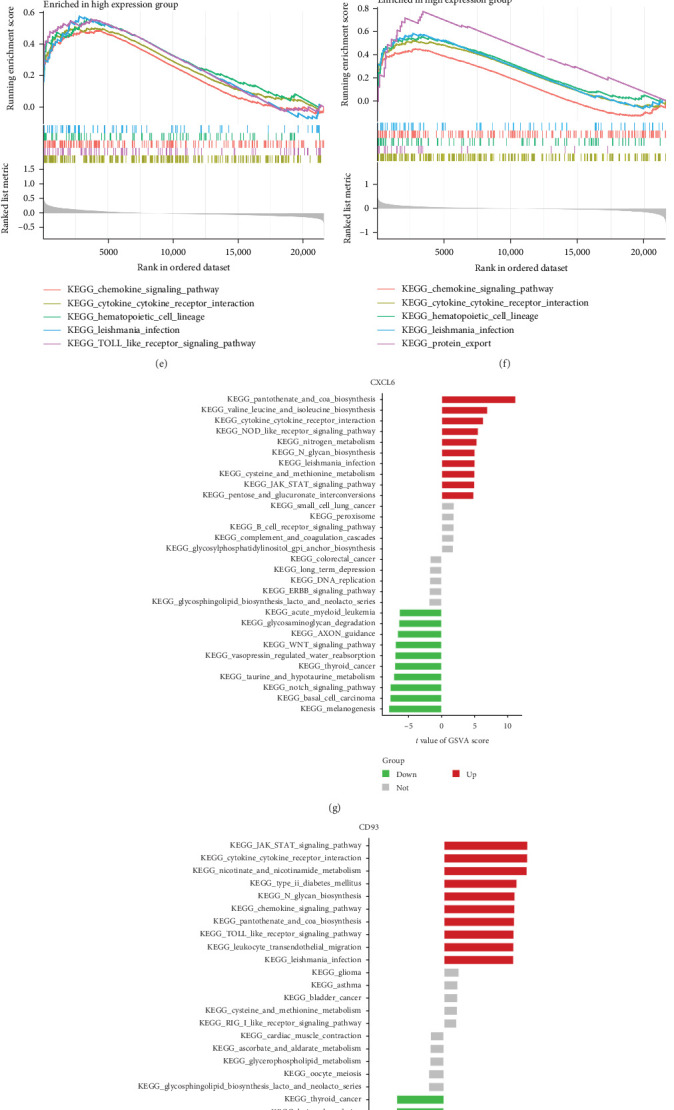
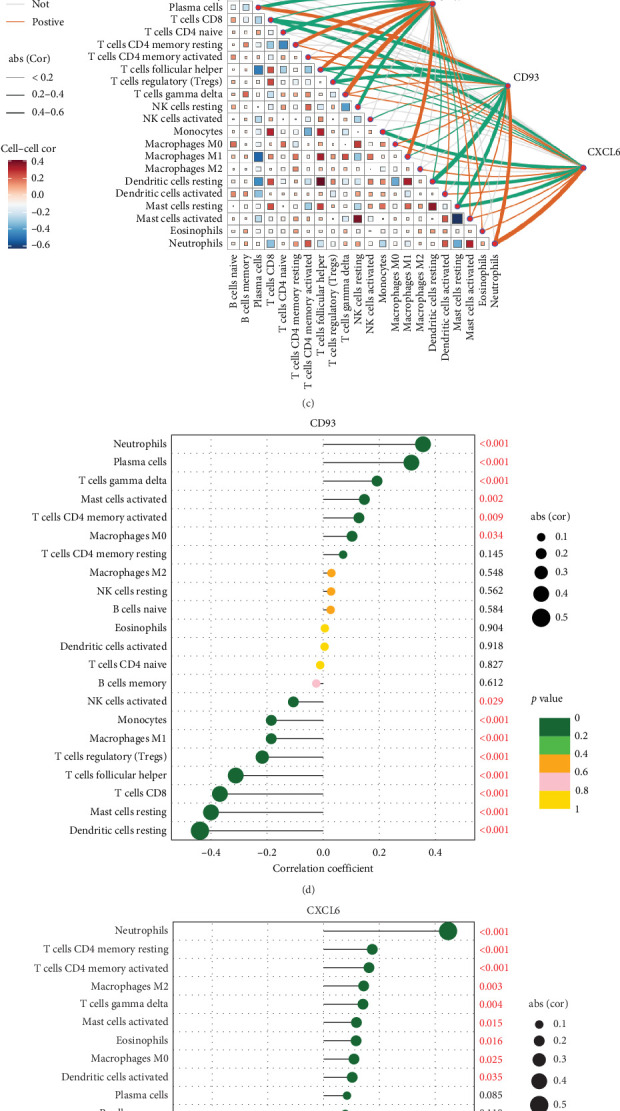
This study aimed to investigate the molecular mechanisms of periodontitis and identify key immune-related biomarkers using machine learning and Mendelian randomization (MR). Differentially expressed gene (DEG) analysis was performed on periodontitis datasets GSE16134 and GSE10334 from the Gene Expression Omnibus (GEO) database, followed by weighted gene co-expression network analysis (WGCNA) to identify relevant gene modules. Various machine learning algorithms were utilized to construct predictive models, highlighting core genes, while MR assessed the causal relationships between these genes and periodontitis. Additionally, immune infiltration analysis and single-cell sequencing were employed to explore the roles of key genes in immunity and their expression across different cell types. The integration of machine learning, MR, and single-cell sequencing represents a novel approach that significantly enhances our understanding of the immune dynamics and gene interactions in periodontitis. The study identified 682 significant DEGs, with WGCNA revealing seven gene modules associated with periodontitis and 471 core candidate genes. Among the 113 machine learning algorithms tested, XGBoost was the most effective in identifying periodontitis samples, leading to the selection of 19 core genes. MR confirmed significant causal relationships between CD93, CD69, and CXCL6 and periodontitis. Further analysis showed that these genes were correlated with various immune cells and exhibited specific expression patterns in periodontitis tissues. The findings suggest that CD93, CD69, and CXCL6 are closely related to the progression of periodontitis, with MR confirming their causal links to the disease. These genes have potential applications in the diagnosis and treatment of periodontitis, offering new insights into the disease's molecular mechanisms and providing valuable resources for precision medicine approaches in periodontitis management. Limitations of this study include the demographic and sample size constraints of the datasets, which may impact the generalizability of the findings. Future research is needed to validate these biomarkers in larger, diverse cohorts and to investigate their functional roles in the pathogenesis of periodontitis.
本研究旨在利用机器学习和孟德尔随机化(MR)探究牙周炎的分子机制并识别关键免疫相关生物标志物。对来自基因表达综合数据库(GEO)的牙周炎数据集GSE16134和GSE10334进行差异表达基因(DEG)分析,随后进行加权基因共表达网络分析(WGCNA)以识别相关基因模块。运用多种机器学习算法构建预测模型,突出核心基因,同时MR评估这些基因与牙周炎之间的因果关系。此外,采用免疫浸润分析和单细胞测序来探究关键基因在免疫中的作用及其在不同细胞类型中的表达。机器学习、MR和单细胞测序的整合代表了一种新方法,显著增强了我们对牙周炎免疫动力学和基因相互作用的理解。该研究确定了682个显著的DEG,WGCNA揭示了7个与牙周炎相关的基因模块和471个核心候选基因。在所测试的113种机器学习算法中,XGBoost在识别牙周炎样本方面最有效,从而筛选出19个核心基因。MR证实了CD93、CD69和CXCL6与牙周炎之间存在显著因果关系。进一步分析表明,这些基因与多种免疫细胞相关,并在牙周炎组织中呈现特定表达模式。研究结果表明,CD93、CD69和CXCL6与牙周炎的进展密切相关,MR证实了它们与该疾病的因果联系。这些基因在牙周炎的诊断和治疗中具有潜在应用价值,为该疾病的分子机制提供了新见解,并为牙周炎管理中的精准医学方法提供了有价值的资源。本研究的局限性包括数据集的人口统计学和样本量限制,这可能会影响研究结果的普遍性。未来需要在更大、更多样化的队列中验证这些生物标志物,并研究它们在牙周炎发病机制中的功能作用。