Baris Alican, Özmen Emre, Circi Esra, Yuksel Serdar, Beytemür Ozan
İstanbul Fizik Tedavi ve Rehabilitasyon Eğitim ve Araştırma Hastanesi, Ortopedi ve Travmatoloji Kliniği, 34180 Bahçelievler, İstanbul, Türkiye.
Jt Dis Relat Surg. 2025 Jan 2;36(1):97-106. doi: 10.52312/jdrs.2025.1806. Epub 2024 Nov 5.
This study aims to investigate quantitatively the protective effect of a 1.6-mm or a 2.5-mm Kirschner wire (K-wire) on the medial hinge at different gap distances through finite element analysis (FEA) and to establish whether using a 2.5-mm K-wire can offer benefits compared to a 1.6-mm in preventing medial hinge fractures.
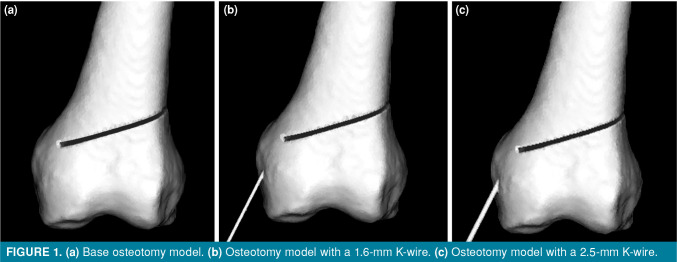
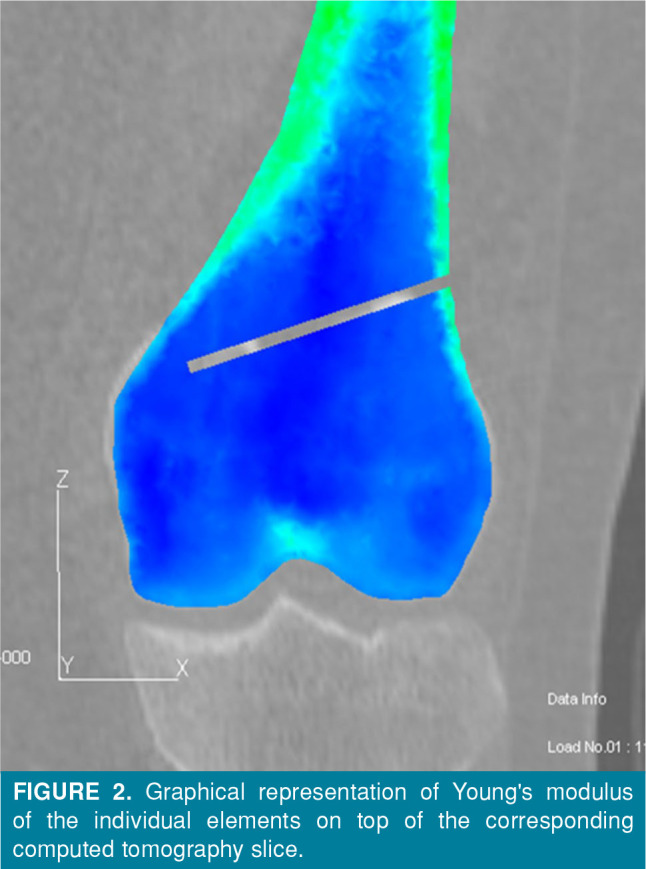
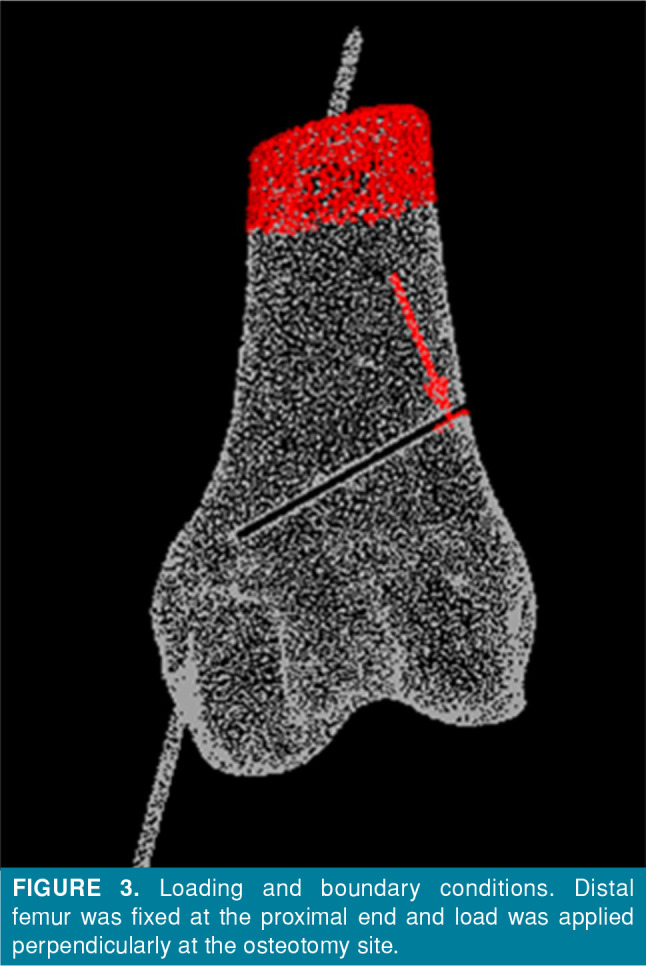
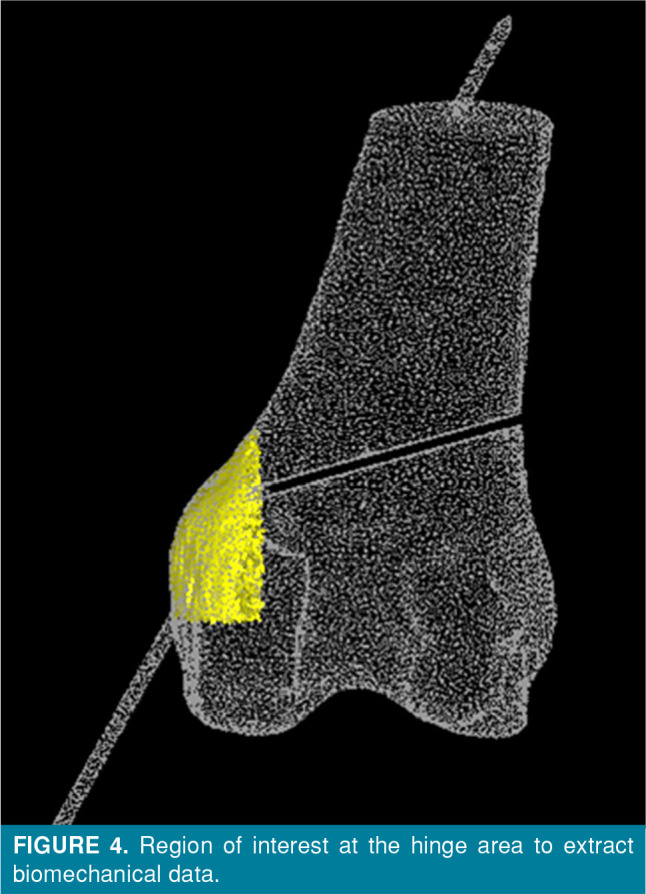
Between June 2024 and July 2024, three different models simulating a lateral opening wedge (LOW) osteotomy of the distal femur were created from a femoral computed tomography (CT) scan of a 36-year-old male patient: no K-wire (Model I), 1.6-mm K-wire (Model II), and 2.5-mm K-wire (Model III). Finite element analysis was performed to simulate 7- to 13-mm gaps at the osteotomy site. Loads, principal stress, strain, and equivalent stress were analyzed around the medial hinge.
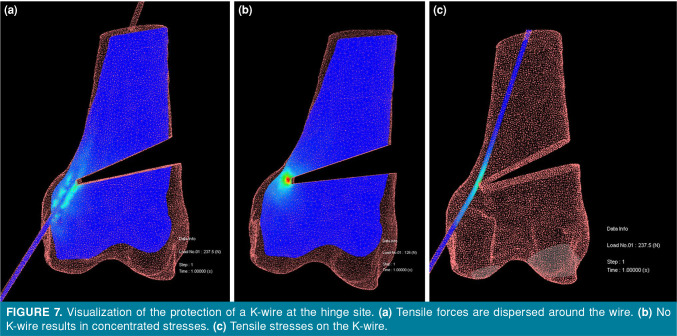
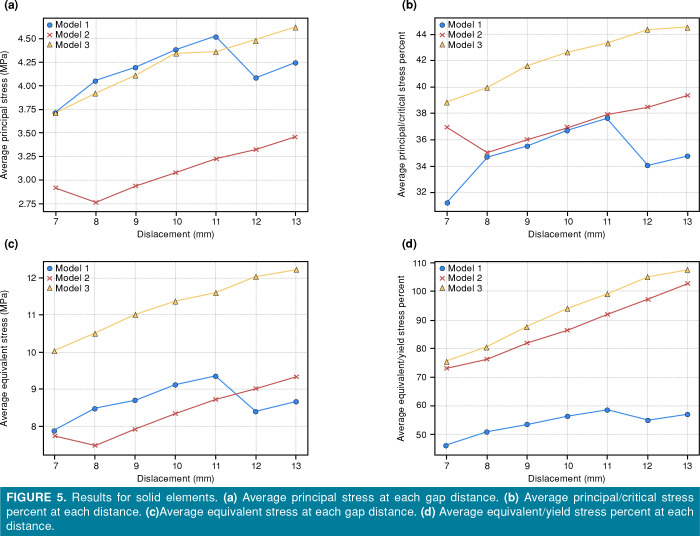
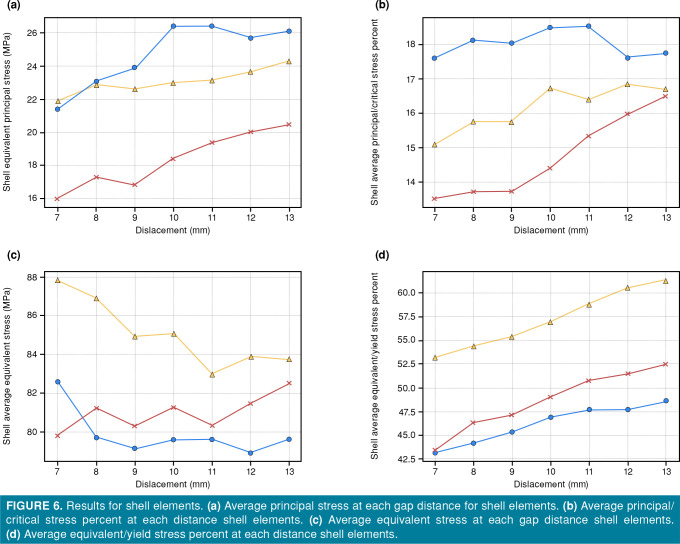
Model I required 123.0±5.2 N, Model II required 181.7±12.2 N, and Model III required 228.7±13.6 N (p<0.001). Cracked shell elements were the lowest in Model II and the highest in Model I. While the average equivalent/yield stress ratio was not significantly lower in Model II compared to Model III (87.0±10.9% vs. 92.7±12.1%), the maximum equivalent/yield stress ratio values in Model II were significantly lower than both Model I and Model III (1206.2±138.3% vs. 1836.2±165.4% and 1689.1±404.0%, respectively), suggesting a superior dispersion of forces.
Using a 1.6-mm K-wire during LOW osteotomy of the distal femur provides a balance between structural reinforcement and stress distribution, significantly improving stability and reducing the risk of medial hinge fractures compared to a 2.5-mm K-wire or no K-wire. The 1.6-mm K-wire optimizes stress dispersion, making it the preferred choice for surgical planning in lateral opening wedge distal femoral osteotomy.
本研究旨在通过有限元分析(FEA)定量研究1.6毫米或2.5毫米克氏针(K针)在不同间隙距离下对内侧铰链的保护作用,并确定与1.6毫米K针相比,使用2.5毫米K针在预防内侧铰链骨折方面是否具有优势。
在2024年6月至2024年7月期间,从一名36岁男性患者的股骨计算机断层扫描(CT)扫描中创建了三种不同的模型,模拟股骨远端外侧开口楔形(LOW)截骨术:无K针(模型I)、1.6毫米K针(模型II)和2.5毫米K针(模型III)。进行有限元分析以模拟截骨部位7至13毫米的间隙。分析内侧铰链周围的载荷、主应力、应变和等效应力。
模型I需要123.0±5.2 N,模型II需要181.7±12.2 N,模型III需要228.7±13.6 N(p<0.001)。破裂的壳单元在模型II中最低,在模型I中最高。虽然模型II的平均等效应力/屈服应力比与模型III相比没有显著降低(87.0±10.9%对92.7±12.1%),但模型II中的最大等效应力/屈服应力比值显著低于模型I和模型III(分别为1206.2±138.3%对1836.2±165.4%和1689.1±404.0%),表明力的分散性更好。
在股骨远端LOW截骨术中使用1.6毫米K针可在结构加固和应力分布之间取得平衡,与2.5毫米K针或不使用K针相比,显著提高稳定性并降低内侧铰链骨折的风险。1.6毫米K针优化了应力分散,使其成为股骨远端外侧开口楔形截骨术手术规划的首选。