Crivelli Lucia, Winkler Andrea, Keller Greta, Beretta Simone, Calandri Ismael Luis, De Groote Wouter, Fornari Arianna, Frontera Jennifer, Kivipelto Miia, Lopez-Rocha Ana Sabsil, Mangialasche Francesca, Munblit Daniel, Palmer Katie, Guekht Alla, Allegri Ricardo
Department of Cognitive Neurology, Fleni, Montañeses 2325 (C1428AQK), Buenos Aires, Argentina.
Department of Neurology, Center for Global Health, School of Medicine and Health, Technical University of Munich, Munich, Germany.
eNeurologicalSci. 2024 Nov 21;38:100539. doi: 10.1016/j.ensci.2024.100539. eCollection 2025 Mar.
This systematic review analyzes the impact of COVID-19 on dementia patients' functional, cognitive, neuropsychiatric, and health related outcomes. It hypothesizes that dementia patients infected with SARS-CoV-2experience more pronounced deterioration compared to those who are uninfected.
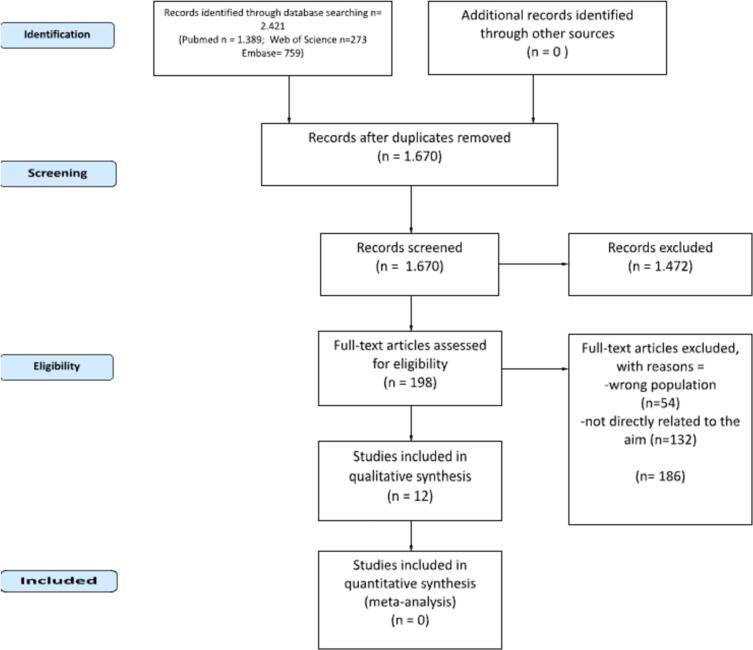
Research from 01/03/2020 to 07/10/2023 was conducted using Medline, Web of Science, and Embase databases, and adhering to PRISMA guidelines and the PICO framework. The study aimed to determine if SARS-CoV-2 infection is associated with worse outcomes in dementia patients. The protocol is registered in PROSPERO (CRD42022352481), and bias was evaluated using the Newcastle-Ottawa Scale.
Among 198 studies reviewed, only three met the criteria. Chen et al. (2023) identified higher mortality in SARS-CoV-2-infected dementia patients, while Merla et al. (2023) observed faster cognitive decline in infected individuals with increased hospital admissions. Additionally, Cascini et al. (2022) reported an increased risk of infection and significantly elevated mortality in dementia patients, highlighting comorbidities and antipsychotic medication use as key risk factors.
These limited data suggest higher mortality and cognitive decline in dementia patients following COVID-19, underscoring the need for extensive research in this area.
本系统评价分析了新冠病毒病(COVID-19)对痴呆症患者功能、认知、神经精神及健康相关结局的影响。研究假设感染严重急性呼吸综合征冠状病毒2(SARS-CoV-2)的痴呆症患者比未感染者的病情恶化更为明显。
使用医学文献数据库(Medline)、科学引文索引数据库(Web of Science)和荷兰医学文摘数据库(Embase)进行2020年3月1日至2023年10月7日期间的研究,并遵循系统评价和荟萃分析的首选报告项目(PRISMA)指南及PICO框架。该研究旨在确定SARS-CoV-2感染是否与痴呆症患者更差的结局相关。该方案已在国际前瞻性系统评价注册库(PROSPERO,注册号:CRD42022352481)注册,采用纽卡斯尔-渥太华量表评估偏倚。
在198项纳入评价的研究中,只有3项符合标准。陈等人(2023年)发现感染SARS-CoV-2的痴呆症患者死亡率更高,而梅拉等人(2023年)观察到感染者认知衰退更快且住院次数增加。此外,卡斯奇尼等人(2022年)报告痴呆症患者感染风险增加且死亡率显著升高,强调合并症和抗精神病药物的使用是关键风险因素。
这些有限的数据表明,COVID-19感染后的痴呆症患者死亡率更高且认知功能下降,凸显了该领域广泛研究的必要性。