Kang Xu, Yue Xiao-Ran, Wang Chen-Xi, Wang Jia-Rui, Zhao Jun-Ning, Yang Zhao-Peng, Fu Qin-Ke, Wu Chang-Sheng, Hu Wei, Li Yue-Zhong, Yue Xin-Jing
State Key Laboratory of Microbial Technology, Institute of Microbial Technology, Shandong University, Qingdao, 266237, People's Republic of China.
Taishan College, Shandong University, Jinan, 250100, China.
Microb Cell Fact. 2024 Dec 27;23(1):346. doi: 10.1186/s12934-024-02627-3.
Ribosome engineering is a semi-empirical technique used to select antibiotic-resistant mutants that exhibit altered secondary metabolism. This method has been demonstrated to effectively select mutants with enhanced synthesis of natural products in many bacterial species, including actinomycetes. Myxobacteria are recognized as fascinating producers of natural active products. However, it remains uncertain whether this technique is similarly effective in myxobacteria, especially for the heterologous production of epothilones in Myxococcus xanthus.
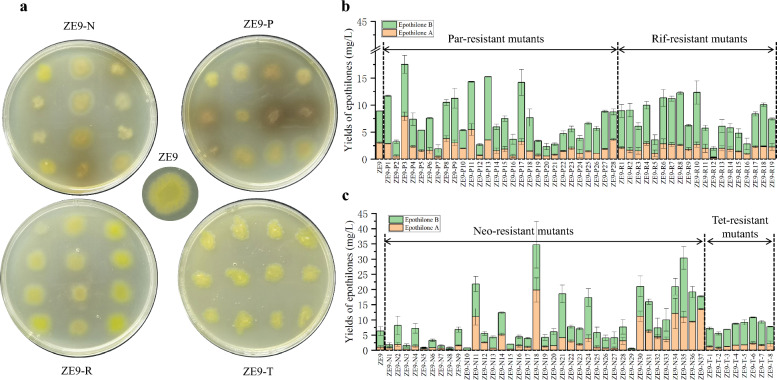
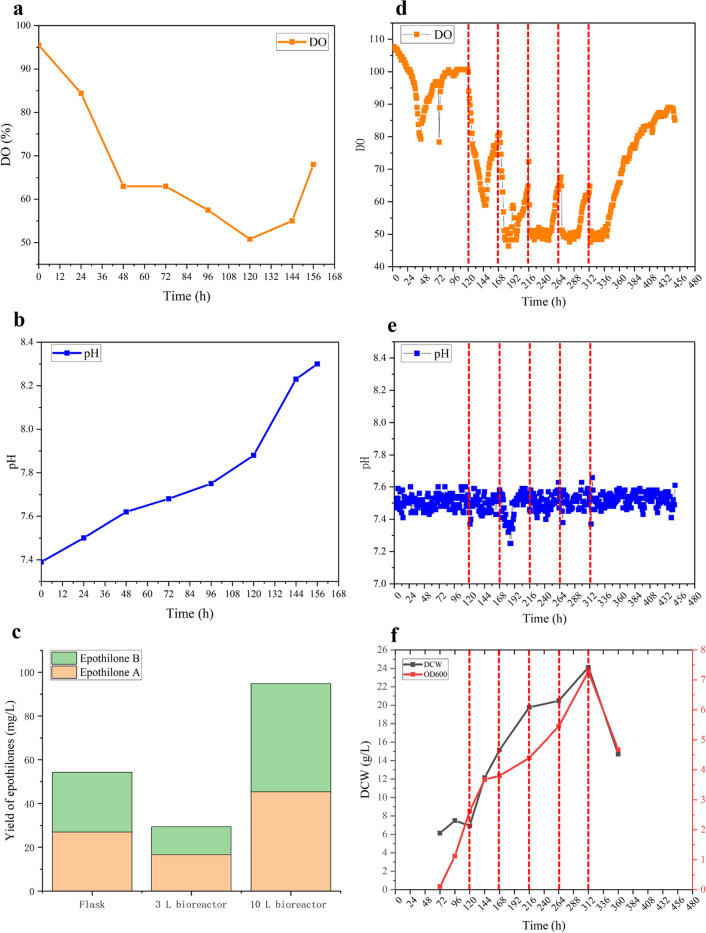
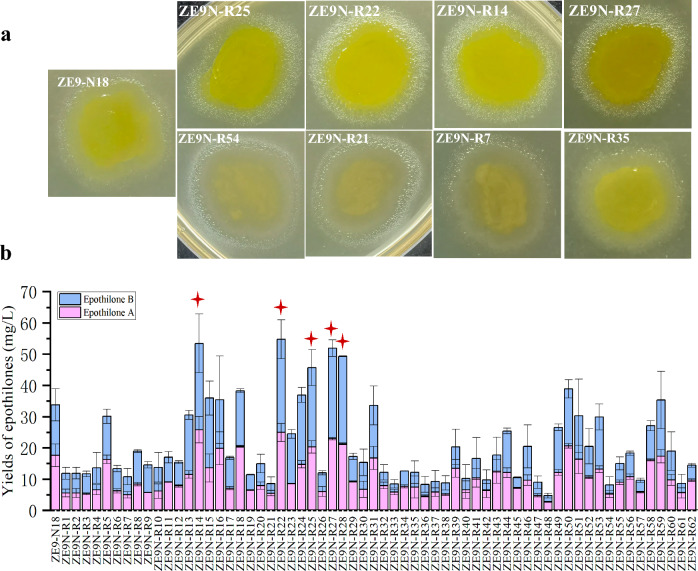
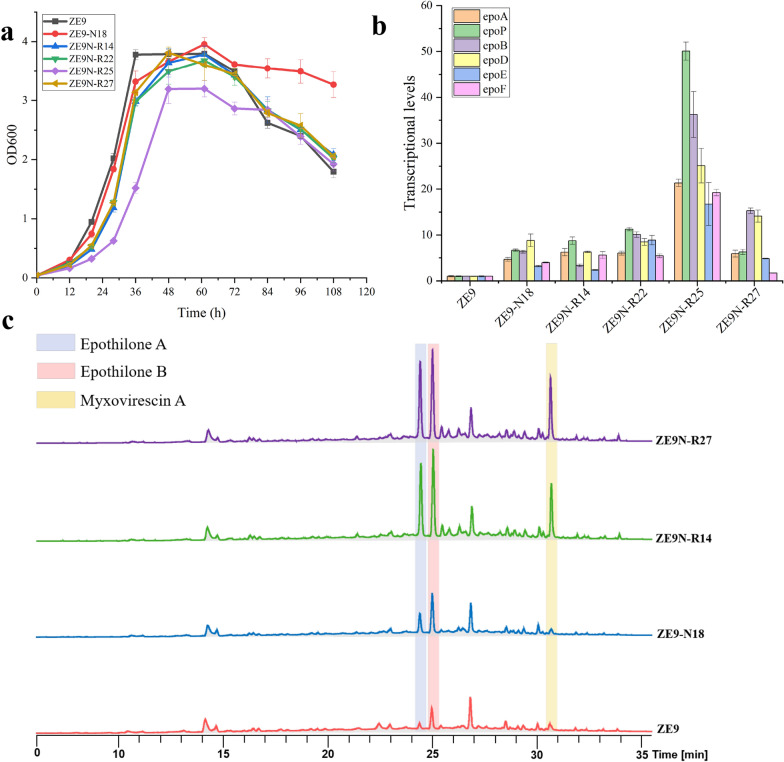
Antibiotics that target the ribosome and RNA polymerase (RNAP) were evaluated for ribosome engineering of the epothilone-producing strain M. xanthus ZE9. The production of epothilone was dramatically altered in different resistant mutants. We screened the mutants resistant to neomycin and rifampicin and found that the yield of epothilones in the resistant mutant ZE9N-R22 was improved by sixfold compared to that of ZE9. Our findings indicate that the improved growth of the mutants, the upregulation of epothilone biosynthetic genes, and specific mutations identified through genome re-sequencing may collectively contribute to the yield improvement. Ultimately, the total titer of epothilones achieved in a 10 L bioreactor reached 93.4 mg/L.
Ribosome engineering is an efficient approach to obtain M. xanthus strains with enhanced production of epothilones through various interference mechanisms. Here, we discuss the potential mechanisms of the semi-empirical method.
核糖体工程是一种半经验技术,用于筛选具有改变的次级代谢的抗生素抗性突变体。该方法已被证明能有效地在包括放线菌在内的许多细菌物种中筛选出天然产物合成增强的突变体。粘细菌被认为是天然活性产物的迷人生产者。然而,该技术在粘细菌中是否同样有效仍不确定,特别是对于在黄色粘球菌中异源生产埃坡霉素而言。
针对埃坡霉素生产菌株黄色粘球菌ZE9,评估了靶向核糖体和RNA聚合酶(RNAP)的抗生素用于核糖体工程。在不同的抗性突变体中,埃坡霉素的产量发生了显著变化。我们筛选了对新霉素和利福平抗性的突变体,发现抗性突变体ZE9N-R22中埃坡霉素的产量比ZE9提高了六倍。我们的研究结果表明,突变体生长的改善、埃坡霉素生物合成基因的上调以及通过基因组重测序鉴定的特定突变可能共同促成了产量的提高。最终,在10 L生物反应器中实现的埃坡霉素总滴度达到93.4 mg/L。
核糖体工程是一种通过各种干扰机制获得埃坡霉素产量提高的黄色粘球菌菌株的有效方法。在此,我们讨论了这种半经验方法的潜在机制。