Leung Hei-To, Kwok Sit-Yee, Shih Fong-Ying, Lun Kin-Shing, Yung Tak-Cheung, Tsao Sabrina
Department of Paediatrics and Adolescent Medicine, Hong Kong Children's Hospital, Ngau Tau Kok, Hong Kong.
Clinical Genetics Service Unit, Hong Kong Children's Hospital, Ngau Tau Kok, Hong Kong.
Ann Noninvasive Electrocardiol. 2025 Jan;30(1):e70009. doi: 10.1111/anec.70009.
Brugada syndrome (BrS) is an inherited channelopathy characterized by right precordial ST-segment elevation. This study investigates the clinical and genetic characteristics of children with BrS in Hong Kong.
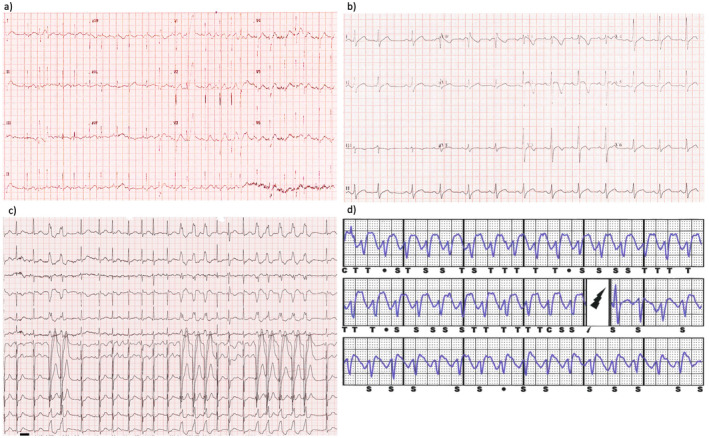
A retrospective review was conducted at the only tertiary pediatric cardiology center in Hong Kong from 2002 to 2022, including all pediatric BrS patients under 18 years old. The diagnosis of BrS was established with a type 1 ECG pattern detected spontaneously or induced by flecainide, excluding secondary causes.
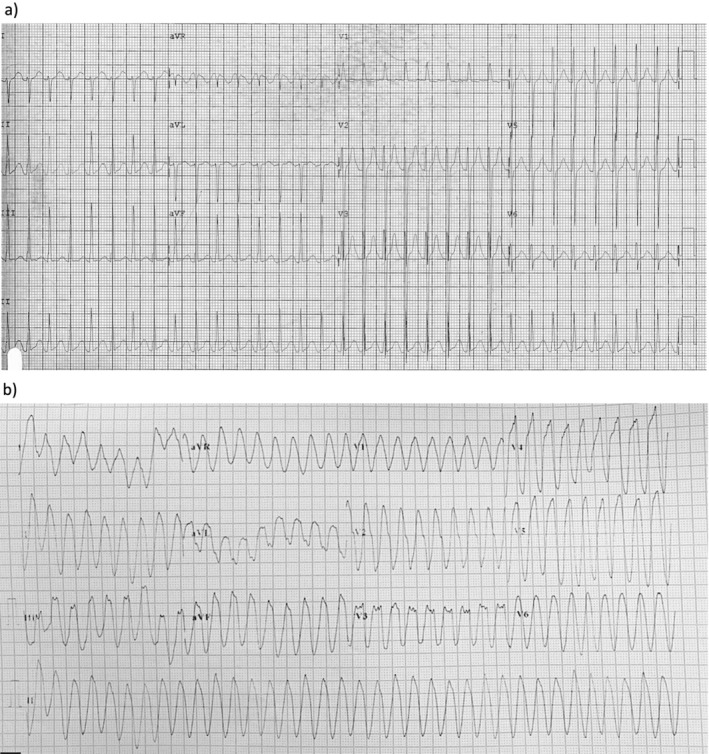
Eight probands of mean age 10 years old were identified. Male dominance was observed (6 boys vs. 2 girls). The mean follow-up duration was 4.6 years (Median 3.5 years). Patients had type 1 ECG pattern either spontaneously (n = 4) or provoked by flecainide (n = 4). Fever was present in seven patients at the initial presentation, and two patients experienced aborted cardiac arrest and one had symptomatic ventricular tachycardia. All symptomatic patients received implantable cardioverter-defibrillator placement. Five asymptomatic patients (62.5%) were diagnosed with BrS through ECG during febrile illness, and they remained asymptomatic following conservative management involving strict fever control and medication avoidance. Two patients with mixed phenotype (one with long QT syndrome and another with ectopic atrial tachycardia) required antiarrhythmics and one patient received transcatheter ablation for atrial tachycardia to achieve optimal arrhythmia control.
Fever plays a significant role in unmasking BrS in children. Asymptomatic children with BrS managed conservatively have a favorable prognosis. Difficult arrhythmia control was found in patients with mixed phenotype.
Brugada综合征(BrS)是一种遗传性通道病,其特征为右胸前导联ST段抬高。本研究调查了香港地区儿童BrS的临床和遗传特征。
对香港唯一的三级儿科心脏病中心2002年至2022年期间所有18岁以下的儿科BrS患者进行回顾性研究。BrS的诊断基于自发或由氟卡尼诱发的1型心电图模式,并排除继发原因。
共确定了8名先证者,平均年龄10岁。观察到男性占优势(6名男孩对2名女孩)。平均随访时间为4.6年(中位数3.5年)。患者出现自发的1型心电图模式(n = 4)或由氟卡尼诱发的1型心电图模式(n = 4)。7名患者初诊时伴有发热,2名患者发生心脏骤停未遂,1名患者出现有症状的室性心动过速。所有有症状的患者均接受了植入式心律转复除颤器植入。5名无症状患者(62.5%)在发热性疾病期间通过心电图诊断为BrS,在采取严格控制发热和避免用药的保守治疗后仍无症状。两名具有混合表型的患者(一名合并长QT综合征,另一名合并异位房性心动过速)需要使用抗心律失常药物,一名患者接受了经导管消融治疗房性心动过速以实现最佳心律失常控制。
发热在儿童BrS的暴露中起重要作用。保守治疗的无症状儿童BrS患者预后良好。混合表型患者的心律失常控制困难。