Williams Nick
National Library of Medicine, Lister Hill National Centre for Biomedical Communications, Maryland, United States of America.
J Bacteriol Parasitol. 2024;15(Suppl 27). Epub 2024 May 13.
Modifiable Areal Unit Problems are a major source of spatial uncertainty, but their impact on infectious diseases and epidemic detection is unknown.
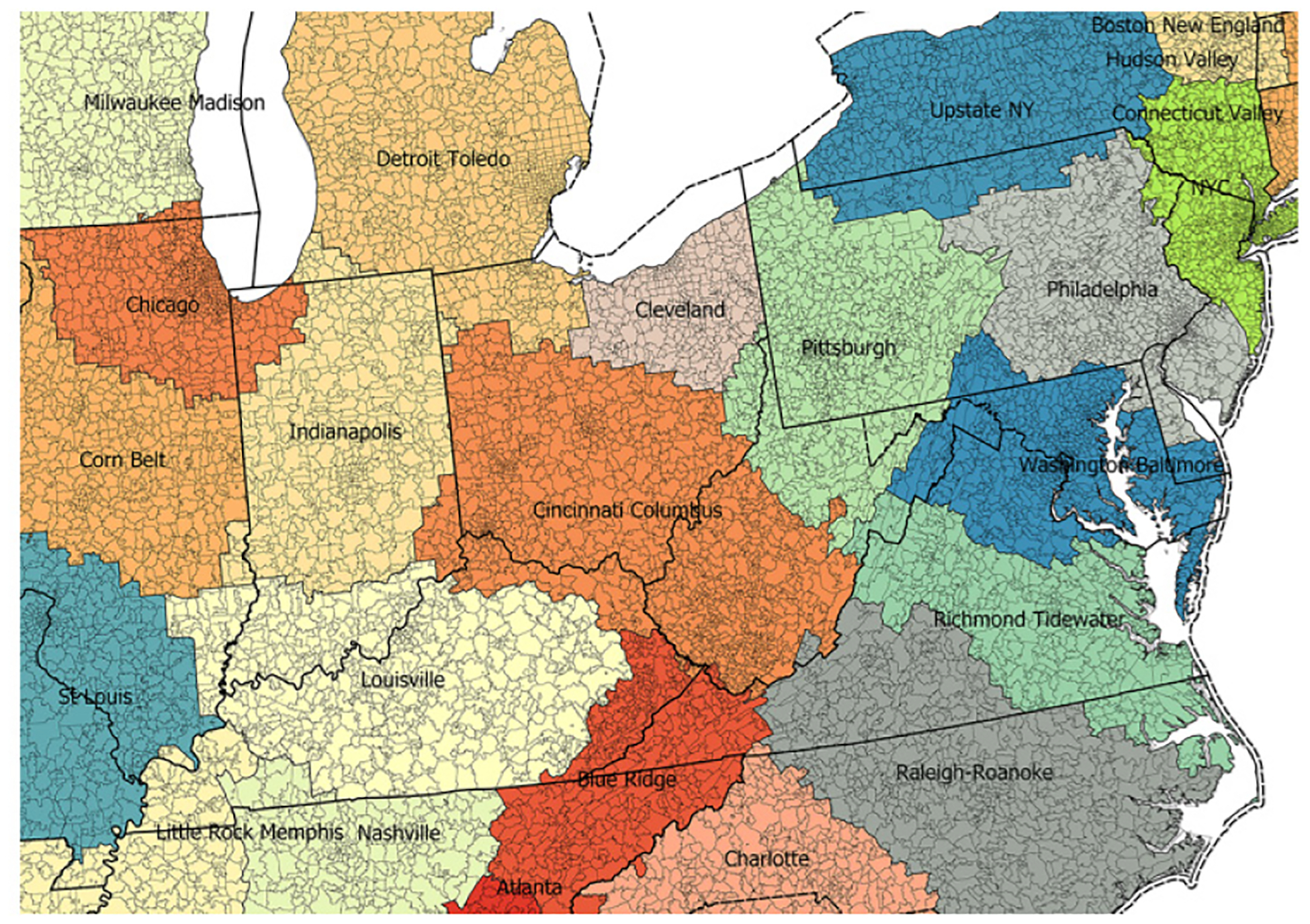
CMS claims (2016-2019) which included infectious disease codes learned through Systematized Nomenclature of Medicine Clinical Terms (SNOMED CT) were extracted and analysed at two different units of geography; states and 'home to work commute extent' mega regions. Analysis was per member per month. Rolling average above the series median within geography and agent of infection was used to assess peak detection. Spatial random forest was used to assess region segmentation by agent of infection.
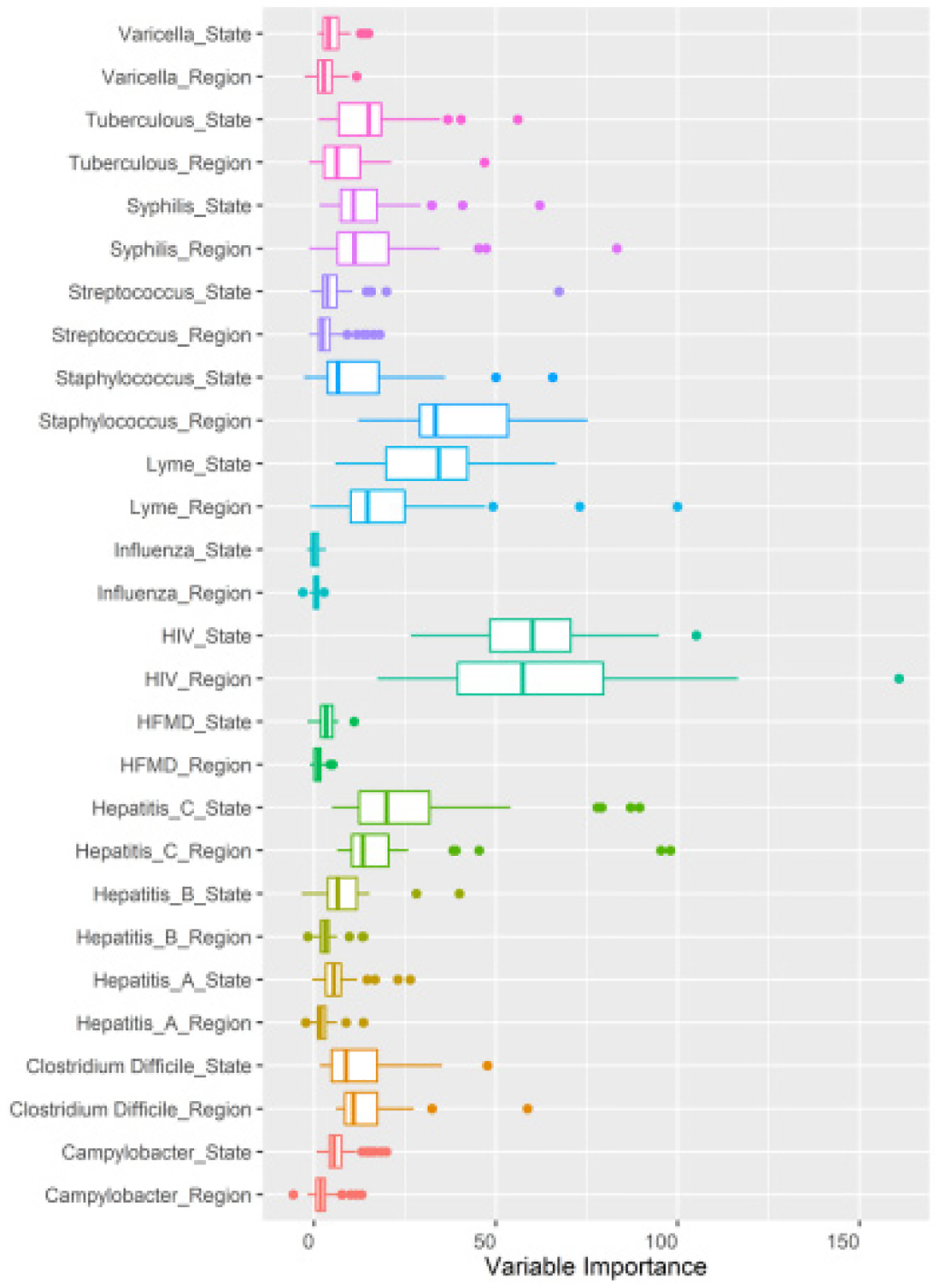
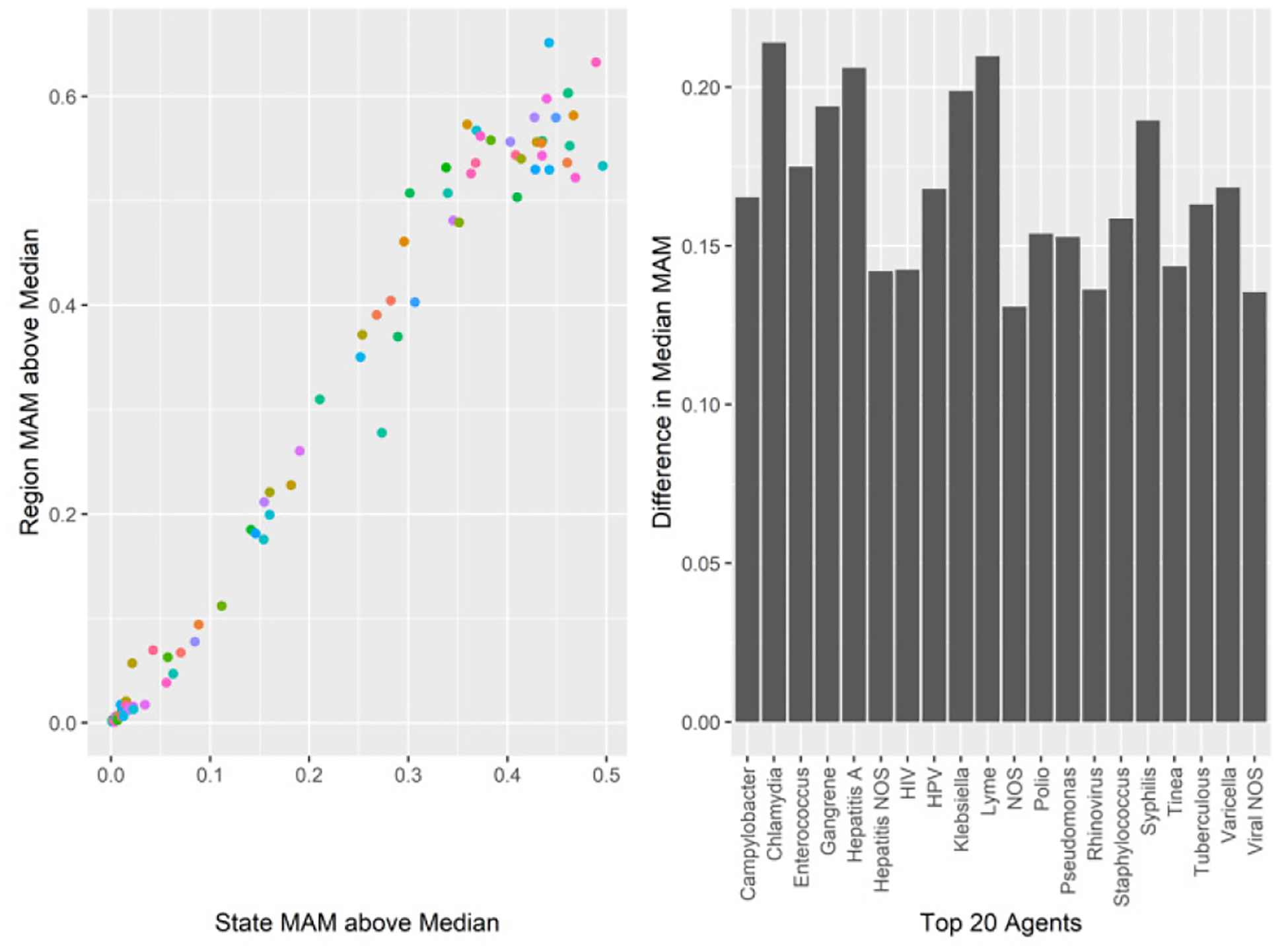
Mega-regions produced better peak discovery for most, but not all agents of infection. Variable importance and Gini measures from spatial random forest show agent-location discrimination between states and regions.
Researchers should defend their geographic unit of report used in peer review studies on an agent by-agent basis.
可修改区域单元问题是空间不确定性的主要来源,但其对传染病和疫情检测的影响尚不清楚。
提取并分析了2016 - 2019年医疗保险与医疗补助服务中心(CMS)的索赔数据,这些数据包含通过医学临床术语系统命名法(SNOMED CT)得知的传染病代码,分析在两个不同的地理单元进行;州以及“上班通勤范围”大区域。分析按每月每个参保人进行。使用地理区域和感染源内高于序列中位数的滚动平均值来评估峰值检测。空间随机森林用于评估按感染源进行的区域分割。
对于大多数但并非所有感染源,大区域能产生更好的峰值发现。空间随机森林的变量重要性和基尼系数显示了州和区域之间感染源位置的差异。
研究人员应在同行评审研究中逐个感染源地为所使用的地理报告单元进行辩护。