Sun Siwei, Hou Xinyi, Li Ke, Huang Chenqi, Rong Yu, Bi Jiao, Li Xueping, Wu Daocheng
Institute of Basic and Translational Medicine, Xi'an Medical University, Xi'an 710021, China.
Xi'an Key Laboratory for Prevention and Treatment of Common Aging Diseases, Translational and Research Centre for Prevention and Therapy of Chronic Disease, Xi'an Medical University, Xi'an 710021, China.
J Funct Biomater. 2024 Dec 21;15(12):388. doi: 10.3390/jfb15120388.
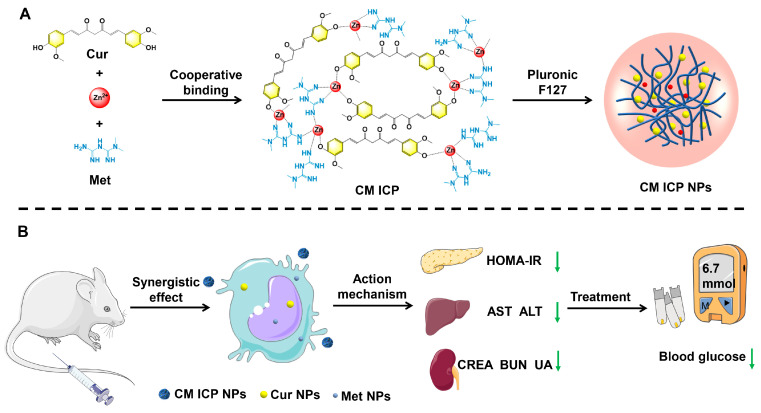
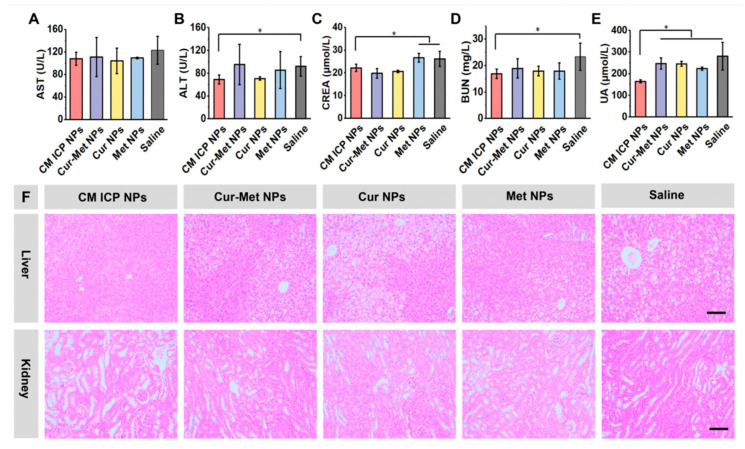
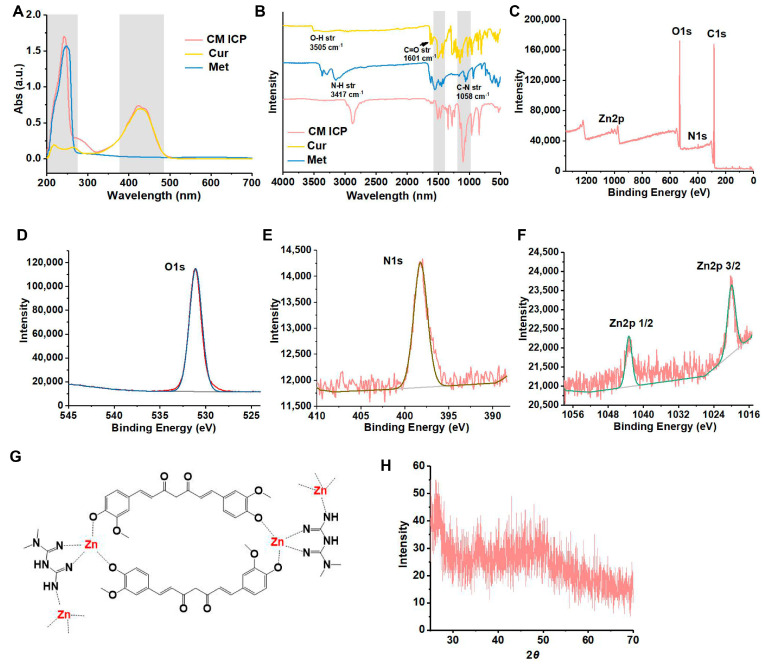
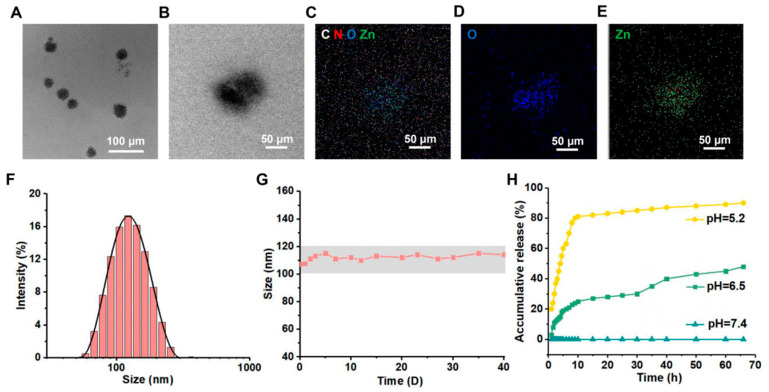
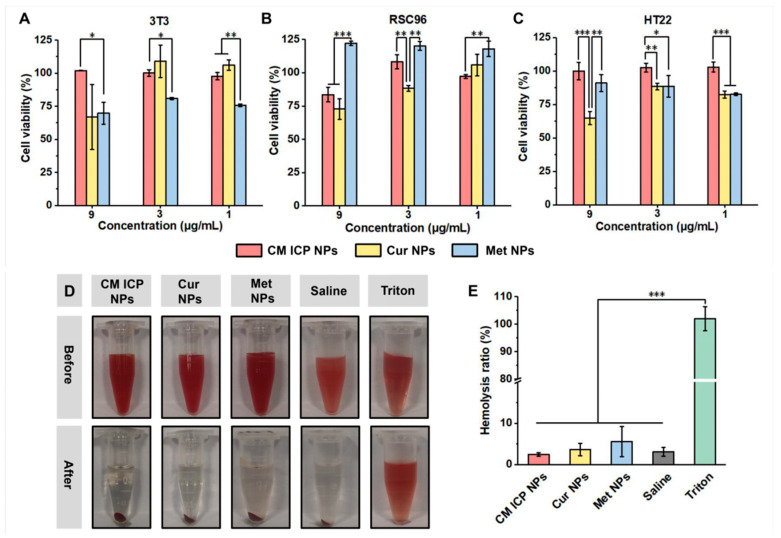
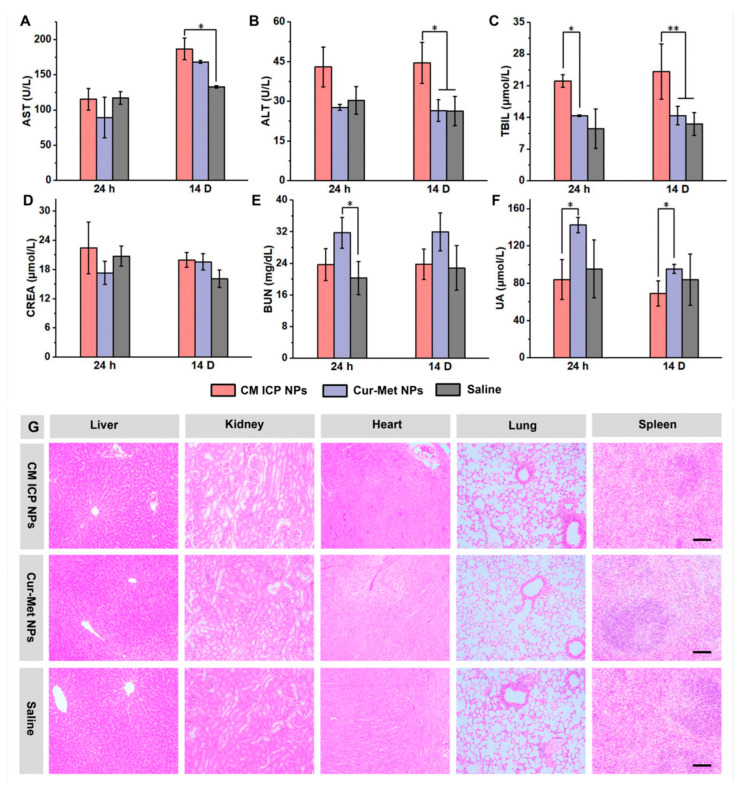
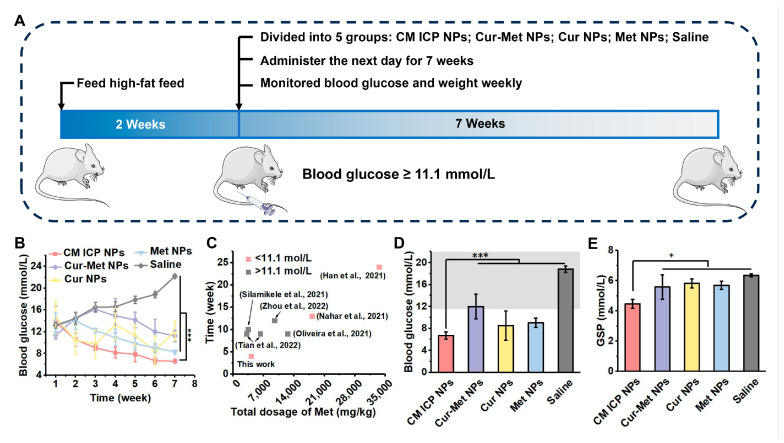
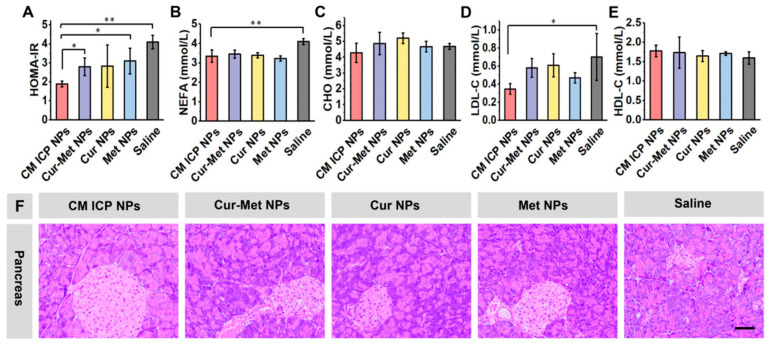
Metformin (Met) is one of the most commonly prescribed first-line drugs for diabetes treatment. However, it has several issues, including low bioavailability, therapeutic platform, and side effects at high doses. In order to improve the therapeutic efficiency of Met, this study proposes a strategy of using Met and curcumin (Cur) to prepare Cur-Zn(II)-Met infinite coordination polymer nanoparticles (CM ICP NPs), and combining this with intraperitoneal injections, for the treatment of diabetic mice. Fourier transform infrared (FTIR) spectroscopy, X-ray photoelectron spectroscopy (XPS), transmission electron microscopy (TEM), nanoparticle analysis, cytotoxicity experiments, and mice experiments were used to investigate structure, properties, and application effects. The results showed that CM ICP NPs exhibit a high drug encapsulation rate (100%), good stability, and an absence of in vivo and in vitro toxicity. The blood glucose level of diabetic mice after treatment was reduced to 6.7 ± 0.65 mmol/L at the seventh week. In terms of therapeutic mechanism, it appears that Met and Cur can synergistically regulate blood glucose in mice from multiple paths. This study provides a promising method for the treatment of diabetes using Met and other drugs.
二甲双胍(Met)是糖尿病治疗中最常用的一线处方药之一。然而,它存在一些问题,包括生物利用度低、治疗平台有限以及高剂量时的副作用。为了提高二甲双胍的治疗效果,本研究提出了一种策略,即使用二甲双胍和姜黄素(Cur)制备姜黄素-锌(II)-二甲双胍无限配位聚合物纳米颗粒(CM ICP NPs),并将其与腹腔注射相结合,用于治疗糖尿病小鼠。采用傅里叶变换红外(FTIR)光谱、X射线光电子能谱(XPS)、透射电子显微镜(TEM)、纳米颗粒分析、细胞毒性实验和小鼠实验来研究其结构、性质和应用效果。结果表明,CM ICP NPs具有较高的药物包封率(100%)、良好的稳定性,且在体内外均无毒性。治疗后第七周,糖尿病小鼠的血糖水平降至6.7±0.65 mmol/L。在治疗机制方面,二甲双胍和姜黄素似乎可以从多条途径协同调节小鼠的血糖。本研究为使用二甲双胍和其他药物治疗糖尿病提供了一种有前景的方法。