Alarifi Sehad N, Alyamani Essam Jamil, Alarawi Mohammed, Alquait Azzam A, Alolayan Mohammed A, Aldossary Ahmad M, El-Rahman Randa A Abd, Mir Rashid
Departments of Food and Nutrition Science, Al-Quwayiyah College of Sciences and Humanities, Shaqra University, Al-Quwayiyah 11971, Saudi Arabia.
Wellness & Preventive Medicine Institute Health Sector King Abdulaziz City for Science and Technology (KACST), Riyadh 11442, Saudi Arabia.
Metabolites. 2024 Dec 21;14(12):720. doi: 10.3390/metabo14120720.
BACKGROUND/OBJECTIVES: Type 2 diabetes mellitus (T2DM) is a chronic metabolic disorder associated with gut dysbiosis. To investigate the association between gut microbiota and T2DM in a Saudi Arabian population.
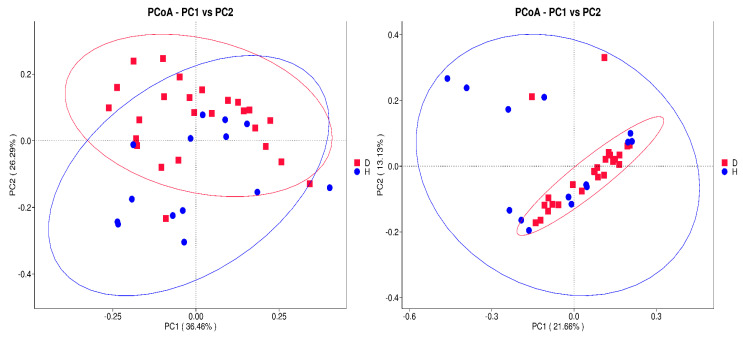
We conducted a comparative analysis of fecal microbiota from 35 individuals, including both T2DM patients and healthy controls. 16S rRNA gene sequencing was employed to characterize the microbial community structure.
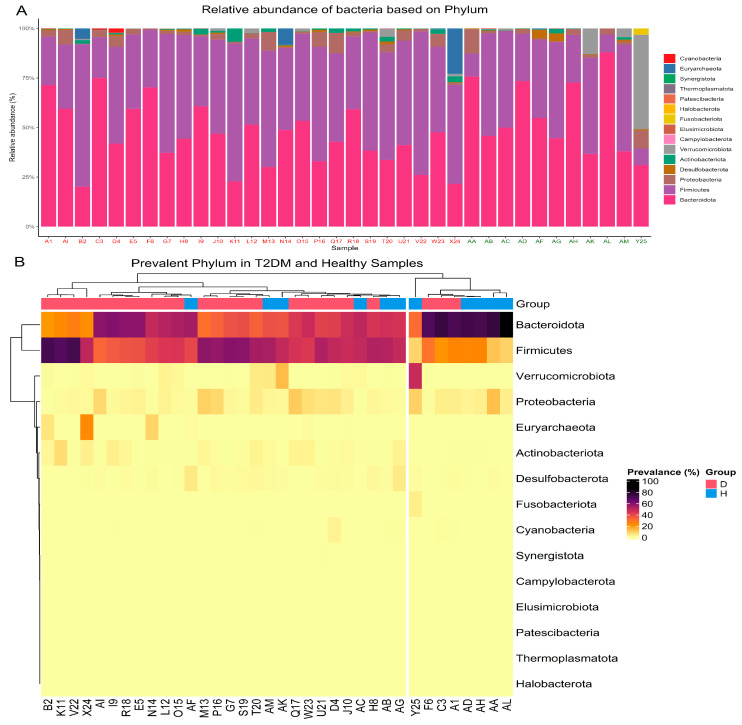
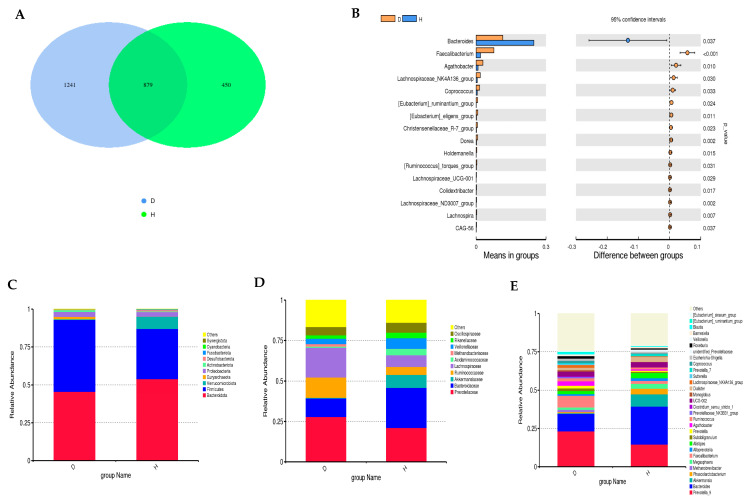
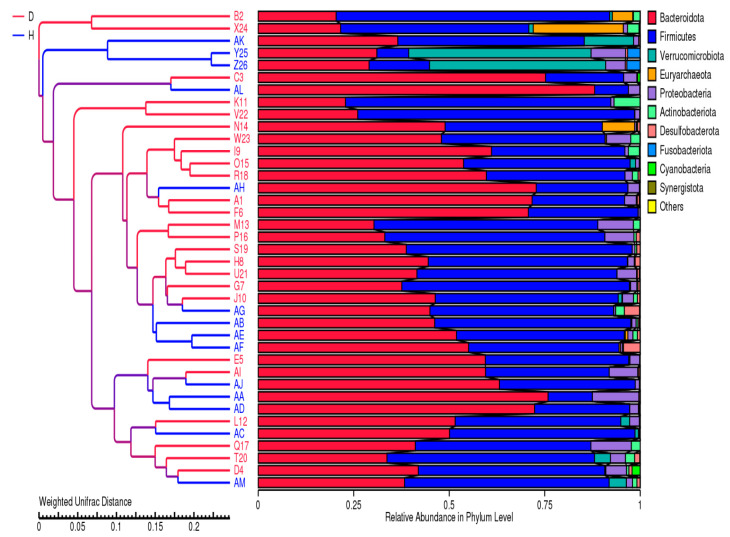
Our findings revealed significant differences in microbial composition between the two groups. The T2DM group exhibited a higher abundance of Firmicutes and lower levels of Bacteroidetes compared to the healthy control group. At the genus level, T2DM patients showed a decrease in butyrate-producing bacteria such as Bacteroides and Akkermansia, while an increase in Ruminococcus and Prevotella was observed. Additionally, the T2DM group had a higher abundance of Faecalibacterium, Agathobacter, and Lachnospiraceae, along with a lower abundance of Bacteroides.
These results suggest that alterations in gut microbiota composition may contribute to the development of T2DM in the Saudi Arabian population. Further large-scale studies are needed to validate these findings and explore potential therapeutic interventions targeting the gut microbiome.
背景/目的:2型糖尿病(T2DM)是一种与肠道菌群失调相关的慢性代谢紊乱疾病。旨在研究沙特阿拉伯人群中肠道微生物群与T2DM之间的关联。
我们对35名个体(包括T2DM患者和健康对照)的粪便微生物群进行了比较分析。采用16S rRNA基因测序来表征微生物群落结构。
我们的研究结果显示两组之间微生物组成存在显著差异。与健康对照组相比,T2DM组厚壁菌门丰度较高,拟杆菌门水平较低。在属水平上,T2DM患者中产生丁酸盐的细菌如拟杆菌属和阿克曼氏菌属减少,而瘤胃球菌属和普雷沃氏菌属增加。此外,T2DM组粪杆菌属、阿加西杆菌属和毛螺菌科的丰度较高,拟杆菌属的丰度较低。
这些结果表明肠道微生物群组成的改变可能促成沙特阿拉伯人群中T2DM的发生。需要进一步的大规模研究来验证这些发现,并探索针对肠道微生物群的潜在治疗干预措施。