Panny Lauren E, Piper Ashley E, Gardner Christina L, Burke Crystal W
Virology Division, United States Army Medical Research Institute of Infectious Diseases (USAMRIID), Fort Detrick, Frederick, MD 21702, USA.
Methods Protoc. 2024 Dec 21;7(6):105. doi: 10.3390/mps7060105.
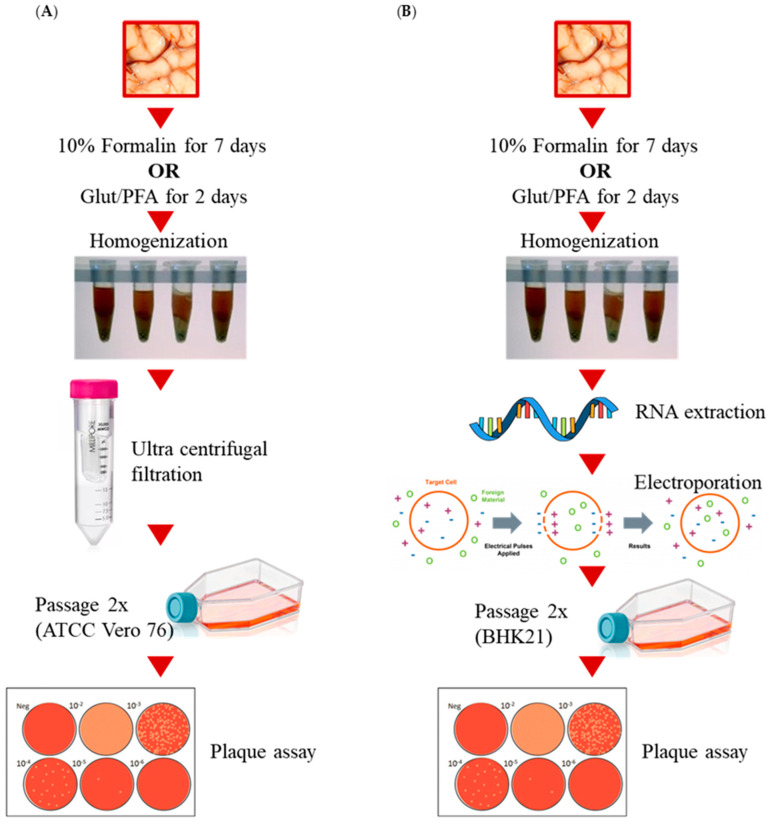
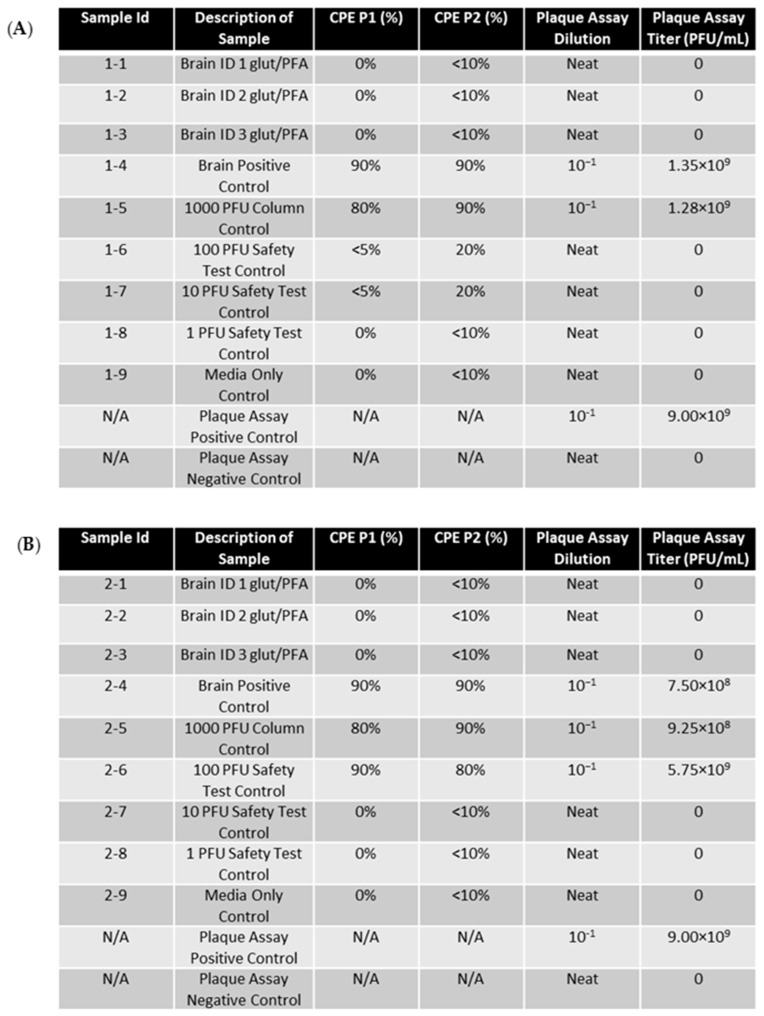
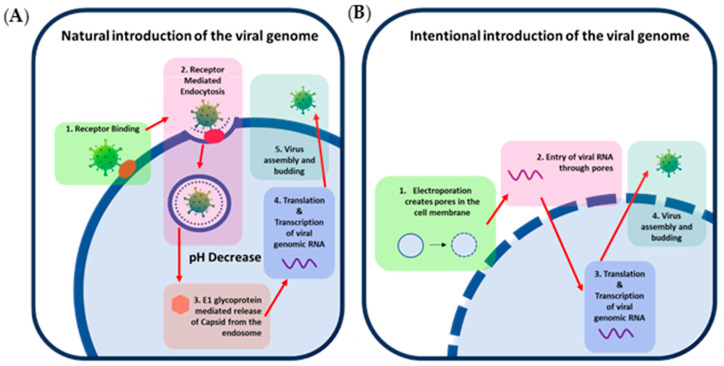
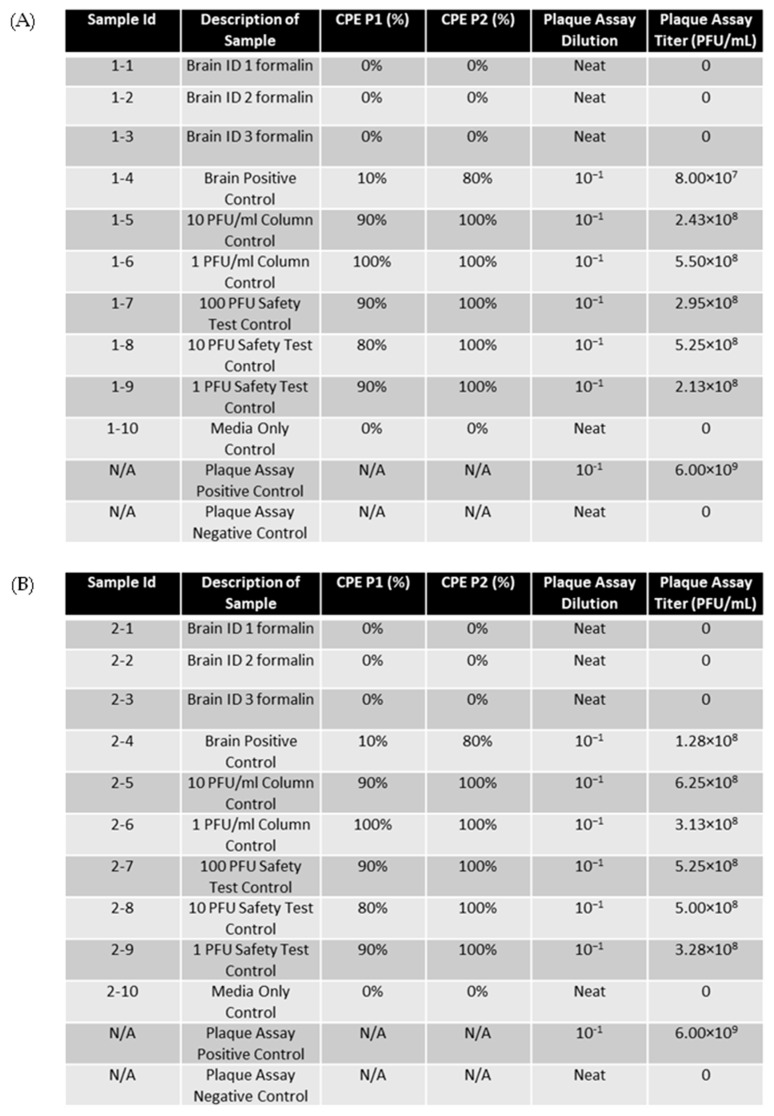
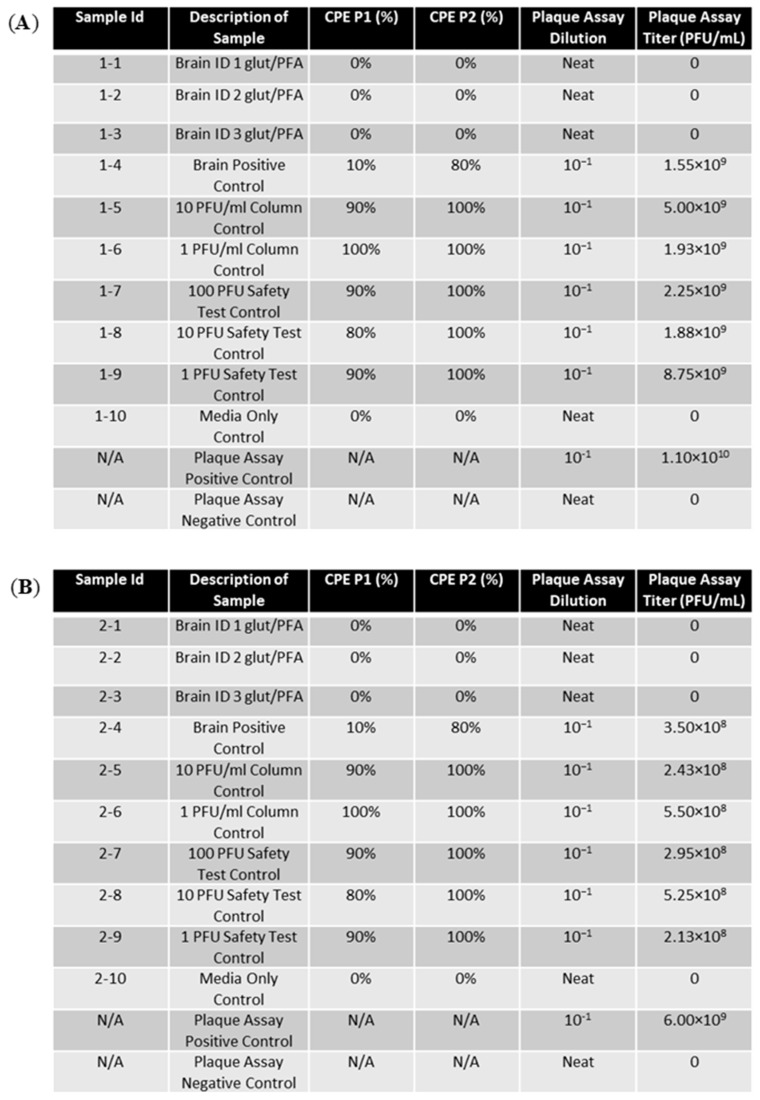
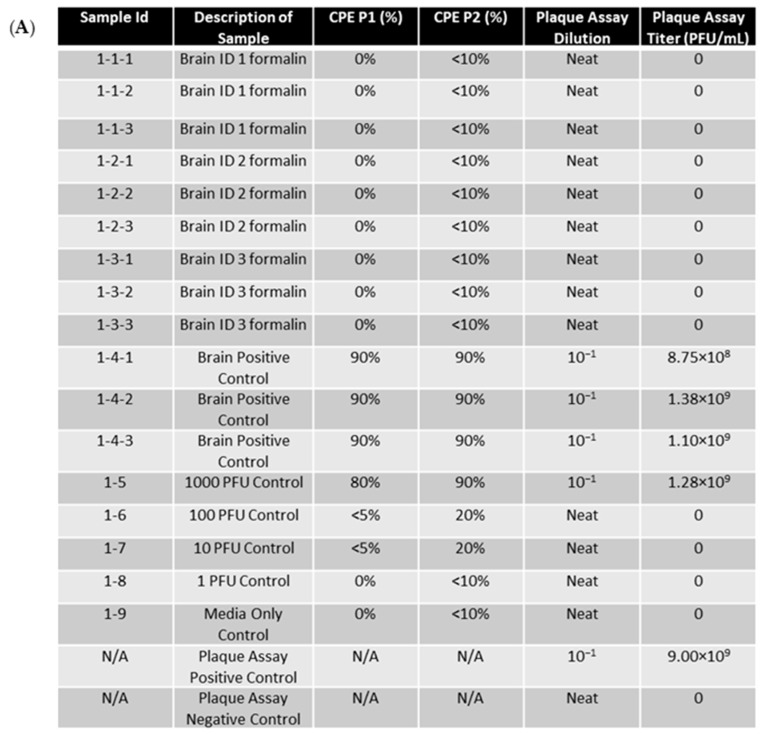
Recommendations released by the CDC in 2023 address the need to demonstrate that the RNA genome of positive-strand RNA viruses is inactivated in addition to viral particles. This recommendation is in response to the similarities between host mRNA and the viral genome that allow the viral RNA to be used as a template by host replication mechanisms to produce infectious viruses; therefore, there is concern that through artificial introduction into host cells, active positive-strand RNA genomes can be utilized to produce infectious viruses out of a containment facility. Utilizing 10% formalin for 7 days or 2.5% glutaraldehyde/2% paraformaldehyde in 0.1 M cacodylate buffer (glut/PFA) for 2 days to fix eastern equine encephalitis virus (EEEV)-infected non-human primate (NHP) brain tissue was found to effectively inactivate EEEV particles and genomic RNA. The methods assessed in this paper outline an effective means to validate both genomic RNA and viral particle inactivation.
美国疾病控制与预防中心(CDC)2023年发布的建议指出,除了病毒颗粒外,还需要证明正链RNA病毒的RNA基因组已失活。这项建议是针对宿主mRNA与病毒基因组之间的相似性而提出的,这种相似性使得病毒RNA能够被宿主复制机制用作模板来产生感染性病毒;因此,人们担心通过人工引入宿主细胞,活跃的正链RNA基因组可被用于在隔离设施外产生感染性病毒。研究发现,使用10%福尔马林处理7天或在0.1 M二甲胂酸钠缓冲液(戊二醛/多聚甲醛)中使用2.5%戊二醛/2%多聚甲醛处理2天来固定感染东部马脑炎病毒(EEEV)的非人灵长类动物(NHP)脑组织,可有效灭活EEEV颗粒和基因组RNA。本文评估的方法概述了一种验证基因组RNA和病毒颗粒失活的有效手段。