Gomez Rapson, Brown Taylor
School of Health Sciences and Psychology, Federation University, Ballarat, VIC 3350, Australia.
Applied Health, School of Health and Biomedical Science, RMIT University, Melbourne, VIC 3001, Australia.
Pediatr Rep. 2024 Dec 10;16(4):1115-1133. doi: 10.3390/pediatric16040095.
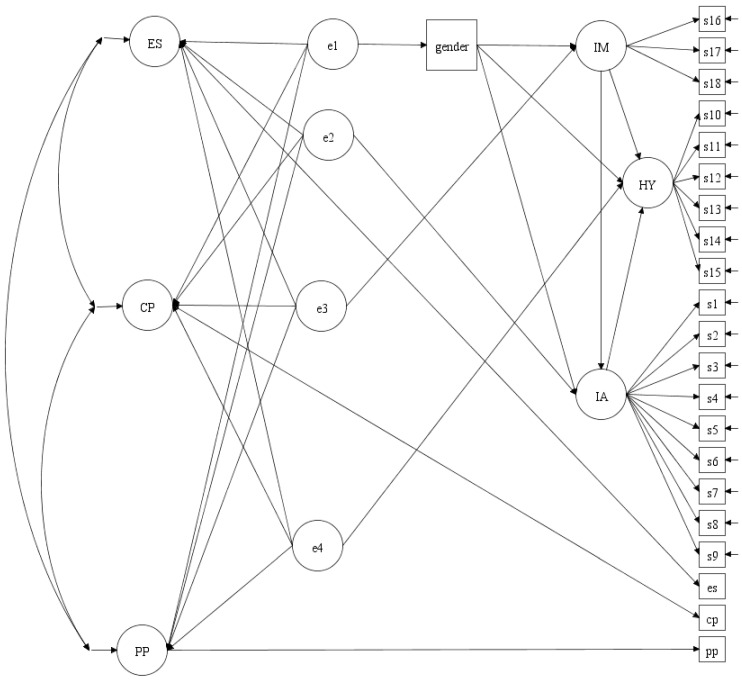
The present study investigated the incremental validity of the ADHD dimensions of inattention (IA), hyperactivity (HY), and impulsivity (IM) in the predictions of emotion symptoms (ESs), conduct problems (CPs), and peer problems (PPs) in adolescents based on parent, teacher, and self- ratings. A total of 214 ratings were collected from adolescents, their parents, and teachers in Australia. A structural equation modeling approach was employed to evaluated incremental validity. The findings revealed that, controlling for gender, IM contributed moderate, low, and low levels of variance in predicting ESs based on parent, teacher, and self-ratings, respectively. Additionally, IM contributed moderate, substantial, and moderate levels of variance to CP predictions based on parent, teacher, and self-ratings, respectively. Furthermore, after controlling for gender, IM, and HY, parent-rated IA contributed a low level of variance to the prediction of ESs, while teacher and self-rated IA did not contribute significantly to the prediction of ESs, CPs, or PPs. The findings underscore the differential predictive validity of ADHD dimensions across informants and outcomes, highlighting impulsivity's stronger association with conduct problems and emotional symptoms. These results have theoretical and practical implications for understanding ADHD-related risks in adolescence and tailoring interventions accordingly.
本研究基于家长、教师和自我评定,调查了注意缺陷多动障碍(ADHD)的注意力不集中(IA)、多动(HY)和冲动(IM)维度在预测青少年情绪症状(ESs)、行为问题(CPs)和同伴问题(PPs)方面的增量效度。在澳大利亚,共收集了214名青少年及其家长和教师的评定。采用结构方程建模方法评估增量效度。研究结果显示,在控制性别后,IM分别在基于家长、教师和自我评定预测ESs时,解释了中等、低和低水平的方差。此外,IM分别在基于家长、教师和自我评定预测CPs时,解释了中等、大量和中等水平的方差。此外,在控制性别、IM和HY后,家长评定的IA在预测ESs时解释的方差水平较低,而教师和自我评定的IA在预测ESs、CPs或PPs时均未做出显著贡献。研究结果强调了ADHD各维度在不同信息提供者和结果方面的差异预测效度,突出了冲动与行为问题和情绪症状的更强关联。这些结果对于理解青少年ADHD相关风险并据此调整干预措施具有理论和实践意义。