Li Yongjie, Zeng Min, Qin Yinan, Feng Fen, Wei Hailiang
School of Pharmacy, Shaoyang University, Shaoyang, 422000, Hunan, China.
Southwest Hunan Research Center of Engineering for Development and Utilization of Traditional Chinese Medicine, Shaoyang, 422000, Hunan, China.
Discov Oncol. 2024 Dec 27;15(1):841. doi: 10.1007/s12672-024-01728-0.
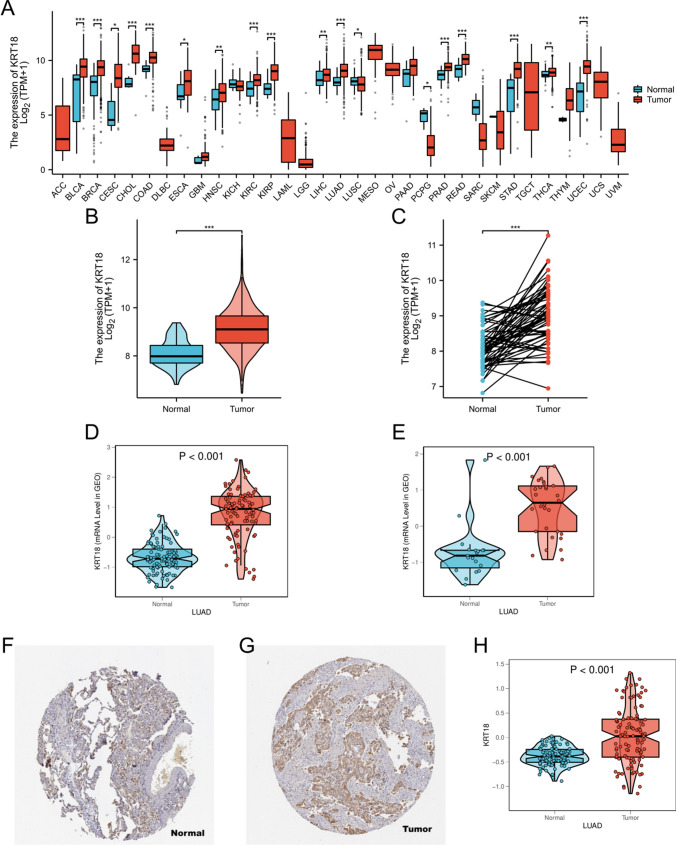
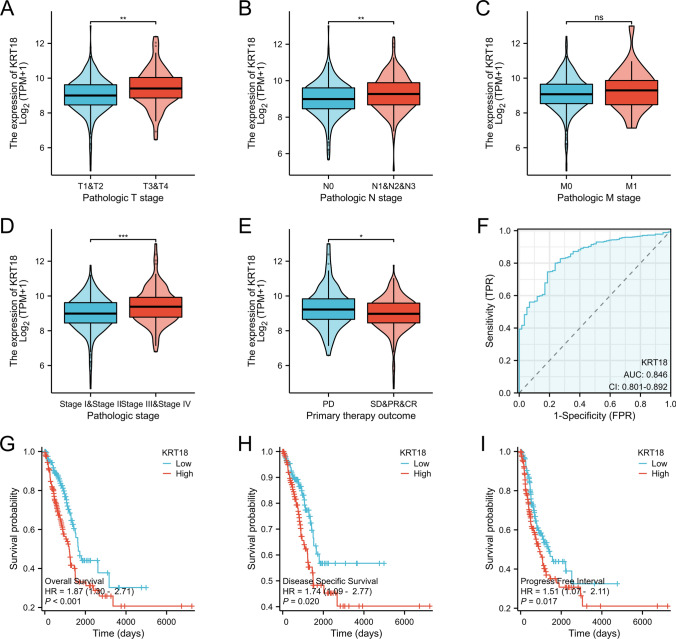
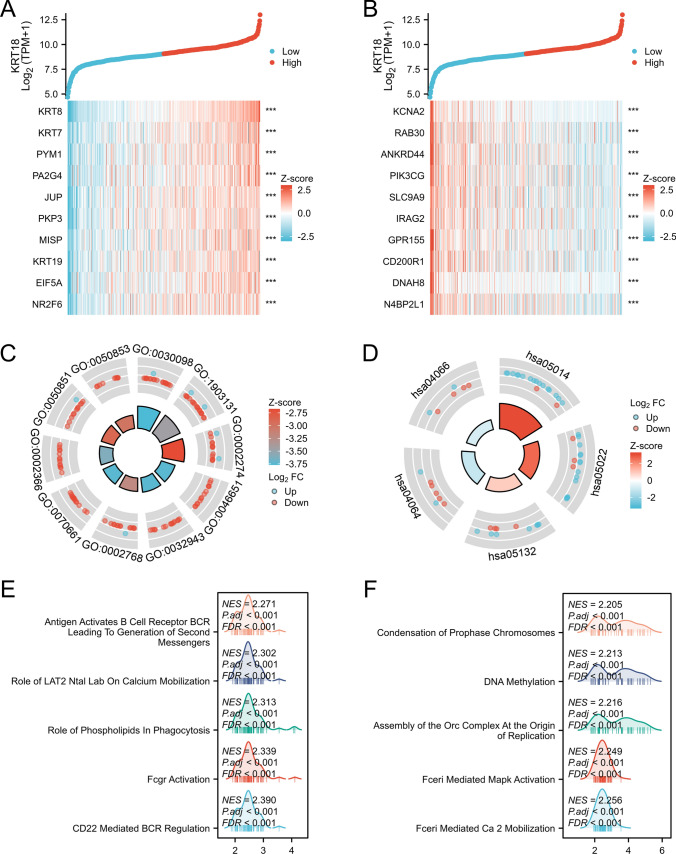
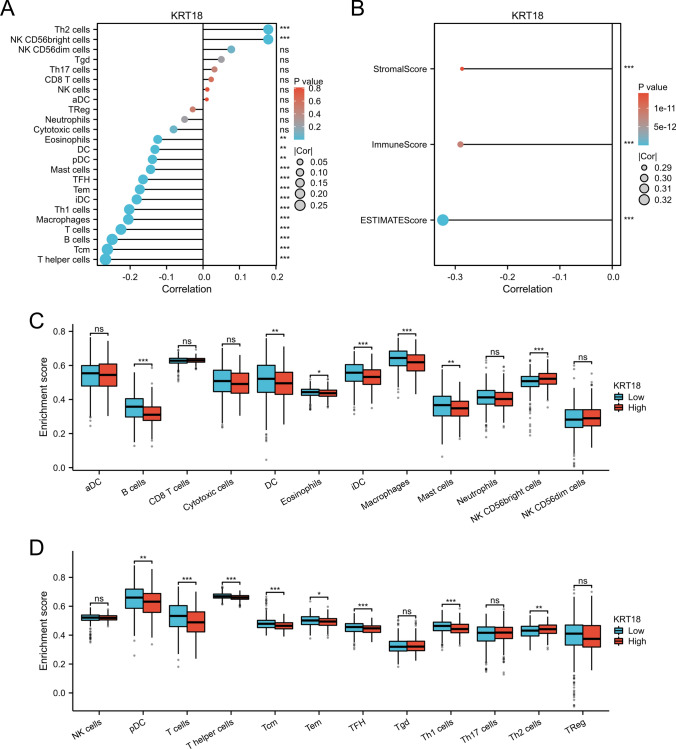
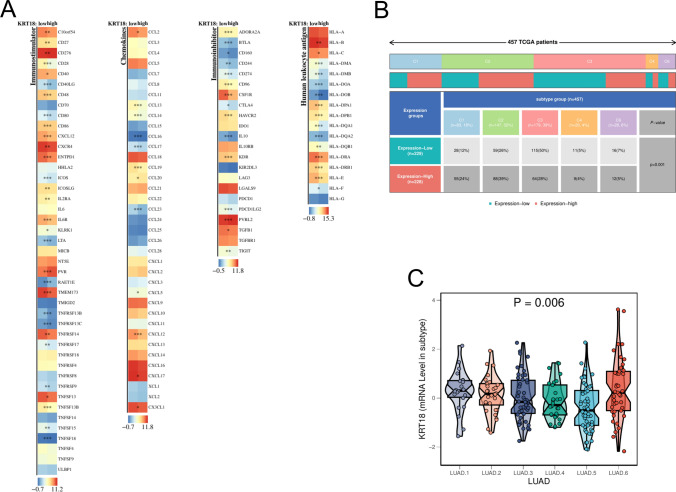
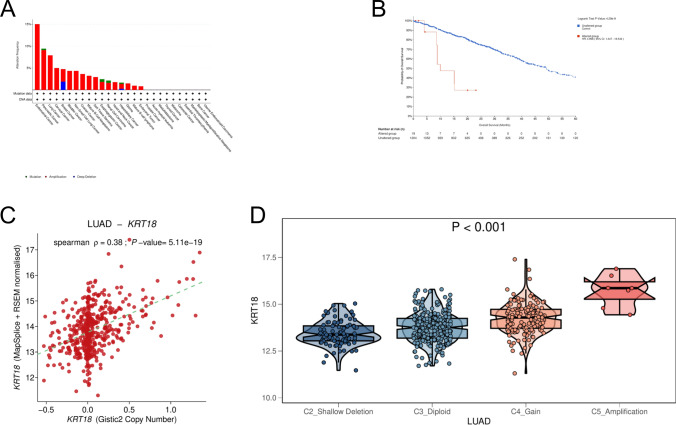
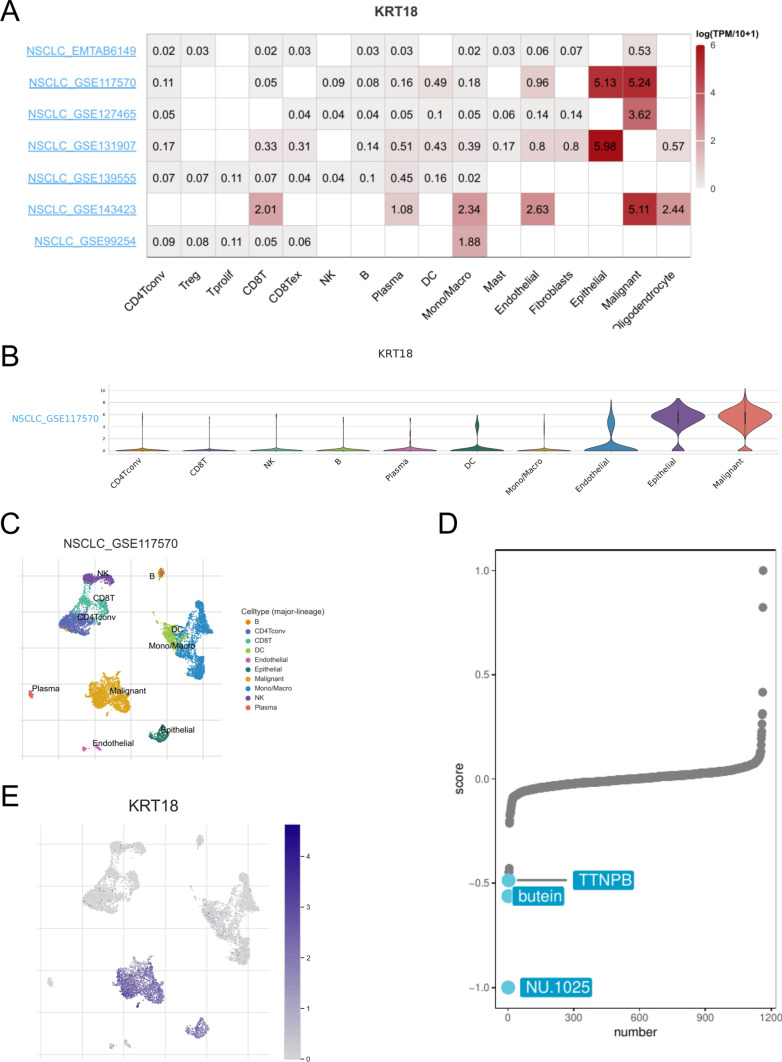
Lung adenocarcinoma (LUAD) represents one of the most common subtypes of lung cancer with high rates of incidence and mortality, which contributes to substantial health and economic demand across the globe. Treatment today mainly consists of surgery, radiotherapy, and chemotherapy, but their efficacy in advanced stages is often suboptimal and emphasizes the clear need for new biomarkers and therapeutic targets. Using comprehensive bioinformatics analyses consisting of the Cancer Genome Atlas (TCGA), Gene Expression Omnibus (GEO), Human Protein Atlas (HPA) and Clinical Proteomic Tumor Analysis Consortium (CPTAC), immune infiltration analysis and functional enrichment analysis, and single-cell analysis, we examined the potential of keratin 18 (KRT18) as a candidate biomarker in advanced LUAD. KRT18 was significantly elevated in LUAD tissue relative to normal adjacent tissue (p < 0.05), and its expression was correlated with poor clinical-pathological features and inferior prognostic outcome. Furthermore, KRT18 expression was associated with several populations of immune cells, suggesting KRT18 may contribute to the local tumor microenvironment and potentially pathways of immune evasion. Survival analysis indicated that elevated KRT18 expression correlated with poor overall survival (OS), disease-specific survival (DSS), and progression-free interval (PFI), reinforcing its legitimacy as a prognostic tool (AUC = 0.846). Importantly, gene enrichment analysis found KRT18-associated genes enriched for pathways associated with lymphocyte differentiation and immune response pathways, which provides mechanistic insight into biological effects attributed to KRT18. Notably, NU.1025 has demonstrated the capability of reversing KRT18-modulated oncogenic features, and targeted therapeutic strategies can be developed moving forward. In conclusion, our data demonstrate that KRT18 has utility as a potential biomarker but may also serve as a therapeutic target in LUAD and merit further investigation into underlying mechanistic functions and potential therapeutic roles in the clinic.
肺腺癌(LUAD)是肺癌最常见的亚型之一,发病率和死亡率都很高,在全球范围内造成了巨大的健康和经济需求。目前的治疗主要包括手术、放疗和化疗,但它们在晚期的疗效往往不理想,这凸显了对新的生物标志物和治疗靶点的迫切需求。通过综合利用癌症基因组图谱(TCGA)、基因表达综合数据库(GEO)、人类蛋白质图谱(HPA)和临床蛋白质组肿瘤分析联盟(CPTAC)进行生物信息学分析、免疫浸润分析和功能富集分析以及单细胞分析,我们研究了角蛋白18(KRT18)作为晚期LUAD候选生物标志物的潜力。相对于相邻正常组织,KRT18在LUAD组织中显著升高(p < 0.05),其表达与不良的临床病理特征和较差的预后结果相关。此外,KRT18表达与几种免疫细胞群体相关,这表明KRT18可能有助于局部肿瘤微环境以及潜在的免疫逃逸途径。生存分析表明,KRT18表达升高与总生存期(OS)、疾病特异性生存期(DSS)和无进展生存期(PFI)较差相关,强化了其作为预后工具的合理性(AUC = 0.846)。重要的是,基因富集分析发现与KRT18相关的基因在与淋巴细胞分化和免疫反应途径相关的通路上富集,这为KRT18的生物学效应提供了机制性见解。值得注意的是,NU.1025已证明具有逆转KRT18调节的致癌特征的能力,未来可以开发靶向治疗策略。总之,我们的数据表明KRT18可用作潜在的生物标志物,但也可能作为LUAD的治疗靶点,值得进一步研究其潜在的机制功能和临床治疗作用。