Toprak Ahmet
Department of Electricity and Energy, Selcuk University, Konya, Turkey.
Sci Rep. 2024 Dec 28;14(1):30815. doi: 10.1038/s41598-024-81213-4.
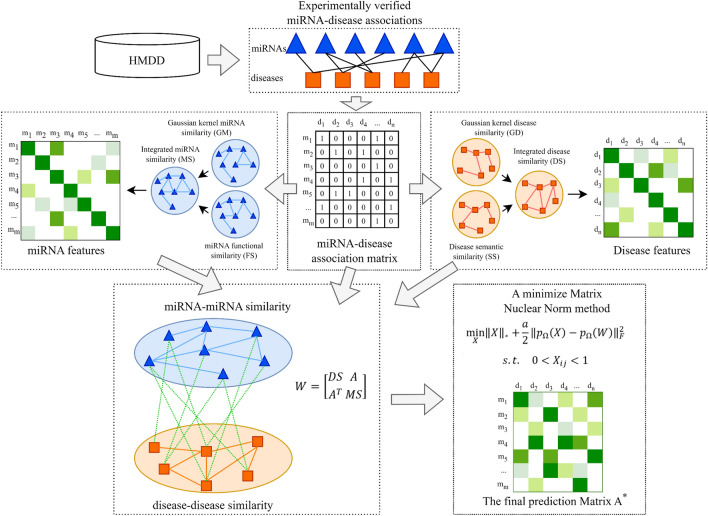
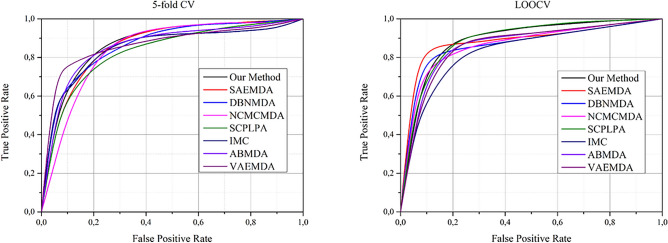
microRNAs (miRNAs) are non-coding RNA molecules that influence the development and progression of many diseases. Research have documented that miRNAs have a significant role in the prevention, diagnosis, and treatment of complex human diseases. Recently, scientists have devoted extensive resources to attempting to find the connections between miRNAs and diseases. Since the experimental methods used to discover that new miRNA-disease associations are time-consuming and expensive, many computational methods have been developed. In this research, a novel computational method based on matrix decomposition was proposed to predict new associations between miRNAs and diseases. Furthermore, the nuclear norm minimization method was employed to acquire breast cancer-associated miRNAs. We then evaluated the effectiveness of our method by utilizing two different cross-validation techniques and the results were compared to seven different methods. Moreover, a case study on breast cancer further validated our technique, confirming its predictive accuracy. These experimental results demonstrate that our method is a reliable computational model for uncovering potential miRNA-disease relationships.
微小RNA(miRNA)是非编码RNA分子,影响许多疾病的发生发展。研究表明,miRNA在复杂人类疾病的预防、诊断和治疗中发挥着重要作用。近年来,科学家投入大量资源试图寻找miRNA与疾病之间的联系。由于用于发现新的miRNA-疾病关联的实验方法耗时且昂贵,因此已开发出许多计算方法。本研究提出了一种基于矩阵分解的新型计算方法来预测miRNA与疾病之间的新关联。此外,采用核范数最小化方法获取与乳腺癌相关的miRNA。然后,我们利用两种不同的交叉验证技术评估了该方法的有效性,并将结果与七种不同方法进行了比较。此外,一项关于乳腺癌的案例研究进一步验证了我们的技术,证实了其预测准确性。这些实验结果表明,我们的方法是一种可靠的计算模型,可用于揭示潜在的miRNA-疾病关系。