Metzler-Zebeli Barbara U, Lerch Frederike, Yosi Fitra, Vötterl Julia C, Koger Simone, Klinsoda Jutamat
Centre for Veterinary Systems Transformation and Sustainability, Clinical Department for Farm Animals and Food System Science, University of Veterinary Medicine Vienna, Vienna, Austria.
Christian-Doppler Laboratory for Innovative Gut Health Concepts of Livestock, University of Veterinary Medicine Vienna, Vienna, Austria.
Sci Rep. 2024 Dec 28;14(1):30902. doi: 10.1038/s41598-024-81227-y.
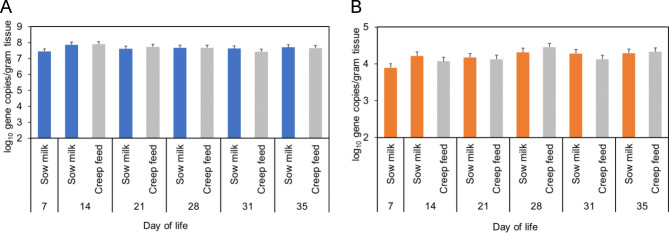
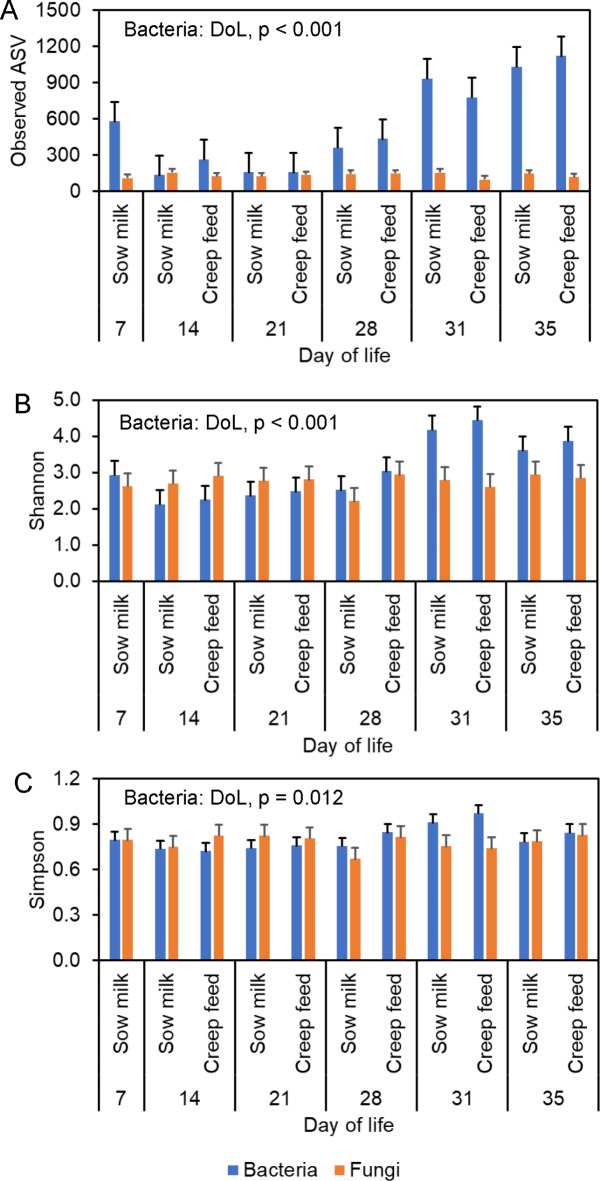
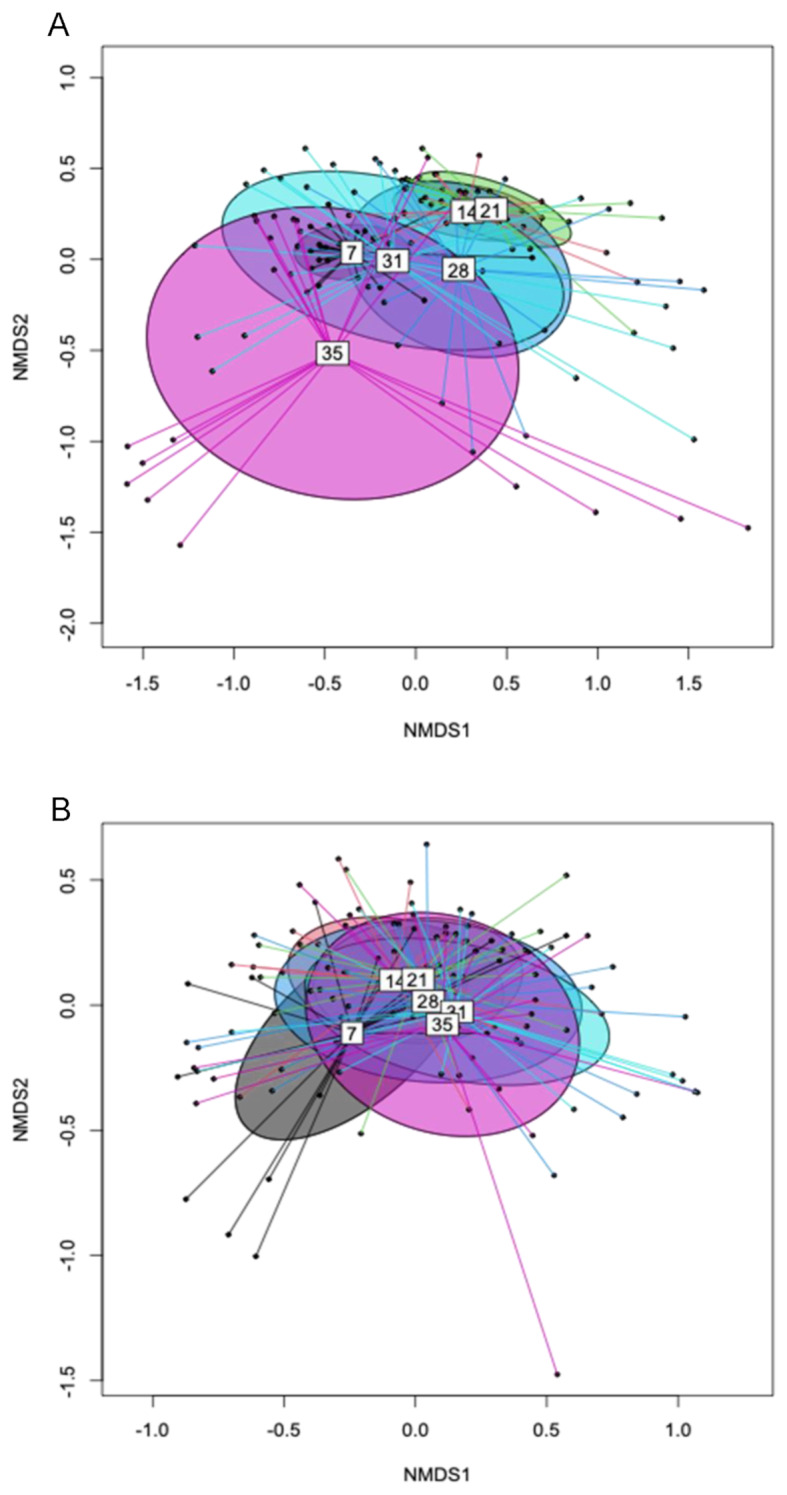
The early microbial colonization of the porcine gut is an important priming factor for gut and immune development. Nevertheless, little is known about the composition of microbes that translocate into the ileo-cecal lymph nodes (ICLN) in the neonatal phase. This study aimed to characterize age- and nutrition-related changes in the metabolically active bacterial and fungal composition of the ICLN in suckling and newly weaned piglets. Ten litters received only sow milk, while ten litters had access to creep feed from day of life (DoL) 10. Weaning occurred on DoL28. The ICLN were collected from 10 piglets/feeding group on each sampling day (DoL7, 14, 21, 28, 31 and 35) for RNA isolation, transcription into complementary DNA for 16 S rRNA and ITS2 amplicon sequencing. Age and weaning influenced the microbiome in the ICLN more than the nutrition during the suckling phase. Species richness and alpha-diversity of the bacterial but not fungal communities were increased on DoL7 and postweaning. Potential modes of action may have been linked to gut permeability at these ages and selective sampling by immune cells. Potential selective transfer of microbes may explain the dominance of Lactobacillus and Limosilactobacillus in the ICLN. Piglets that only drank sow milk comprised more Bacteroides in their ICLN on DoL35 compared to the creep fed piglets. Especially the role of fungi in the ICLN, including their mechanisms for translocation survival, needs further attention, as we detected metabolically active mold fungi and plant pathogens (e.g., Fusarium, Alternaria and Blumeria) in the ICLN.
猪肠道的早期微生物定殖是肠道和免疫发育的重要启动因素。然而,对于新生期易位至回盲肠淋巴结(ICLN)的微生物组成知之甚少。本研究旨在描述哺乳仔猪和刚断奶仔猪ICLN中代谢活跃的细菌和真菌组成与年龄及营养相关的变化。十窝仔猪仅食用母乳,而另外十窝仔猪从出生后第10天开始可采食开食料。在出生后第28天断奶。在每个采样日(出生后第7、14、21、28、31和35天)从每个饲喂组的10头仔猪采集ICLN用于RNA分离,转录为互补DNA用于16S rRNA和ITS2扩增子测序。在哺乳阶段,年龄和断奶对ICLN中微生物群的影响大于营养。在出生后第7天和断奶后,细菌群落而非真菌群落的物种丰富度和α多样性增加。潜在的作用模式可能与这些年龄段的肠道通透性以及免疫细胞的选择性采样有关。微生物的潜在选择性转移可能解释了ICLN中乳酸杆菌属和Limosilactobacillus的优势。与采食开食料的仔猪相比,仅饮用母乳的仔猪在出生后第35天其ICLN中含有更多的拟杆菌属。由于我们在ICLN中检测到了代谢活跃的霉菌和植物病原体(如镰刀菌属、链格孢属和白粉菌属),因此尤其需要进一步关注真菌在ICLN中的作用,包括它们的易位存活机制。