Xia Hailiang, Wang Chuantao, Li Zhuoyuan, Zhang Yuchen, Hu Shihe, Zhai Jiliang
School of Mechanical-Electronic and Vehicle Engineering, Beijing University of Civil Engineering and Architecture, Beijing, 102616, China.
Department of Orthopedics, Peking Union Medical College Hospital, Chinese Academy of Medical Sciences and Peking Union Medical College, Beijing, 100730, China.
Sci Rep. 2024 Dec 28;14(1):31018. doi: 10.1038/s41598-024-82199-9.
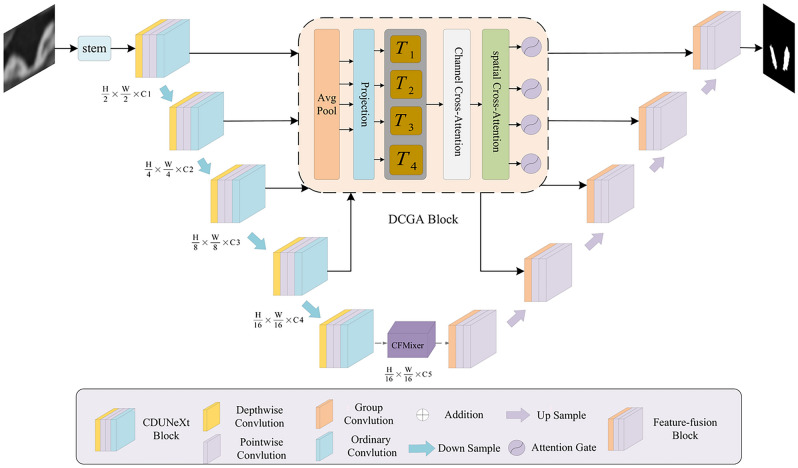
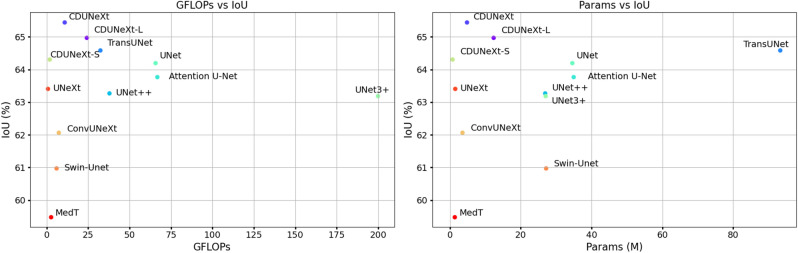
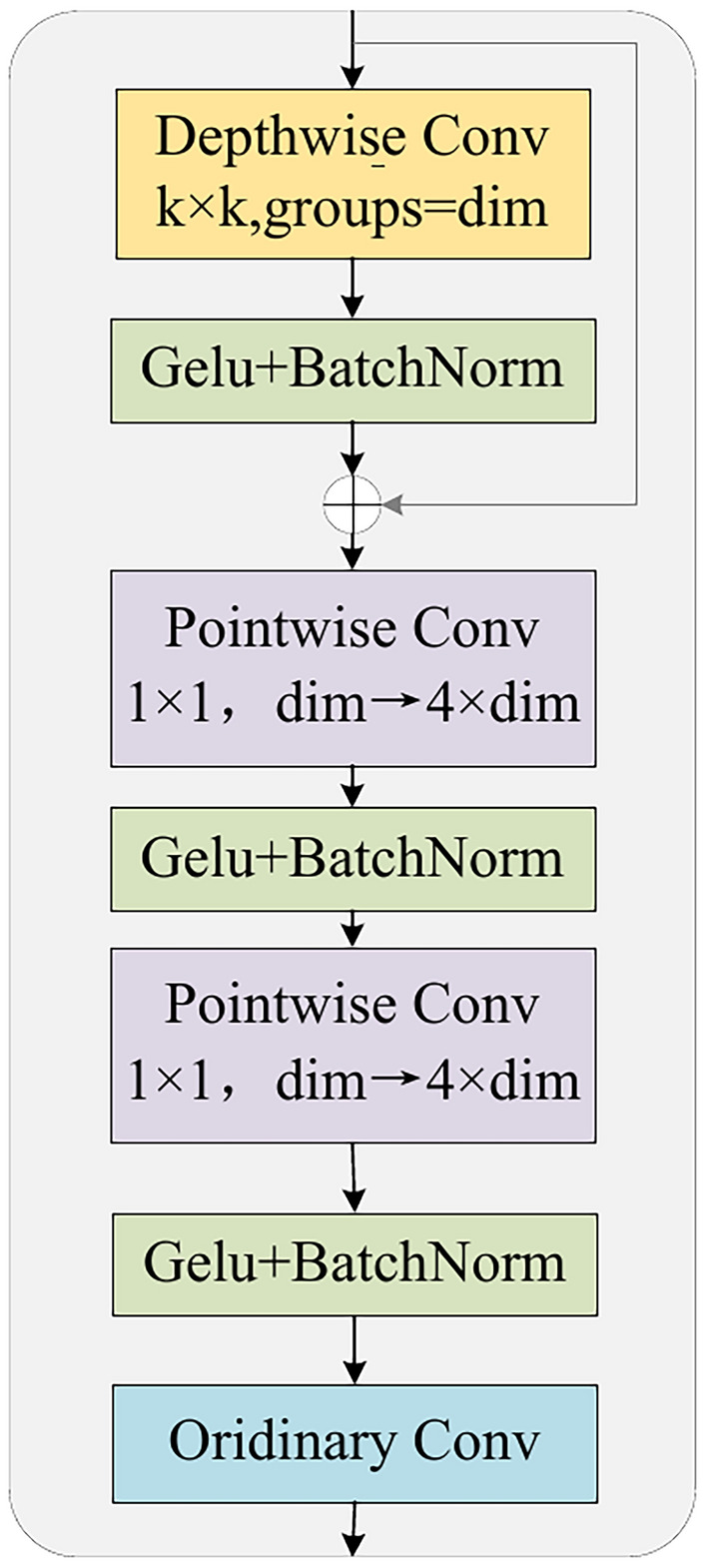
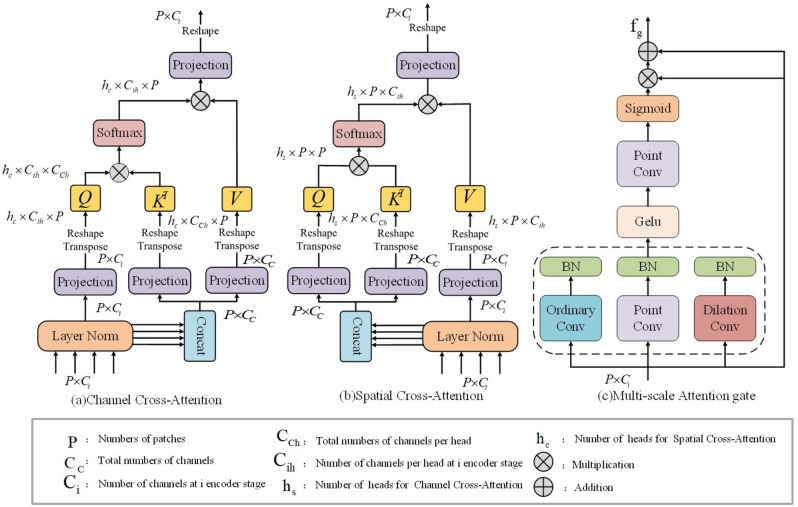
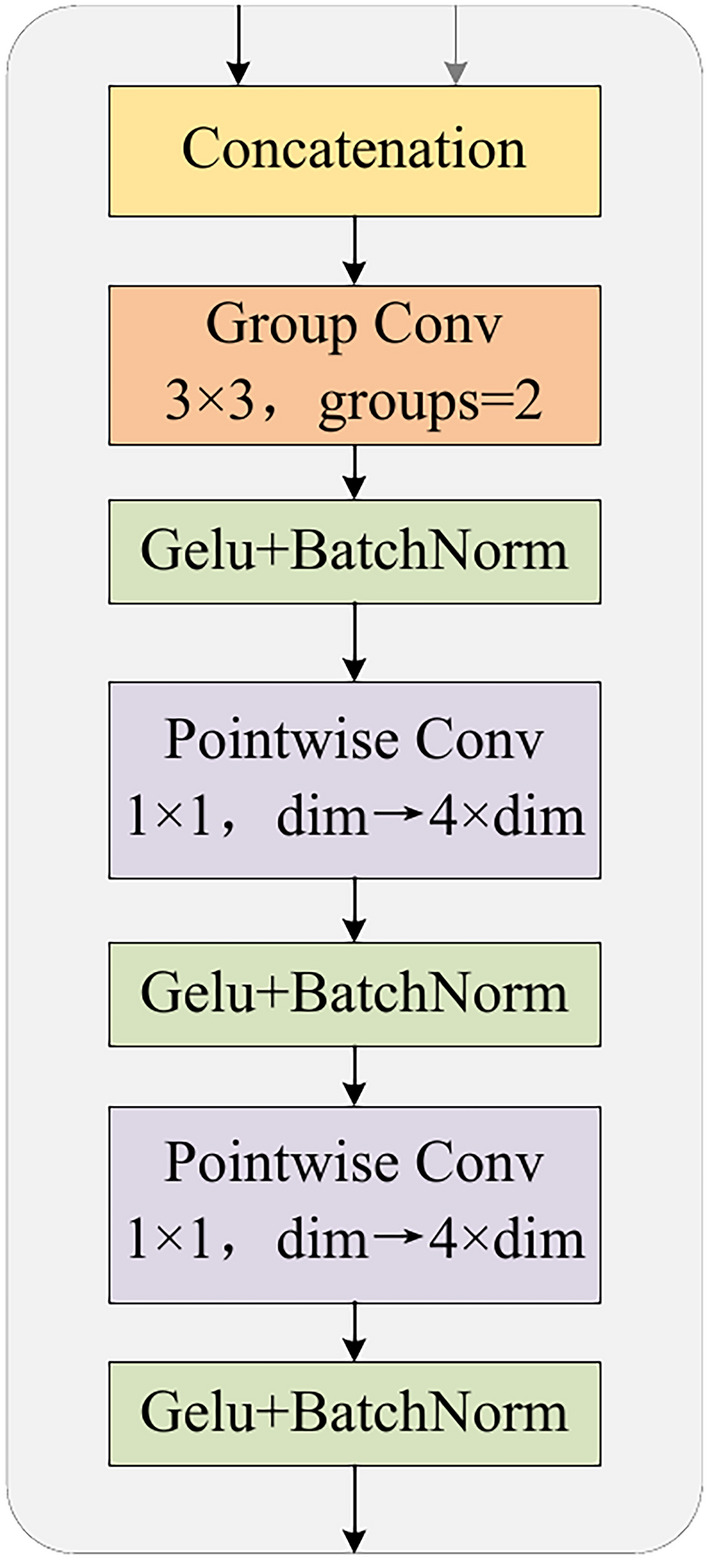
Ossification of the ligamentum flavum (OLF) is the main causative factor of spinal stenosis, but how to accurately and efficiently identify the ossification region is a clinical pain point and an urgent problem to be solved. Currently, we can only rely on the doctor's subjective experience for identification, with low efficiency and large error. In this study, a deep learning method is introduced for the first time into the diagnosis of ligamentum flavum ossificans, we proposed a lightweight, automatic and efficient method for identifying ossified regions, called CDUNeXt. By designing lightweight module structures, utilizing large-kernel convolutions to extracts the long-distance dependencies of different features of the image, and adopting dual-cross-gate-attention(DCGA) to sequentially capture the channel and spatial dependencies so as to fast and accurate segmentation while maintaining fewer parameters and lower complexity. Experiments show that CDUNeXt achieves the best segmentation performance with an optimal balance of lighter weights and less computational cost compared to existing methods. This work fills the gap in the application of deep learning techniques in the diagnosis of ligamentum flavum ossificans, contributes to the realization of lightweight medical image segmentation networks and lays the foundation for subsequent research.
黄韧带骨化(OLF)是导致椎管狭窄的主要因素,但如何准确、高效地识别骨化区域是临床痛点和亟待解决的问题。目前,我们只能依靠医生的主观经验进行识别,效率低且误差大。在本研究中,首次将深度学习方法引入黄韧带骨化的诊断,提出了一种轻量级、自动且高效的骨化区域识别方法,称为CDUNeXt。通过设计轻量级模块结构,利用大内核卷积提取图像不同特征的长距离依赖关系,并采用双交叉门注意力(DCGA)依次捕捉通道和空间依赖关系,从而在保持较少参数和较低复杂度的同时实现快速准确的分割。实验表明,与现有方法相比,CDUNeXt在更轻的权重和更低的计算成本之间实现了最佳平衡,达到了最佳分割性能。这项工作填补了深度学习技术在黄韧带骨化诊断应用方面的空白,有助于实现轻量级医学图像分割网络,并为后续研究奠定了基础。