Kakizawa Sho
Department of Memory Neuroscience, Tokyo Metropolitan Institute for Geriatrics and Gerontology, Tokyo, 173-0015, Japan.
Department of Biological Chemistry, Graduate School of Pharmaceutical Sciences, Kyoto University, Kyoto, 606-8501, Japan.
Sci Rep. 2024 Dec 28;14(1):31003. doi: 10.1038/s41598-024-82108-0.
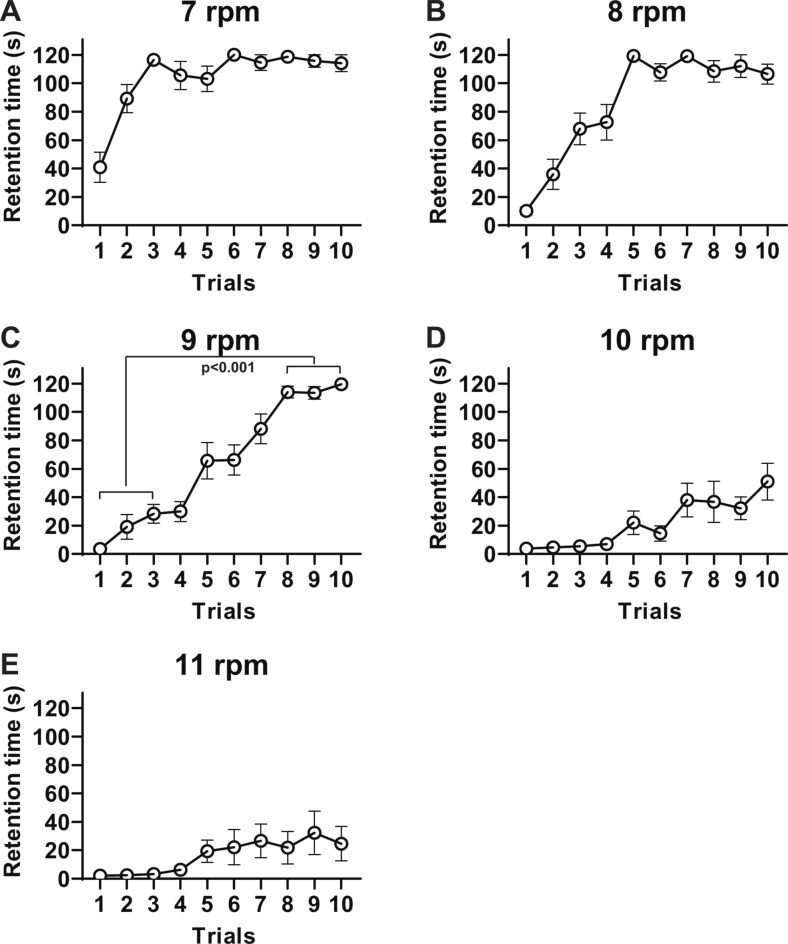
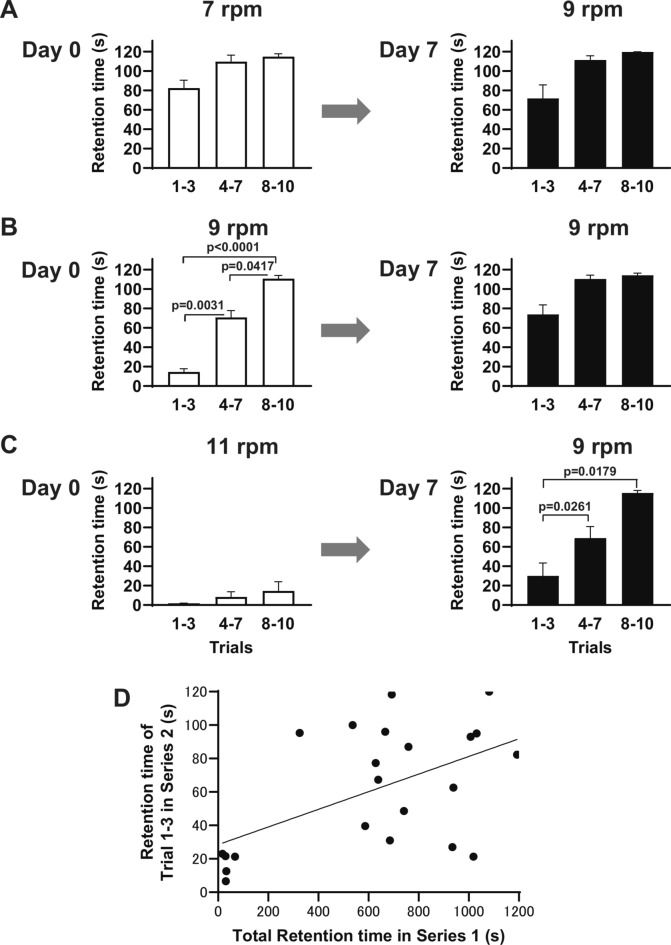
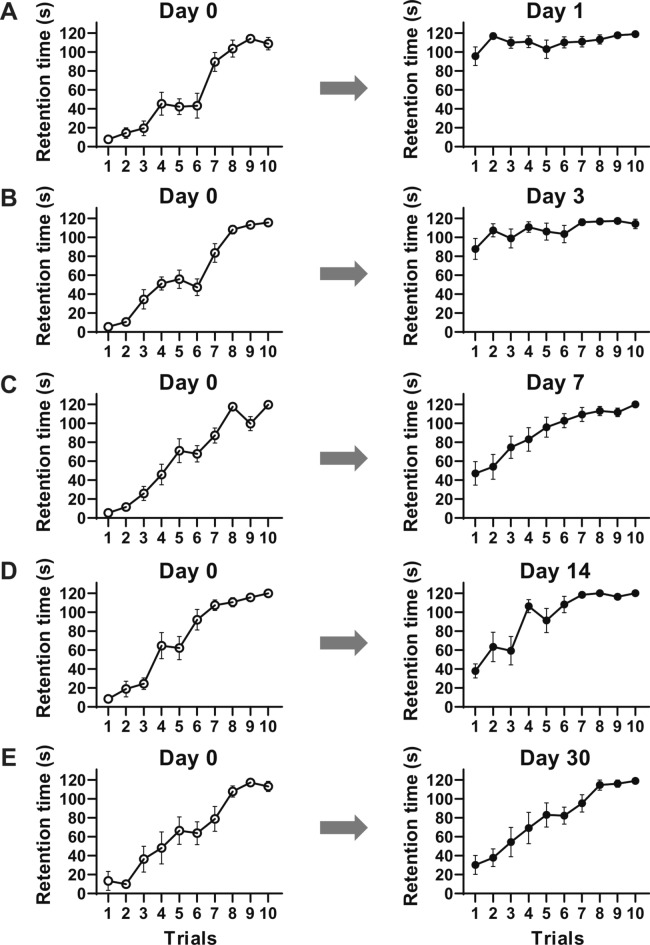
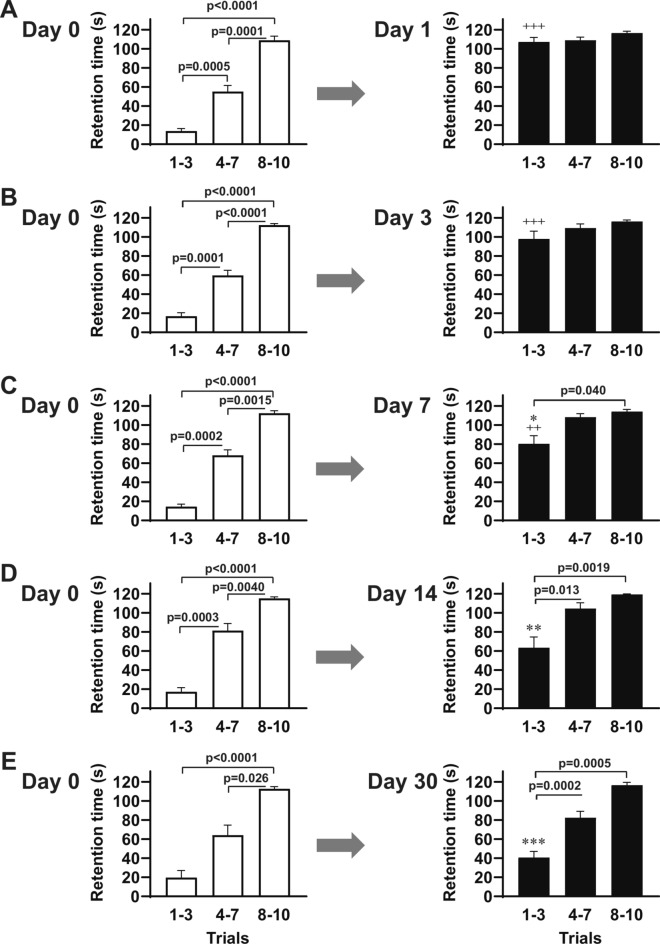
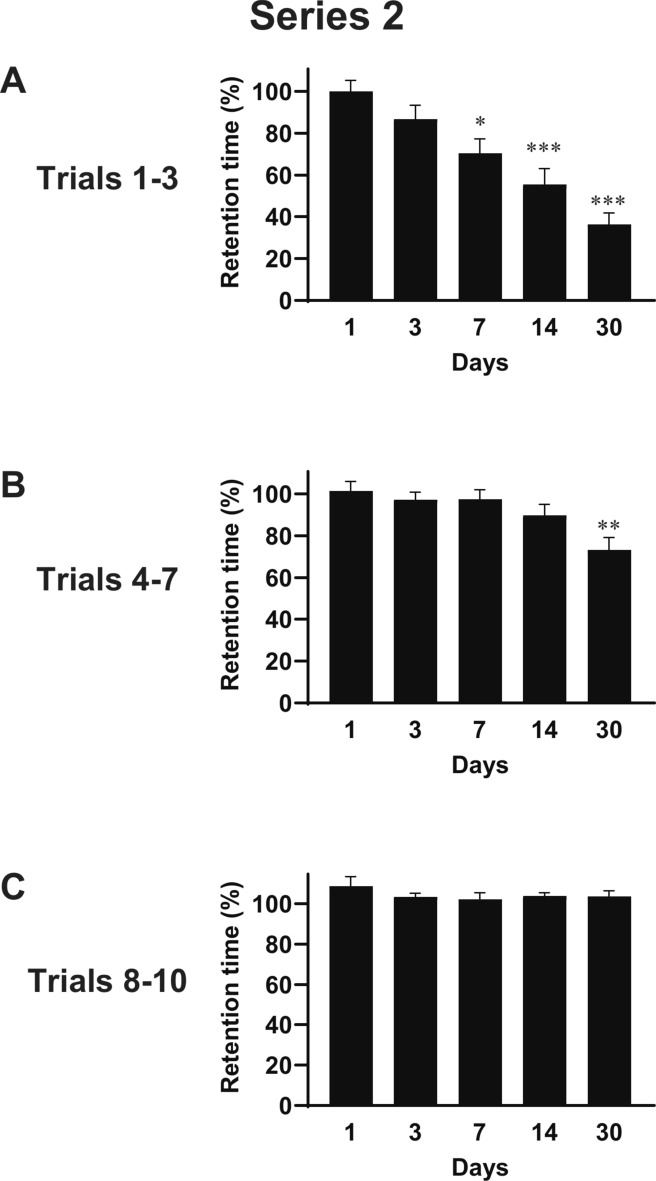
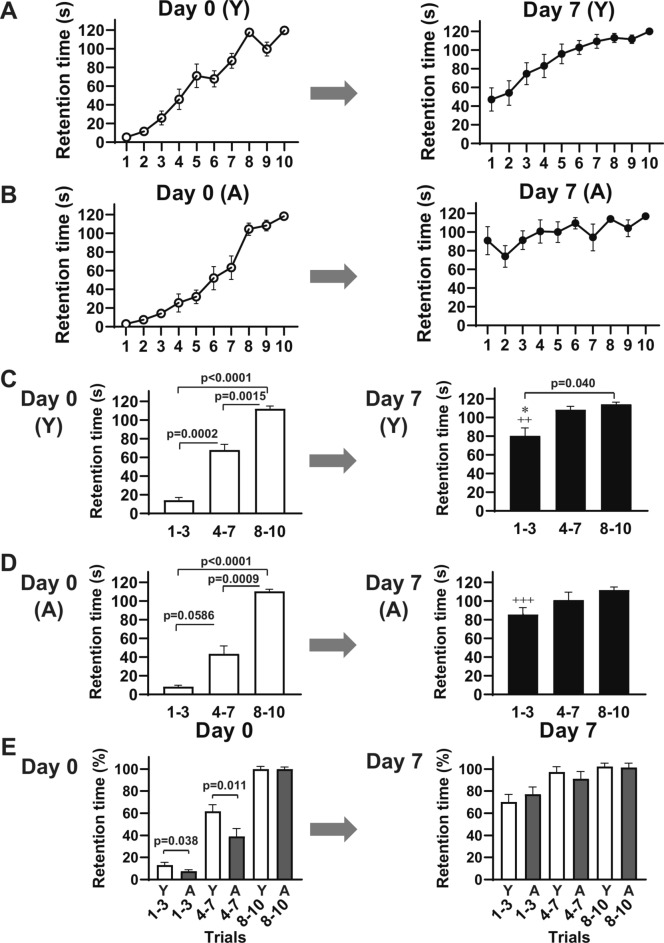
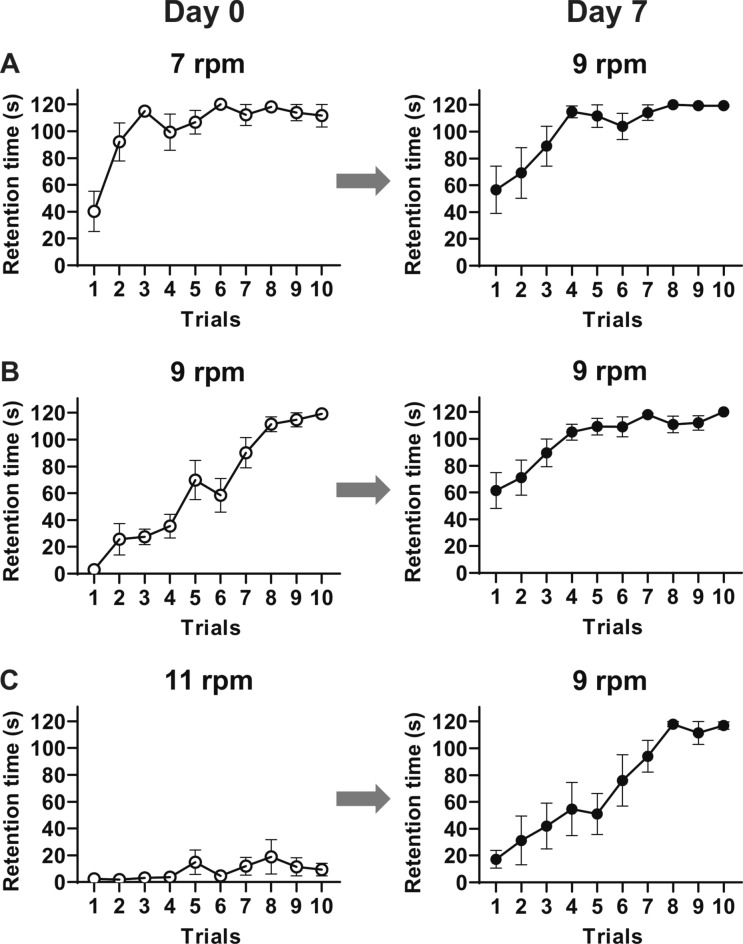
Retention of acquired learning memory is essential for reasonable behavior and crisis avoidance of individuals. Therefore, establishment of a system suitable for analysis of the retention/attenuation of acquired memory is desired. In the present study, mice were conducted on the repeated rotor-rod test, consisting of two series of experiments (Series 1 and 2) of 10 trials each. When rotating speed was 9 rpm, retention time on the rod was gradually increased and reached the maximum value within 10 trials in Series 1. When Series 2 was performed 1 or 3 days after Series 1, retention time of trials 1-3 in Series 2 was not significantly different from that of trials 8-10 in Series 1. On the other hand, retention time of trials 1-3 in Series 2 was significantly declined from that of trials 8-10 in Series 1 when Series 2 was conducted day 7, and returned to the initial level, the same level with trials 1-3 in Series 1, when Series 2 was conducted on days 14 or 30. These results indicate that acquired motor-learning memory is retained for 3 days at least, began to decline by day 7 and returned to the initial level by day 14. In older mice of 10-11 months old, there was a delay in the acquisition of motor learning in Day 0, whereas the retention was not impaired in Day 7. The repeated rotor-rod analyses may useful for research on factors affecting retention/attenuation and acquisition of motor-learning memory and proceed our understanding of motor-learning memory.
保留习得的学习记忆对于个体的合理行为和避免危机至关重要。因此,需要建立一个适合分析习得记忆保留/衰减的系统。在本研究中,对小鼠进行了重复转棒试验,该试验由两个系列的实验(系列1和系列2)组成,每个系列各有10次试验。当转速为9转/分钟时,在系列1中,小鼠在棒上的保留时间逐渐增加,并在10次试验内达到最大值。当系列2在系列1之后1天或3天进行时,系列2中第1 - 3次试验的保留时间与系列1中第8 - 10次试验的保留时间无显著差异。另一方面,当系列2在第7天进行时,系列2中第1 - 3次试验的保留时间相对于系列1中第8 - 10次试验显著下降,而当系列2在第14天或第30天进行时,保留时间恢复到初始水平,与系列1中第1 - 3次试验的水平相同。这些结果表明,习得的运动学习记忆至少保留3天,在第7天开始下降,并在第14天恢复到初始水平。在10 - 11个月大的老年小鼠中,在第0天运动学习的获得存在延迟,而在第7天保留不受损害。重复转棒分析可能有助于研究影响运动学习记忆保留/衰减和获得的因素,并增进我们对运动学习记忆的理解。