Csulak Eszter, Csivincsik Ágnes, Sréter Tamás, Solymosi Norbert, Danka József, Káposztás Zsolt, Nagy Gábor, Dezsényi Balázs
Department of Surgery, Somogy County Teaching Hospital, Kaposvár, 7400, Hungary.
Department of Physiology and Animal Health, Hungarian University of Agriculture and Life Sciences, Kaposvár Campus, Kaposvár, 7400, Hungary.
Sci Rep. 2024 Dec 28;14(1):31435. doi: 10.1038/s41598-024-83119-7.
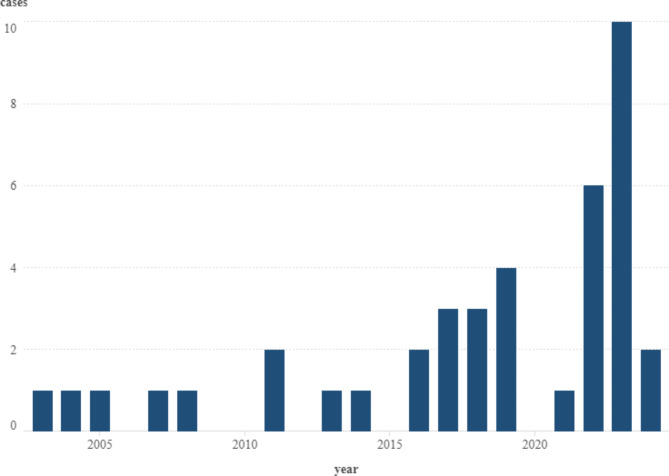
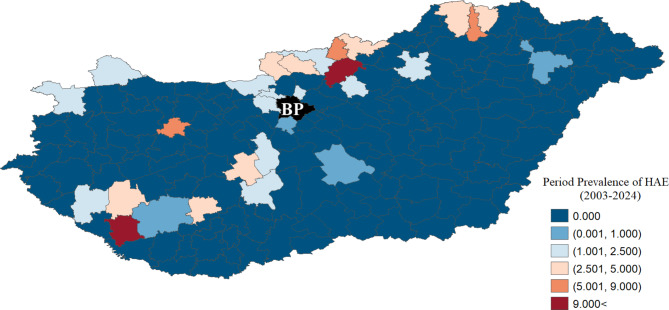
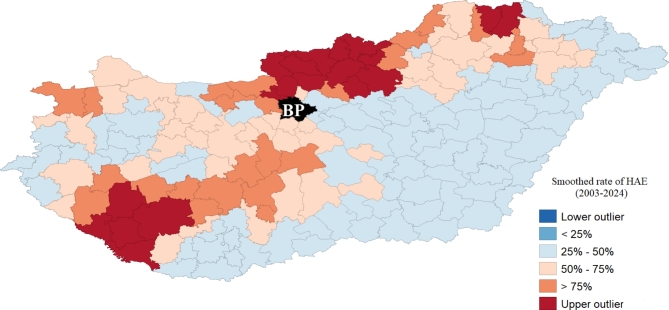
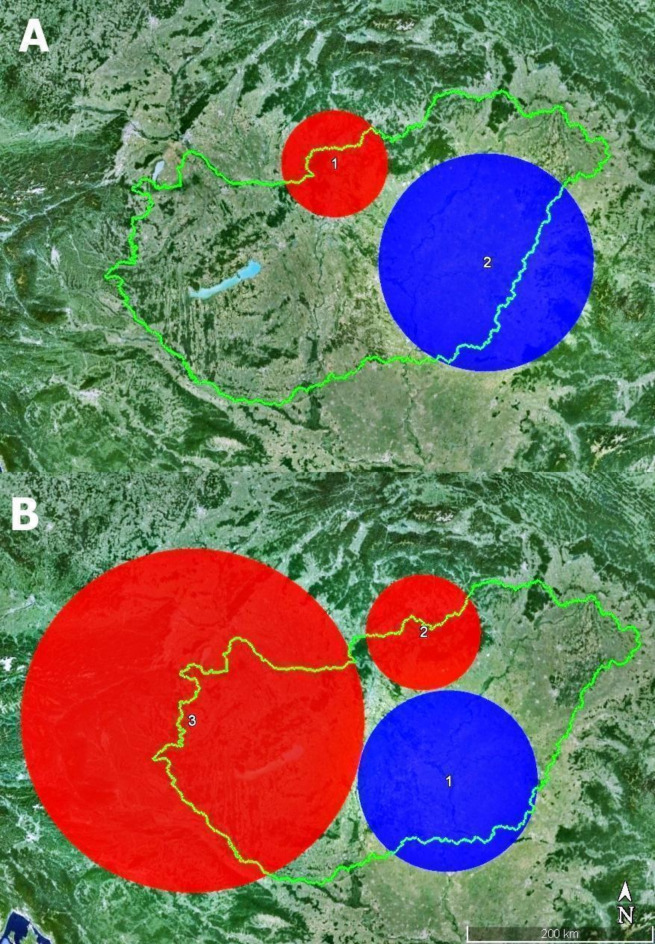
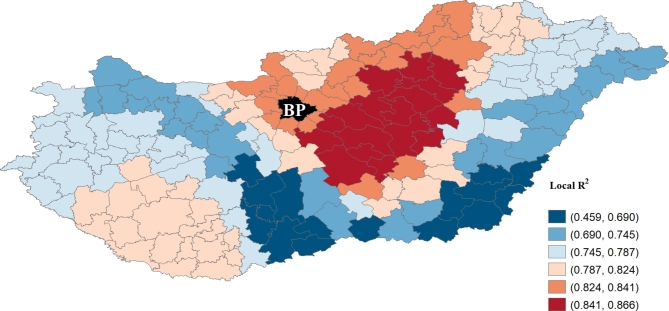
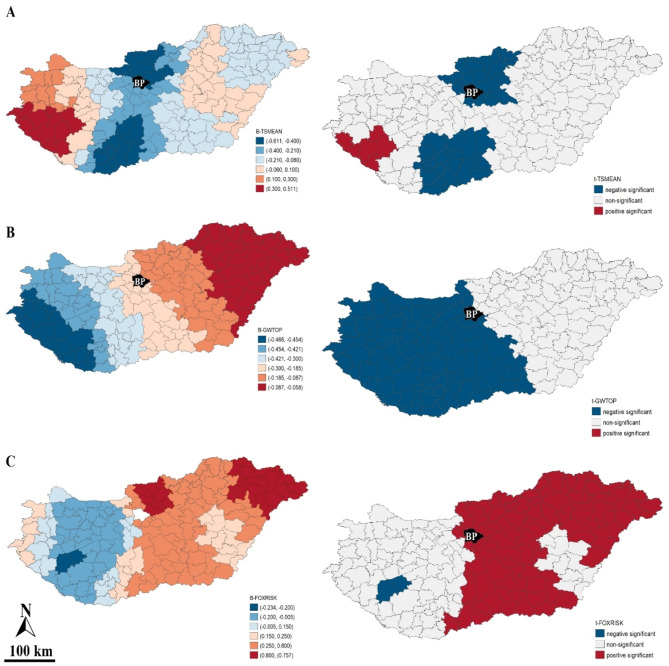
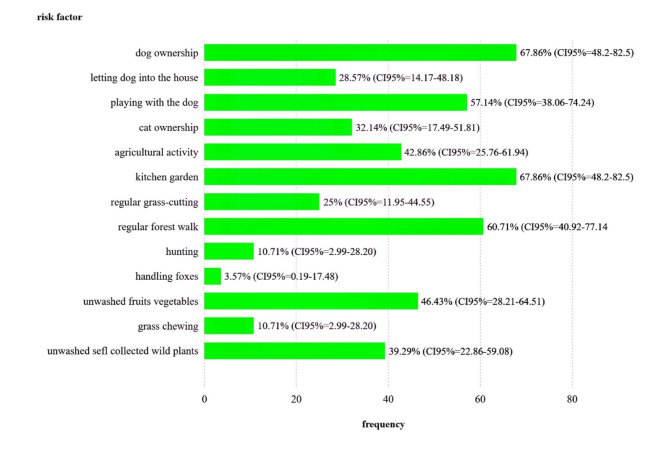
Human alveolar echinococcosis (HAE), which is caused by the larval stage of the Echinococcus multilocularis tapeworm, is an increasing healthcare issue in Hungary. Among the 40 known cases in the country, 25 were detected in the last five years. Our study aimed to reveal the geographically underlying risk factors associated potentially with these cases. We investigated the spatial pattern and the impact of potential risk factors of HAE by cluster analysis, and local and global regression models. Also, a questionnaire survey on the patients' lifestyle was implemented. We found two HAE hyperendemic foci in the country with very dissimilar biotic and climatic features, and controversial impact of different environmental factors. Four factors, viz. forest cover (β = 0.291, p < 0.0001), surface soil wetness (β = - 0.157, p = 0.033), fox infection rate (β = 0.369, p < 0.0001) and socio-economic development (β = - 0.216, p = 0.009), proved important countrywide. The most forested and the least developed districts showed the highest HAE risk. Among the patients, kitchen gardening (67.86%) and dog ownership (67.86%) seemed the riskiest activities. Our models detected an anomaly in one of the poorest regions of Hungary where all risk factors behaved contrary to that of the neighboring areas. This phenomenon was supposed to be the result of under-detection of the disease, and it called attention to the urgent priority of knowledge dissemination to the public and the healthcare professionals.
人体肺泡型包虫病(HAE)由多房棘球绦虫的幼虫阶段引起,在匈牙利已成为一个日益严重的医疗问题。该国已知的40例病例中,有25例是在过去五年中发现的。我们的研究旨在揭示与这些病例潜在相关的地理风险因素。我们通过聚类分析、局部和全局回归模型,研究了HAE的空间格局及其潜在风险因素的影响。此外,还对患者的生活方式进行了问卷调查。我们在该国发现了两个HAE高度流行区,其生物和气候特征截然不同,不同环境因素的影响也存在争议。有四个因素在全国范围内被证明很重要,即森林覆盖率(β = 0.291,p < 0.0001)、表层土壤湿度(β = -0.157,p = 0.033)、狐狸感染率(β = 0.369,p < 0.0001)和社会经济发展水平(β = -0.216,p = 0.009)。森林覆盖率最高和最不发达的地区显示出最高的HAE风险。在患者中,从事家庭园艺(67.86%)和养狗(67.86%)似乎是风险最高的活动。我们的模型在匈牙利最贫困的地区之一发现了一个异常情况,那里所有风险因素的表现都与周边地区相反。这种现象被认为是疾病漏报的结果,它提醒人们迫切需要向公众和医疗专业人员传播相关知识。