Poulle Marie-Lazarine, Bastien Matthieu, Richard Yolan, Josse-Dupuis Émilie, Aubert Dominique, Villena Isabelle, Knapp Jenny
University of Reims Champagne-Ardenne, SFR Cap Santé, EA 3800 PROTAL, 51092 Reims cedex, France - University of Reims Champagne-Ardenne, CERFE, 08240 Boult-aux-Bois, France.
University of Reims Champagne-Ardenne, SFR Cap Santé, EA 3800 PROTAL, 51092 Reims cedex, France - University of Reims Champagne-Ardenne, CERFE, 08240 Boult-aux-Bois, France - French Institute for Fighting Zoonoses (ELIZ), Domaine de Pixéricourt, 54220 Malzéville, France.
Parasite. 2017;24:29. doi: 10.1051/parasite/2017031. Epub 2017 Jul 26.
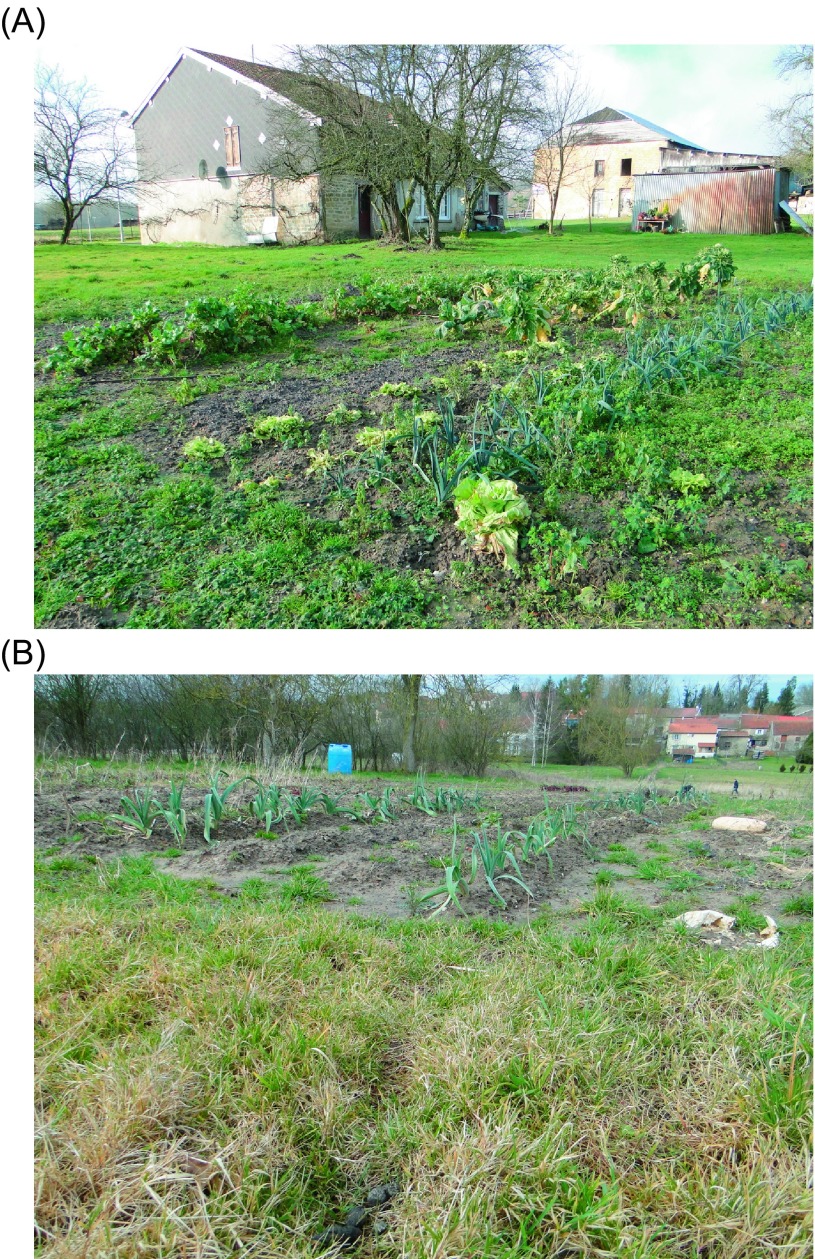
Echinococcus multilocularis, Toxoplasma gondii and Toxocara spp. are foodborne parasites whose eggs or oocysts are spread in the environment via canid or felid faeces. They can cause infections in humans following the raw consumption of contaminated fruit or vegetables. In this study, their occurrence was investigated by quantitative polymerase chain reaction (qPCR) in 254 carnivore faeces deposited in 94 kitchen gardens of northeastern France that were sampled between two and six times from October 2011 to April 2013. Less than 25% of the sampled kitchen gardens contained more than 75% of the collected faeces. Of the 219 faeces that could be attributed to an emitter, cat accounted for 58%, fox for 32% and dog for 10%. Echinococcus multilocularis was detected in 35%, 11% and 7% of fox, dog and cat faeces, respectively, and Toxocara spp. in 33%, 12% and 5.5% of cat, fox and dog faeces, respectively. Toxoplasma gondii was detected in 2/125 cat faeces and 2/21 dog faeces. The 34 faeces that tested positive for E. multilocularis were found in only 19 out of the 94 sampled kitchen gardens, and the 40 faeces that tested positive for Toxocara spp. were found in 28 of them. Consequently, some kitchen gardens appeared particularly at risk of human exposure to foodborne parasites, including E. multilocularis responsible for alveolar echinococcosis (AE), which is a serious zoonosis. In endemic areas, kitchen garden owners should be informed about the zoonotic risk linked to carnivore faeces deposits and encouraged to set up preventive measures.
多房棘球绦虫、刚地弓形虫和弓首蛔虫属是食源性寄生虫,其虫卵或卵囊通过犬科或猫科动物粪便传播到环境中。生食受污染的水果或蔬菜会导致人类感染。在本研究中,通过定量聚合酶链反应(qPCR)对法国东北部94个菜园中沉积的254份食肉动物粪便进行了调查,这些粪便在2011年10月至2013年4月期间被采样了两到六次。不到25%的采样菜园包含了超过75%的收集粪便。在可归因于排放者的219份粪便中,猫占58%,狐狸占32%,狗占10%。多房棘球绦虫分别在35%、11%和7%的狐狸、狗和猫粪便中被检测到,弓首蛔虫属分别在33%、12%和5.5%的猫、狐狸和狗粪便中被检测到。在125份猫粪便中的2份和21份狗粪便中的2份检测到了刚地弓形虫。检测出多房棘球绦虫呈阳性的34份粪便仅在94个采样菜园中的19个中被发现,检测出弓首蛔虫属呈阳性的40份粪便在其中的28个中被发现。因此,一些菜园似乎特别容易使人类接触食源性寄生虫,包括导致肺泡型包虫病(AE)的多房棘球绦虫,这是一种严重的人畜共患病。在流行地区,应告知菜园主人与食肉动物粪便沉积相关的人畜共患病风险,并鼓励他们采取预防措施。