Cao Ya, Xia Jianan, Li Lijuan, Zeng Yujing, Zhao Jing, Li Genxi
Center for Molecular Recognition and Biosensing, Shanghai Engineering Research Center of Organ Repair, Joint International Research Laboratory of Biomaterials and Biotechnology in Organ Repair (Ministry of Education), School of Life Sciences, Shanghai University, Shanghai 200444, China.
State Key Laboratory of Analytical Chemistry for Life Science, School of Life Sciences, Nanjing University, Nanjing 210023, China.
JACS Au. 2024 Dec 11;4(12):4655-4672. doi: 10.1021/jacsau.4c00989. eCollection 2024 Dec 23.
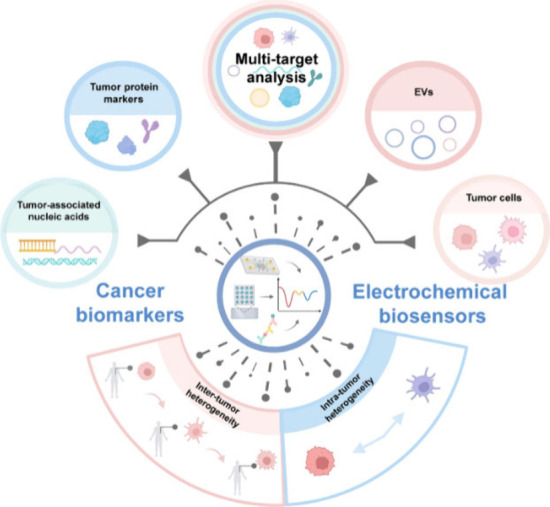
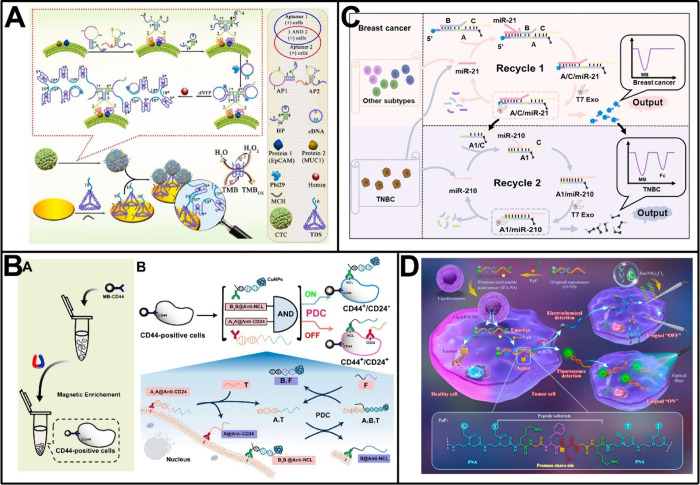
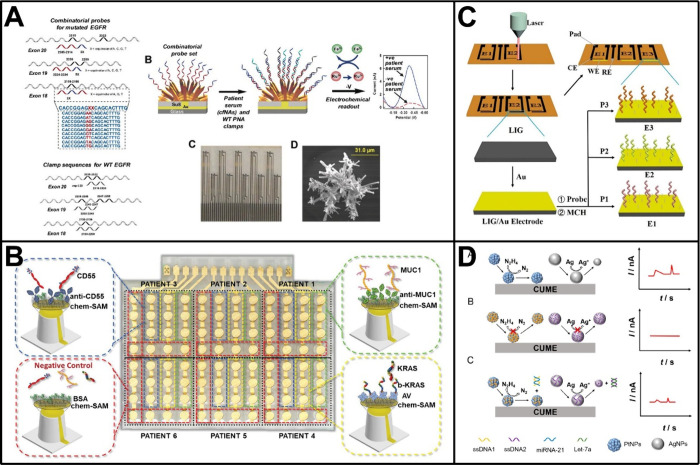
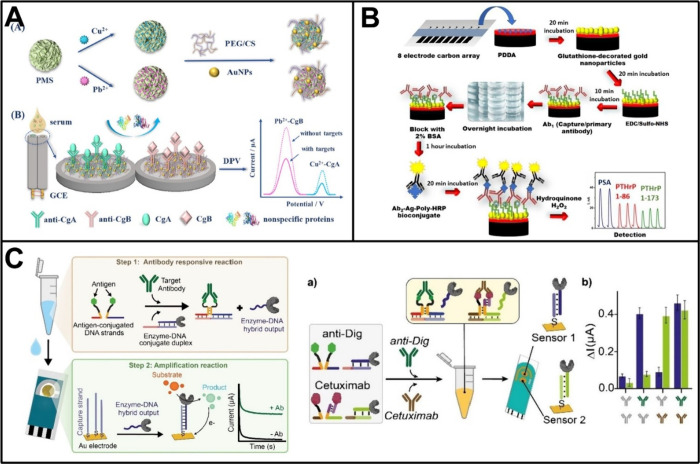
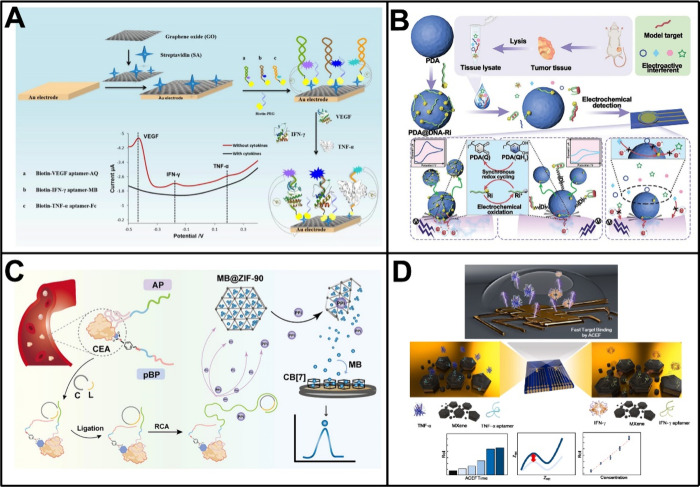
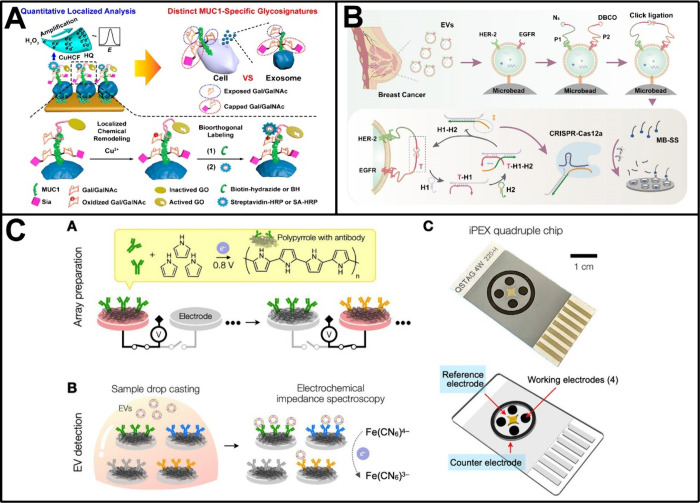
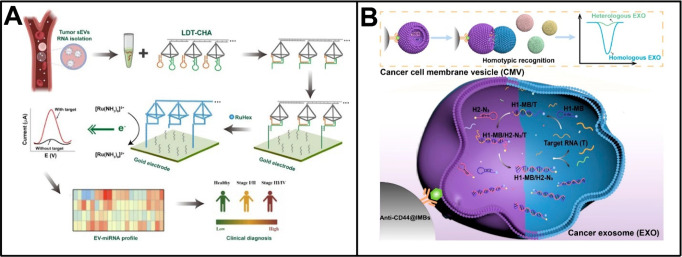
Electrochemical biosensors are gaining attention as powerful tools in cancer diagnosis, particularly in liquid biopsy, due to their high efficiency, rapid response, exceptional sensitivity, and specificity. However, the complexity of intra- and intertumor heterogeneity, with variations in genetic and protein expression profiles and epigenetic modifications, makes electrochemical biosensors susceptible to false-positive or false-negative diagnostic outcomes. To address this challenge, there is growing interest in simultaneously analyzing multiple biomarkers to reveal molecular characteristics of tumor heterogeneity for precise cancer diagnosis. In this Perspective, we highlight recent advancements in utilizing electrochemical biosensors for cancer diagnosis, with a specific emphasis on the multitarget analysis of cancer biomarkers including tumor-associated nucleic acids, tumor protein markers, extracellular vesicles, and tumor cells. These biosensors hold significant promise for improving precision in early cancer diagnosis and monitoring, as well as potentially offering new insights into personalized cancer management.
电化学生物传感器作为癌症诊断中的强大工具正受到关注,特别是在液体活检中,因为它们具有高效、快速响应、卓越的灵敏度和特异性。然而,肿瘤内和肿瘤间异质性的复杂性,包括基因和蛋白质表达谱以及表观遗传修饰的变化,使得电化学生物传感器容易出现假阳性或假阴性诊断结果。为应对这一挑战,人们越来越关注同时分析多种生物标志物,以揭示肿瘤异质性的分子特征,实现精确的癌症诊断。在这篇观点文章中,我们重点介绍了利用电化学生物传感器进行癌症诊断的最新进展,特别强调了对癌症生物标志物的多靶点分析,包括肿瘤相关核酸、肿瘤蛋白标志物、细胞外囊泡和肿瘤细胞。这些生物传感器在提高早期癌症诊断和监测的精度方面具有巨大潜力,并且可能为个性化癌症管理提供新的见解。