Herrera Cesar J, Levenson Benny J, Natcheva Angela, Lucca Ana Corina, Olsson Kelly, Miki Kyoko, Fong Alan, Jollis James G, McCormick Alyssa, Wilson B Hadley
CEDIMAT Cardiovascular Center, Santo Domingo, Dominican Republic, and Montefiore-Einstein Center for Heart and Vascular Care, New York, USA.
Cardiovascular Center Berlin-Charlottenburg, and Cardiology Dept. Klinikum Am Urban Vivantes, Berlin, Germany.
JACC Adv. 2024 Dec 10;4(1):101438. doi: 10.1016/j.jacadv.2024.101438. eCollection 2025 Jan.
The burden of ST-segment elevation myocardial infarction (STEMI) worldwide is increasing as the leading cause of death; there are scant data on system-based initiatives and performance metrics relative to its management in low- and middle-income countries where resources are frequently limited.
The Global Heart Attack Treatment Initiative (GHATI) ultimate aim is improving evidence-based STEMI care, adherence to guidelines, and tracking of clinical and institutional indicators in low- and middle-income countries. To achieve that goal, the process of care and outcomes of STEMI patients in those nations will be studied.
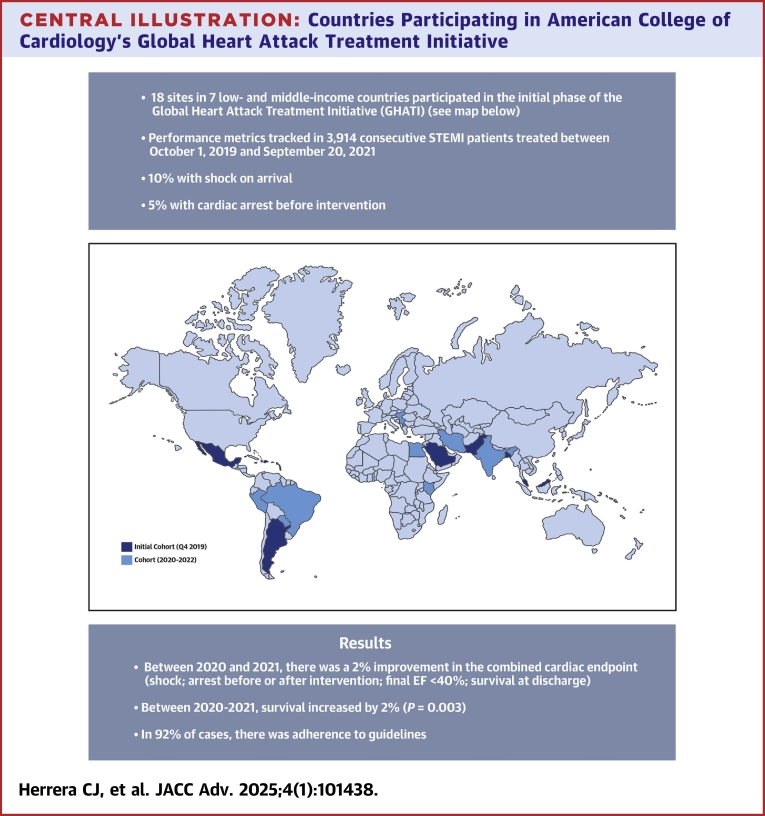
In this initial phase of GHATI (2019-2021), prospective analyses of selected STEMI metrics derived from the American College of Cardiology Chest Pain MI Registry were undertaken in 18 international hospitals, most located in developing countries unfamiliar with quality improvement metrics.
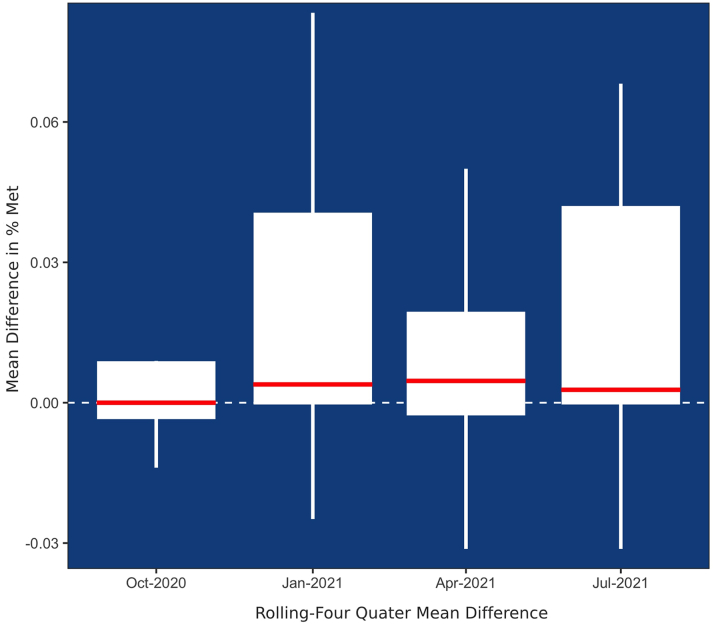
Of 4,092 patients enrolled, complete data were available in 3,914 consecutive STEMIs included here: 80.5% male; 35.5% smokers; shock on arrival in 10%; and 5.1% with cardiac arrest before intervention. Overall, a 2% improvement on combined endpoints (shock; arrest before or after intervention; final ejection fraction <40%; survival at discharge) was observed over time, and survivorship also increased by 2% ( = 0.003). First medical contact to device time <90 minutes occurred in 74.8%; reperfusion therapy in 94.2%; and adherence to guidelines in 91.8%.
This global contemporary registry successfully enrolled STEMI patients in nations generally unfamiliar with quality improvement metrics; trends of improvement in their care were observed. GHATI may facilitate implementation of policies aimed at enhancing outcomes of cardiovascular disease worldwide, particularly in countries with evolving economies.
ST段抬高型心肌梗死(STEMI)作为全球主要死因,其负担正在增加;在资源常常有限的低收入和中等收入国家,关于基于系统的举措及与其管理相关的绩效指标的数据很少。
全球心脏病发作治疗倡议(GHATI)的最终目标是改善低收入和中等收入国家基于证据的STEMI护理、对指南的遵循情况以及临床和机构指标的跟踪。为实现该目标,将对这些国家STEMI患者的护理过程和结局进行研究。
在GHATI的这个初始阶段(2019 - 2021年),对来自美国心脏病学会胸痛心肌梗死注册中心的选定STEMI指标进行前瞻性分析,研究在18家国际医院开展,其中大多数位于不熟悉质量改进指标的发展中国家。
在纳入的4092例患者中,这里纳入的3914例连续STEMI患者有完整数据:男性占80.5%;吸烟者占35.5%;入院时休克的占10%;干预前心脏骤停的占5.1%。总体而言,随着时间推移,联合终点(休克;干预前后心脏骤停;最终射血分数<40%;出院时存活)有2%的改善,生存率也提高了2%(P = 0.003)。首次医疗接触到器械时间<90分钟的占74.8%;接受再灌注治疗的占94.2%;遵循指南的占91.8%。
这个全球当代注册研究成功地在通常不熟悉质量改进指标的国家纳入了STEMI患者;观察到了他们护理方面的改善趋势。GHATI可能有助于实施旨在改善全球心血管疾病结局的政策,特别是在经济不断发展的国家。