Chen Jianuo, Lu Xuekun, Wang Lingtao, Du Wenjia, Guo Hengyi, Rimmer Max, Zhai Heng, Liu Yuhan, Shearing Paul R, Haigh Sarah J, Holmes Stuart M, Miller Thomas S
Department of Chemical Engineering, Electrochemical Innovation Lab, University College London, London, UK.
Department of Chemical Engineering, University of Manchester, Manchester, UK.
Nat Commun. 2024 Dec 30;15(1):10811. doi: 10.1038/s41467-024-55070-8.
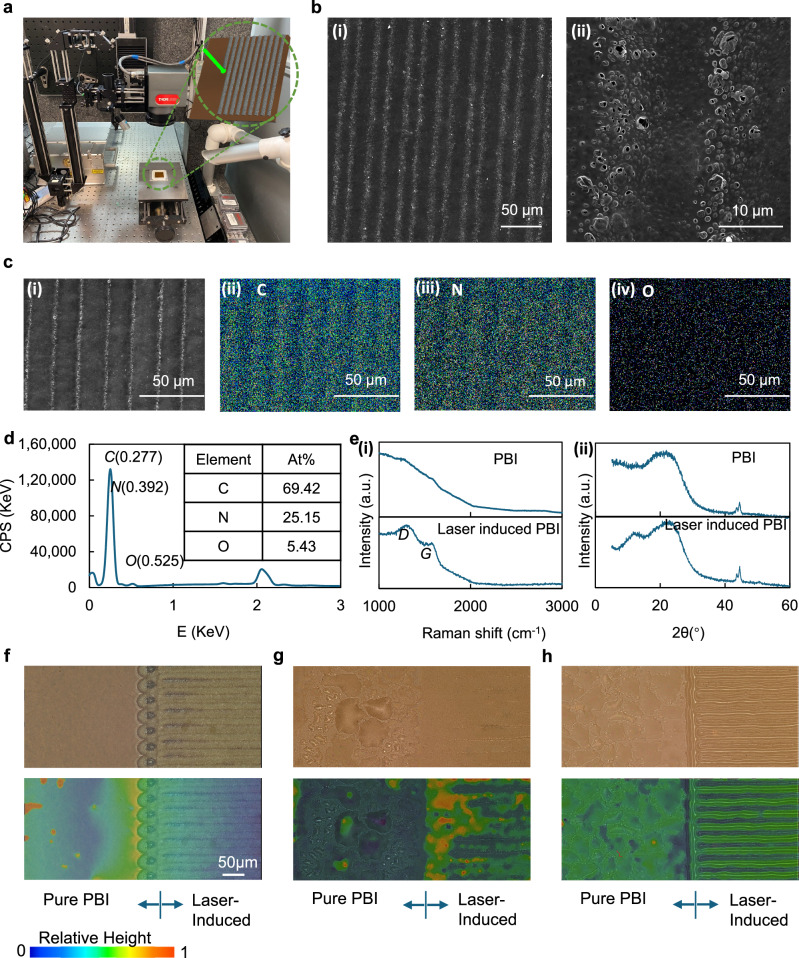
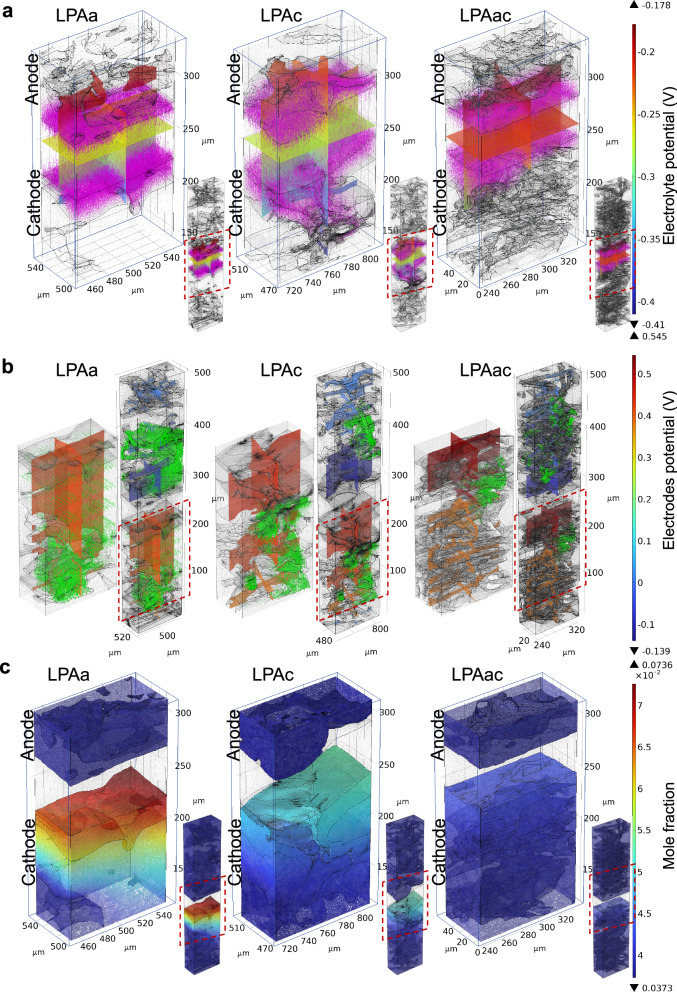
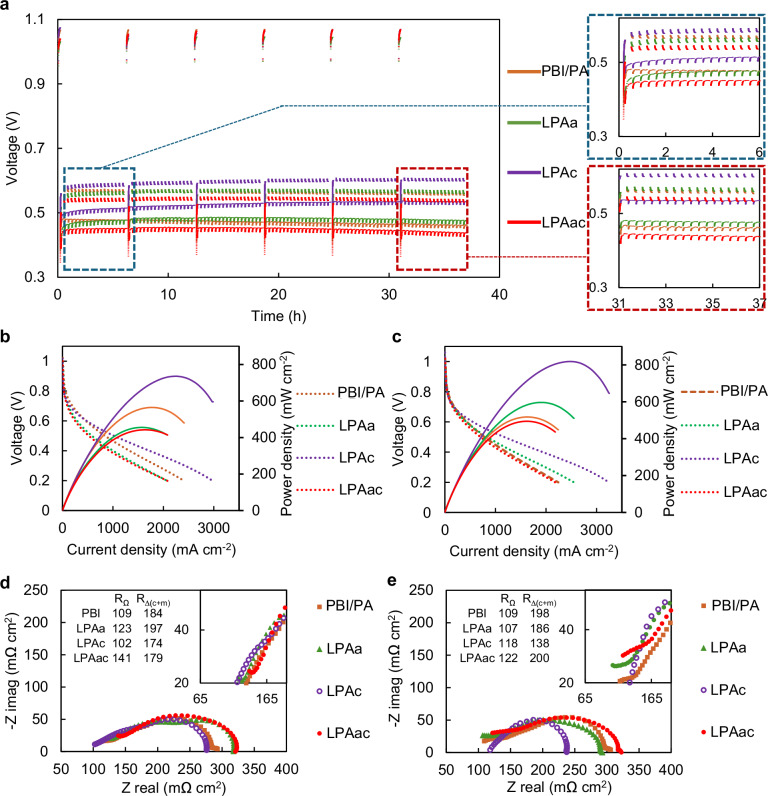
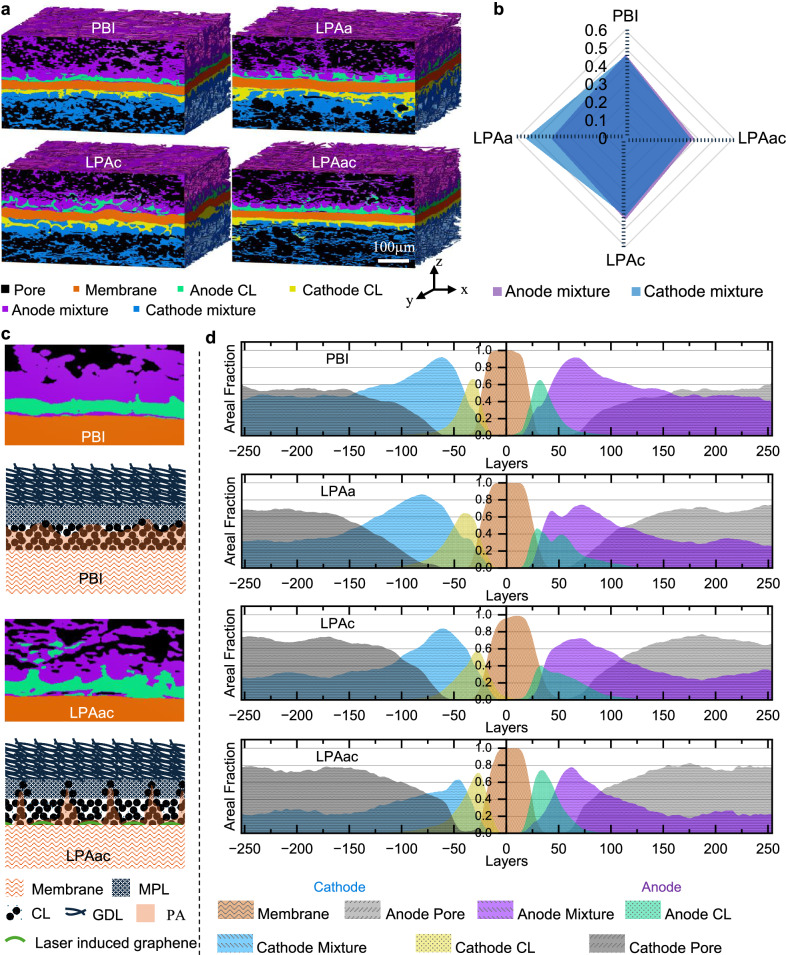
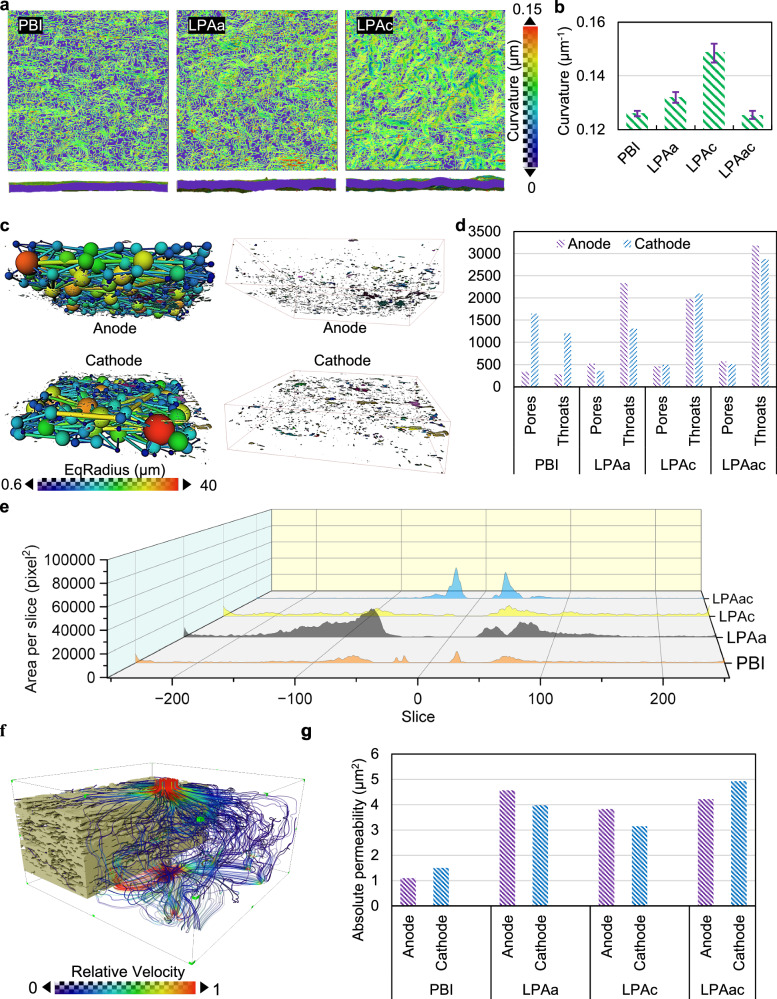
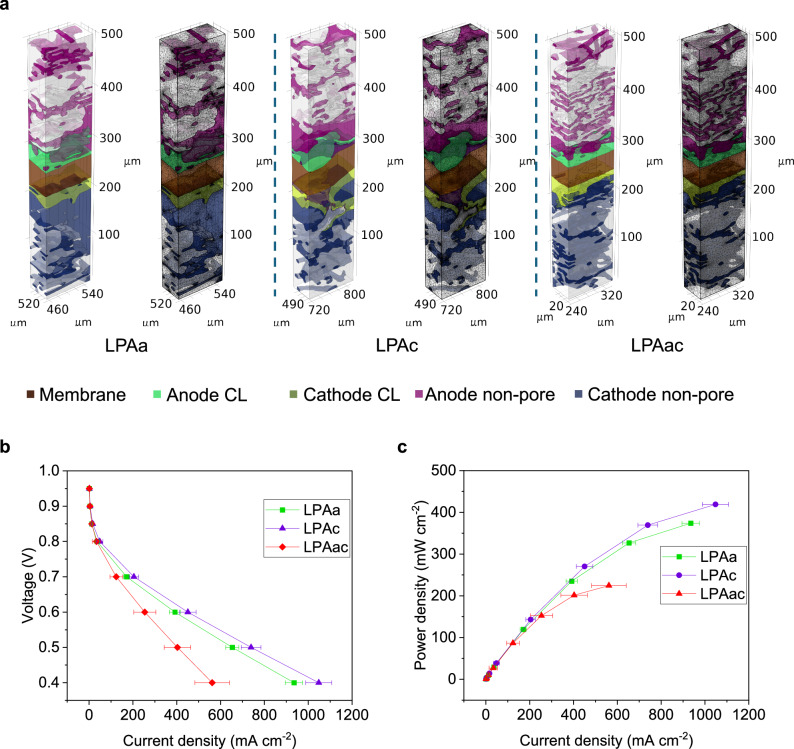
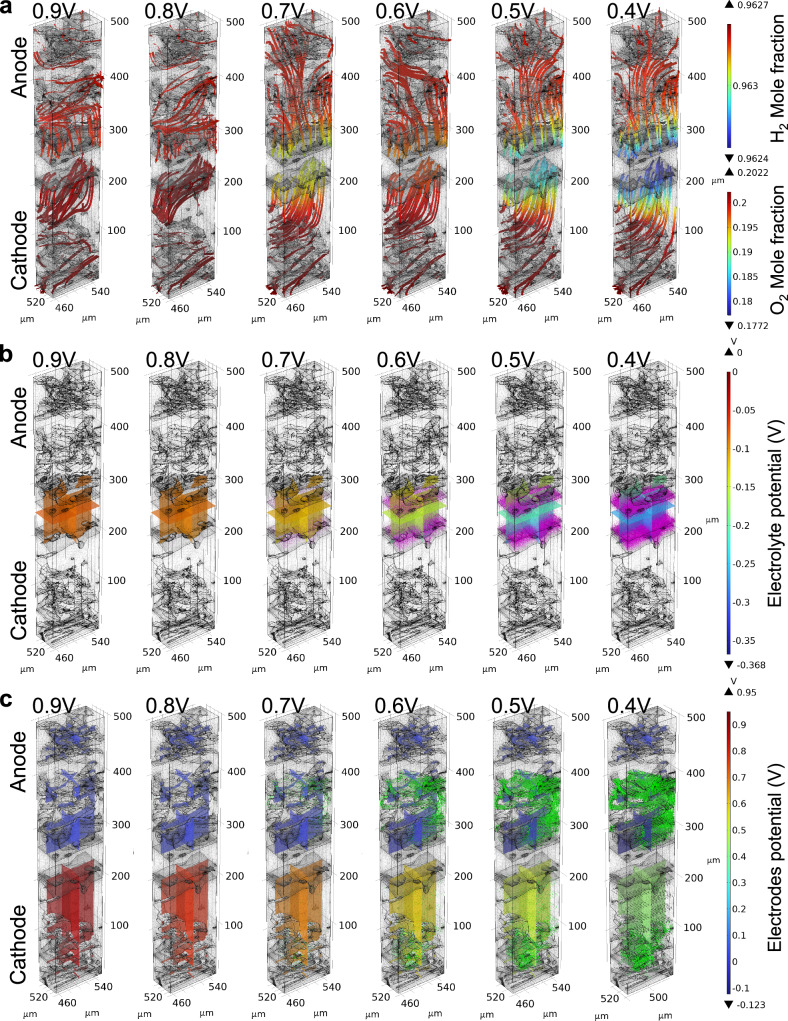
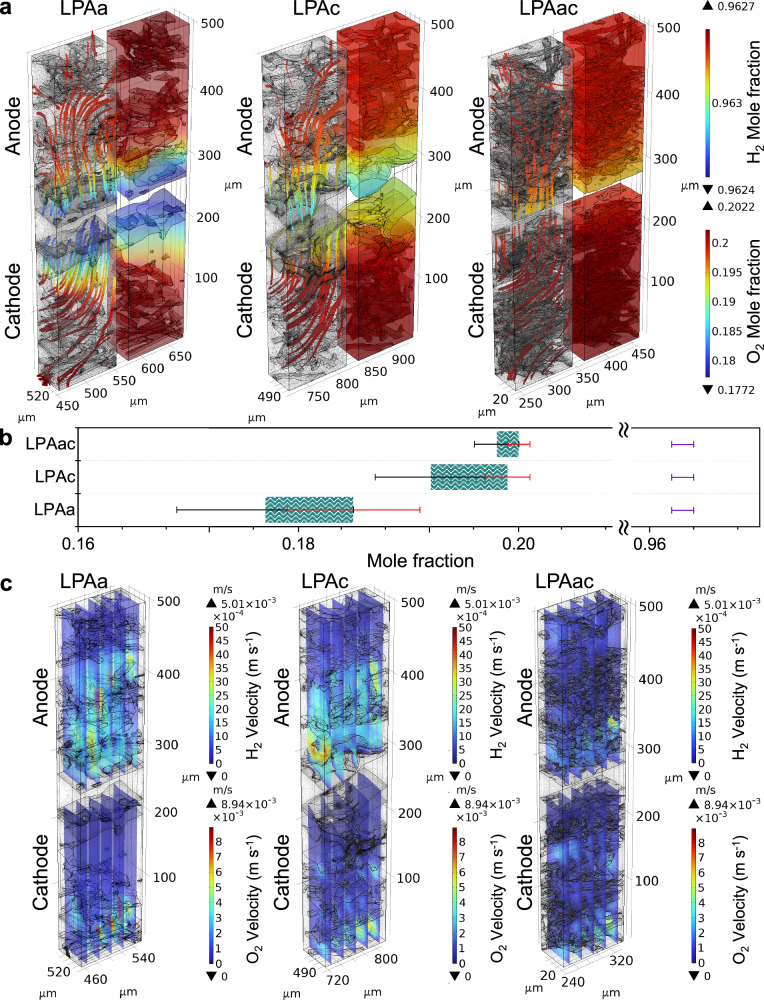
High-temperature proton exchange membrane fuel cells (HT-PEMFCs) offer solutions to challenges intrinsic to low-temperature PEMFCs, such as complex water management, fuel inflexibility, and thermal integration. However, they are hindered by phosphoric acid (PA) leaching and catalyst migration, which destabilize the critical three-phase interface within the membrane electrode assembly (MEA). This study presents an innovative approach to enhance HT-PEMFC performance through membrane modification using picosecond laser scribing, which optimises the three-phase interface by forming a graphene-like structure that mitigates PA leaching. Our results demonstrate that laser-induced modification of PA-doped membranes, particularly on the cathode side, significantly enhances the performance and durability of HT-PEMFCs, achieving a peak power density of 817.2 mW cm⁻² after accelerated stress testing, representing a notable 58.2% increase compared to untreated membranes. Furthermore, a comprehensive three-dimensional multi-physics model, based on X-ray micro-computed tomography data, was employed to visualise and quantify the impact of this laser treatment on the dynamic electrochemical processes within the MEA. Hence, this work provides both a scalable methodology to stabilise an important future membrane technology, and a clear mechanistic understanding of how this targeted laser modification acts to optimise the three-phase interface of HT-PEMFCs, which can have impact across a wide array of applications.
高温质子交换膜燃料电池(HT-PEMFCs)为低温质子交换膜燃料电池所固有的挑战提供了解决方案,比如复杂的水管理、燃料灵活性不足以及热集成问题。然而,它们受到磷酸(PA)浸出和催化剂迁移的阻碍,这会破坏膜电极组件(MEA)内关键的三相界面的稳定性。本研究提出了一种创新方法,通过使用皮秒激光刻划进行膜改性来提高HT-PEMFC的性能,该方法通过形成类似石墨烯的结构来减轻PA浸出,从而优化三相界面。我们的结果表明,激光诱导的PA掺杂膜改性,特别是在阴极侧,显著提高了HT-PEMFC的性能和耐久性,在加速应力测试后实现了817.2 mW cm⁻²的峰值功率密度,与未处理的膜相比显著增加了58.2%。此外,基于X射线微计算机断层扫描数据构建了一个全面的三维多物理模型,以可视化和量化这种激光处理对MEA内动态电化学过程的影响。因此,这项工作既提供了一种可扩展的方法来稳定一种重要的未来膜技术,又对这种有针对性的激光改性如何优化HT-PEMFC的三相界面提供了清晰的机理理解,这可能会对广泛的应用产生影响。