
表面酶聚合赋予Janus水凝胶在穿透性口腔皮肤瘘管中坚韧的粘附力和再生修复能力。
Surface enzyme-polymerization endows Janus hydrogel tough adhesion and regenerative repair in penetrating orocutaneous fistulas.
作者信息
Ju Ye, Ma Chunyue, Ding Ling, Shi Mingyue, Wang Xia, Wu Dongbei, Wu Qing, Qin Xingjun, Wang Qigang
机构信息
Shanghai Key Laboratory of Anesthesiology and Brain Functional Modulation, Clinical Research Center for Anesthesiology and Perioperative Medicine, Translational Research Institute of Brain and Brain-Like Intelligence, Shanghai Fourth People's Hospital, School of Medicine, Tongji University, Shanghai, China.
Department of Oral Maxillofacial-Head and Neck Oncology, Shanghai Ninth People's Hospital, Shanghai Jiao Tong University School of Medicine; College of Stomatology, Shanghai Jiao Tong University; National Center for Stomatology; National Clinical Research Center for Oral Diseases; Shanghai Key Laboratory of Stomatology, Shanghai, China.
出版信息
Nat Commun. 2024 Dec 30;15(1):10903. doi: 10.1038/s41467-024-55303-w.
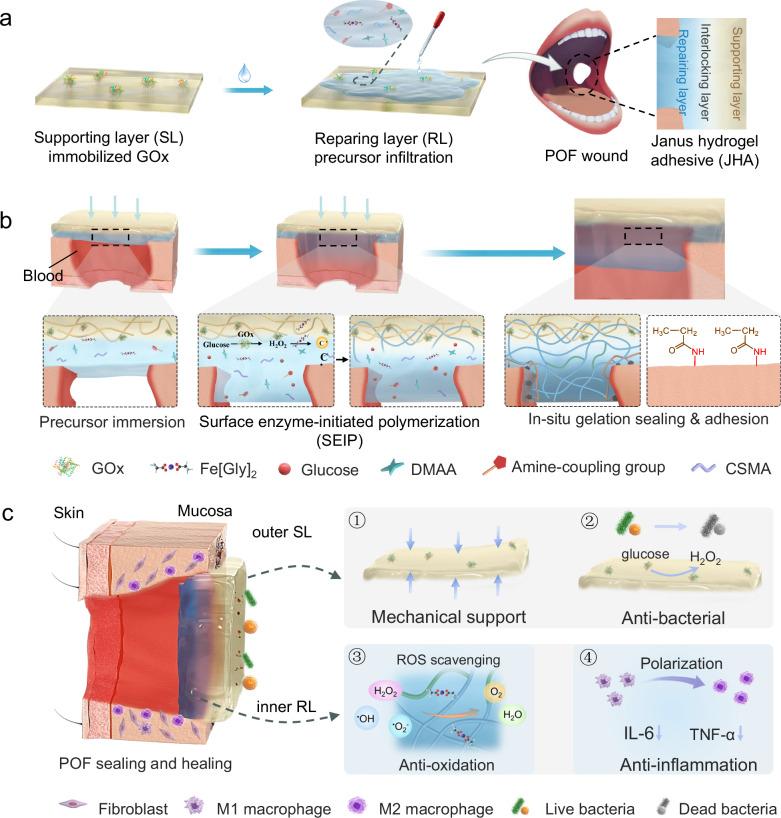
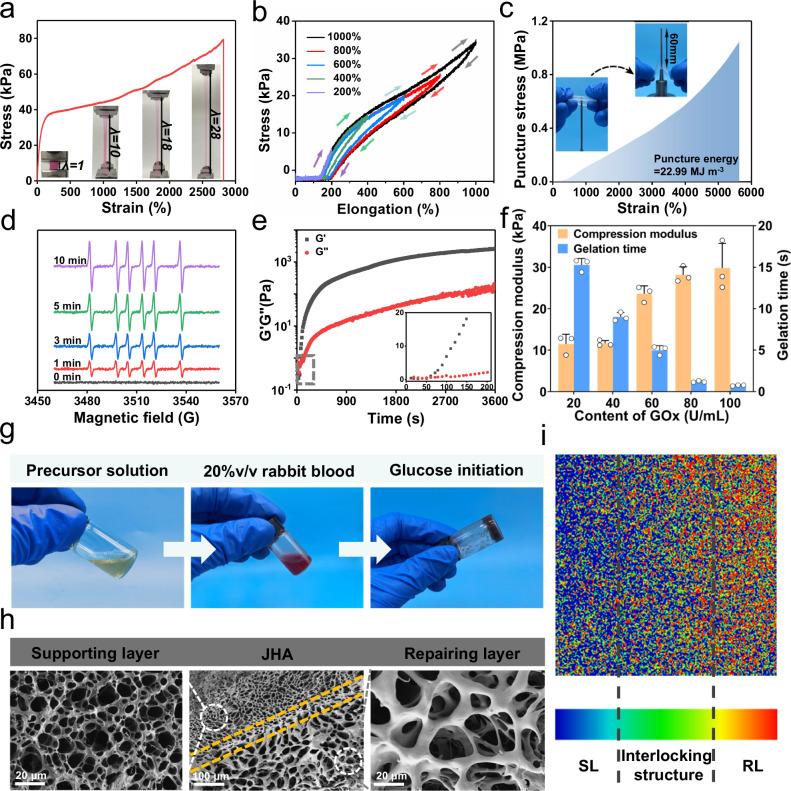
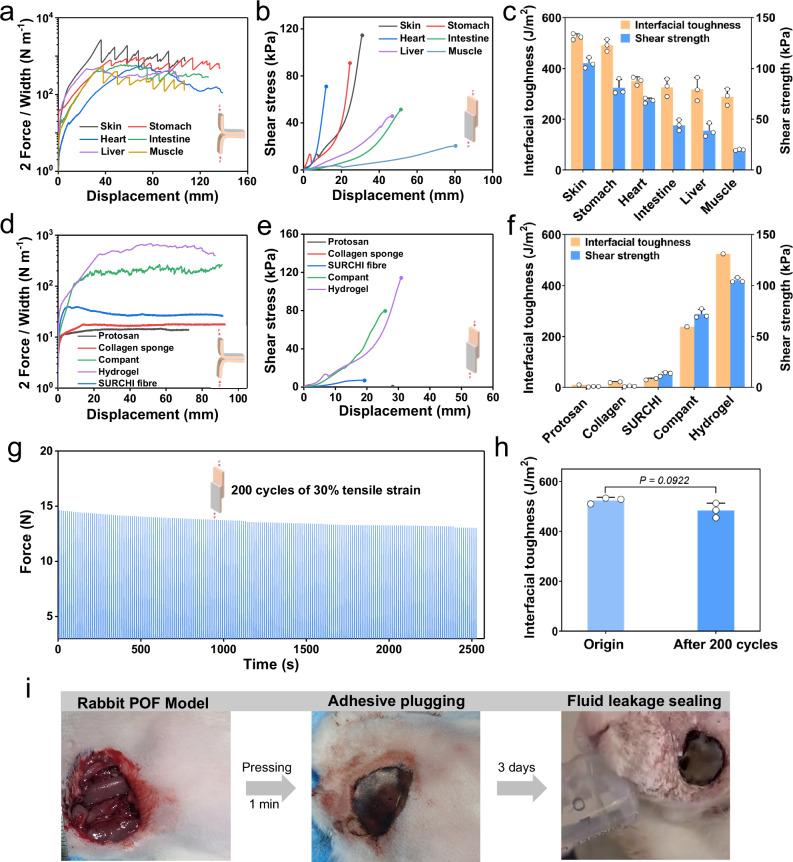
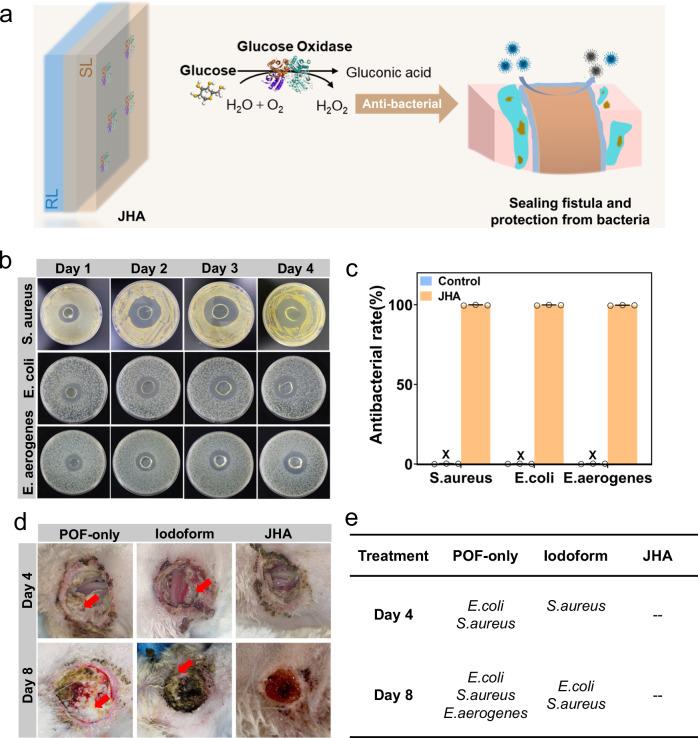
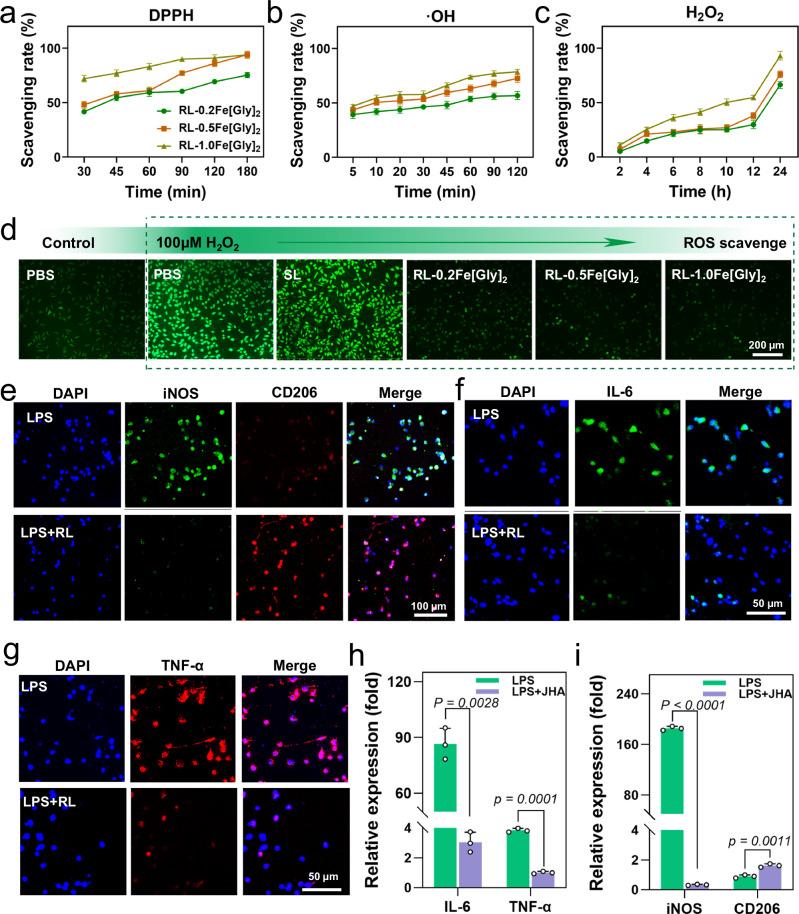
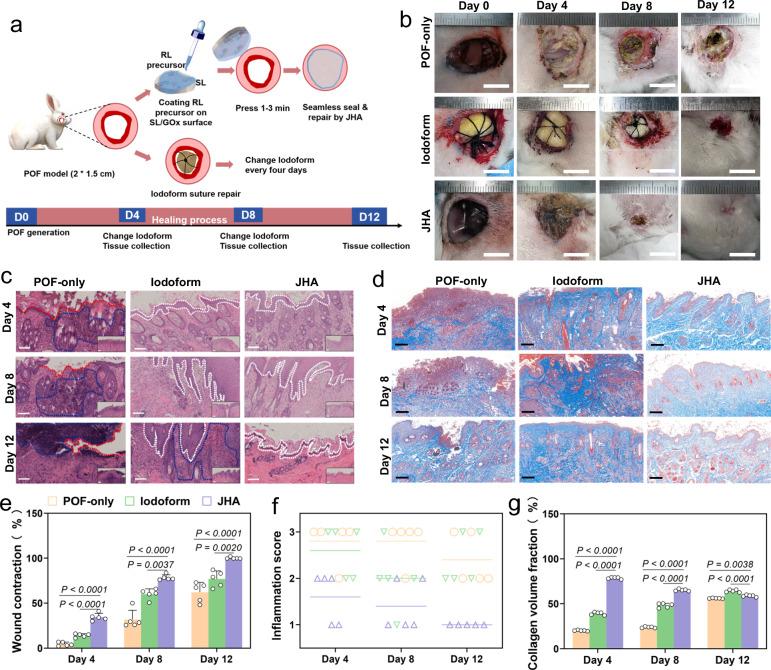
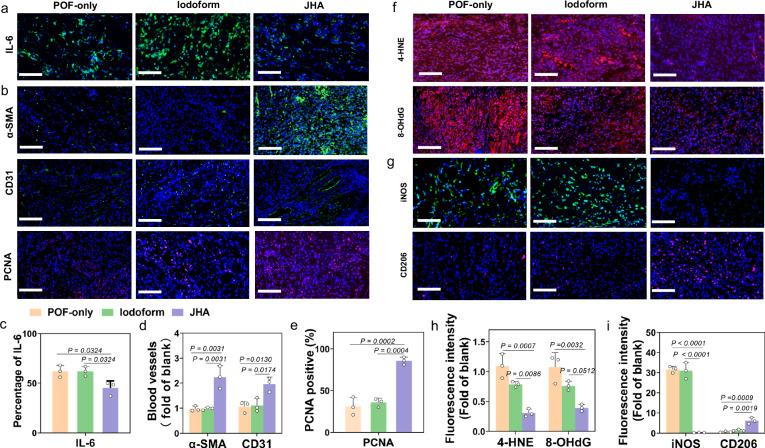
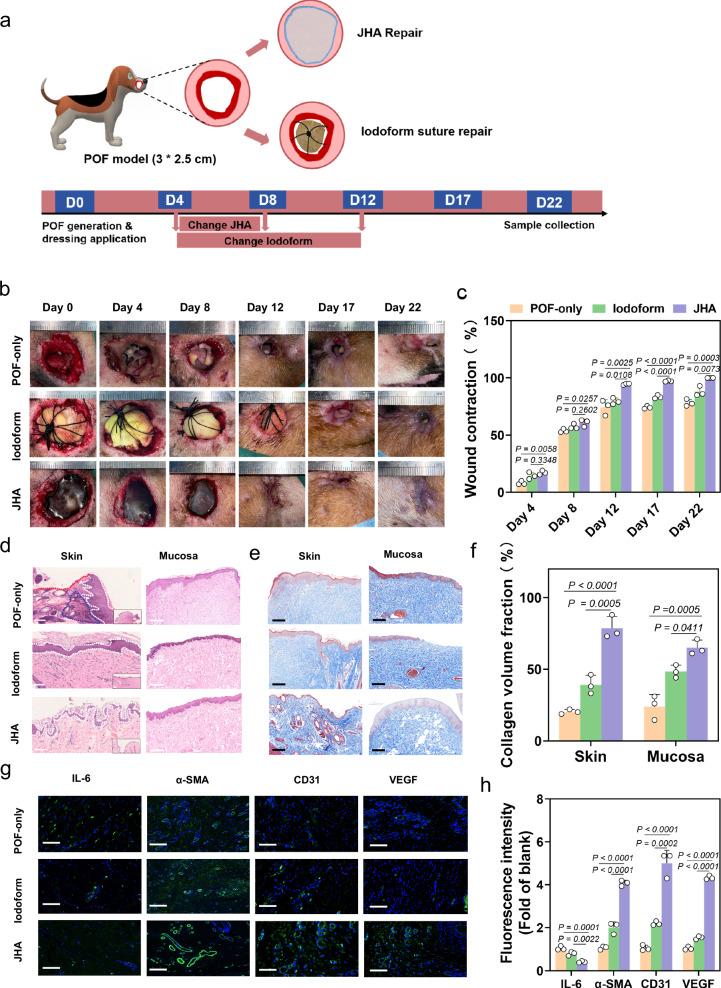
Penetrating orocutaneous or oropharyngeal fistulas (POFs), severe complications following unsuccessful oral or oropharyngeal reconstruction, remain complex clinical challenges due to lack of supportive tissue, contamination with saliva and chewed food, and dynamic oral environment. Here, we present a Janus hydrogel adhesive (JHA) with asymmetric functions on opposite sides fabricated via a facile surface enzyme-initiated polymerization (SEIP) approach, which self-entraps surface water and blood within an in-situ formed hydrogel layer (RL) to effectively bridge biological tissues with a supporting hydrogel (SL), achieving superior wet-adhesion and seamless wound plugging. The tough SL hydrogel interlocked with RL dissipates energy to withstand external mechanical stimuli from continuous oral motions like chewing and swallowing, thus reducing stress-induced damage. In male New Zealand rabbit POF models, the JHA demonstrates strong adhesion and fluid-tight sealing, and maintained firm sealing for over 3 days without any decreased signs under a normal diet. After 12 days, both extraoral cutaneous and mucosal wounds achieved complete closure, with mechanical strengths comparable to normal tissues. Similar therapeutic efficacy was also confirmed in male beagle dog POF models. Thus, the proposed JHA hydrogel shows great potential for deep wound sealing and providing mechanical support to assist healing in penetrating fistulas and other injuries.
穿透性口腔皮肤瘘或口咽瘘(POF)是口腔或口咽重建失败后的严重并发症,由于缺乏支持组织、受到唾液和咀嚼食物的污染以及口腔环境的动态变化,仍然是复杂的临床挑战。在此,我们展示了一种通过简便的表面酶引发聚合(SEIP)方法制备的具有不对称功能的双面水凝胶粘合剂(JHA),它能将表面的水和血液自捕获在原位形成的水凝胶层(RL)中,从而有效地用支撑水凝胶(SL)桥接生物组织,实现卓越的湿粘附和无缝伤口封堵。坚韧的SL水凝胶与RL互锁以耗散能量,承受咀嚼和吞咽等持续口腔运动产生的外部机械刺激,从而减少应力诱导的损伤。在雄性新西兰兔POF模型中,JHA表现出强大的粘附力和液密性,在正常饮食下能保持牢固密封超过3天且无任何减弱迹象。12天后,口外皮肤和黏膜伤口均实现完全闭合,机械强度与正常组织相当。在雄性比格犬POF模型中也证实了类似的治疗效果。因此,所提出的JHA水凝胶在深部伤口封堵以及为穿透性瘘管和其他损伤的愈合提供机械支持方面显示出巨大潜力。
 Zotero 插件