Wang Huifang, Zhao Xuehua, Guo Qiucen, Wu Xixi
College of Water Resources Science and Engineering, Taiyuan University of Technology, Taiyuan, 030024, China.
Sci Rep. 2024 Dec 30;14(1):31699. doi: 10.1038/s41598-024-81574-w.
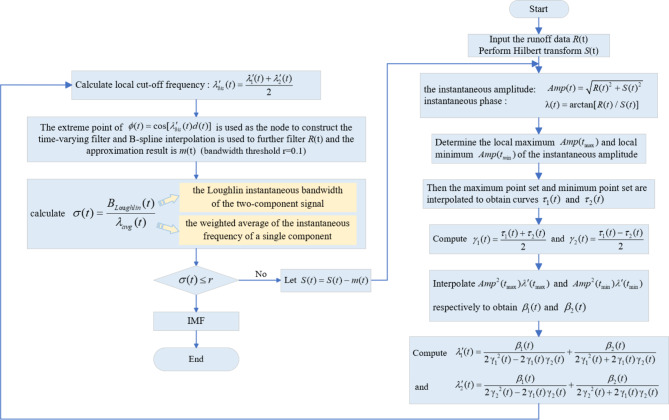
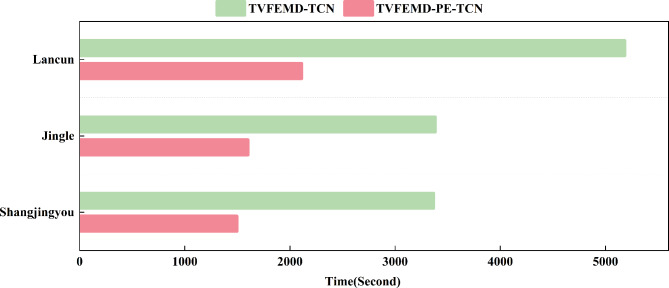
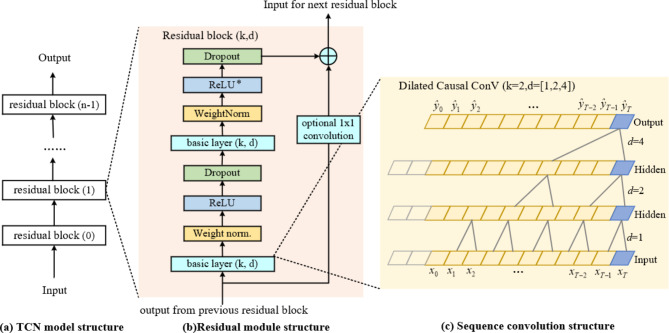
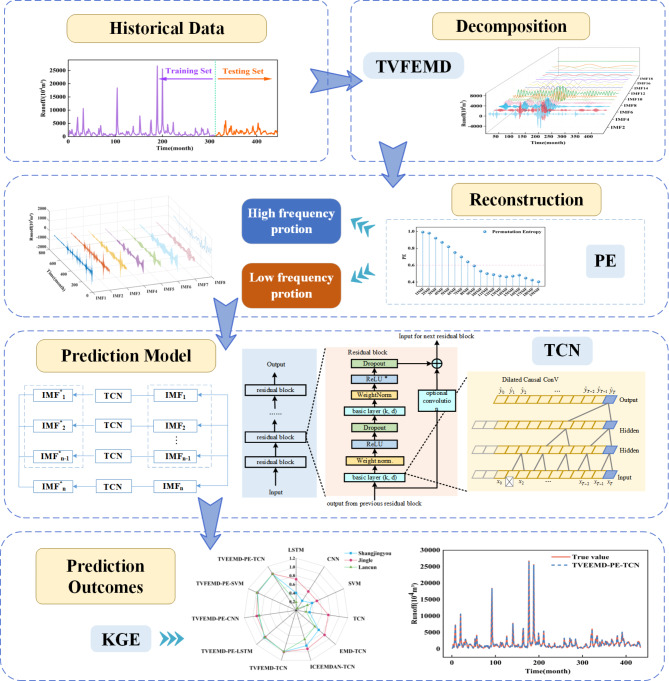
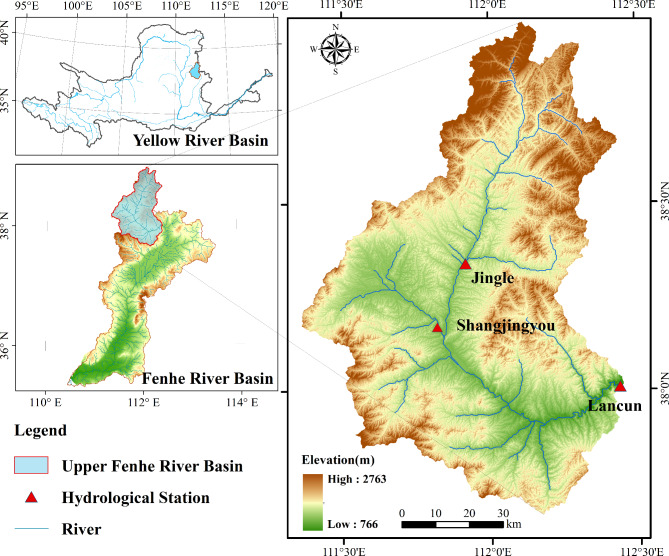
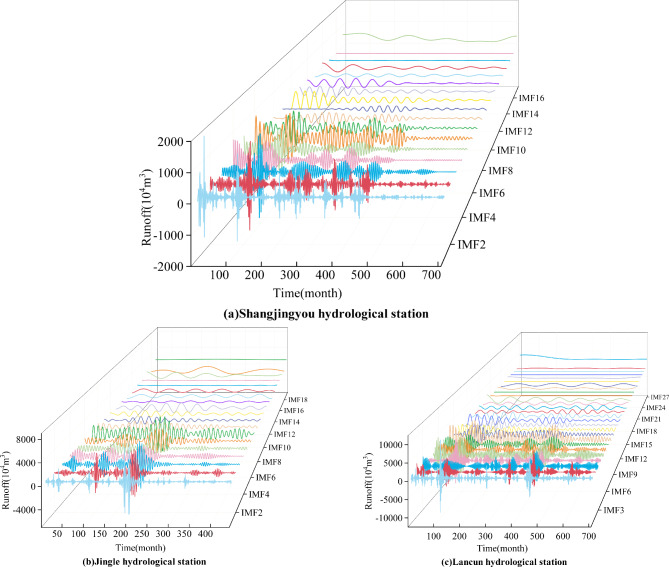
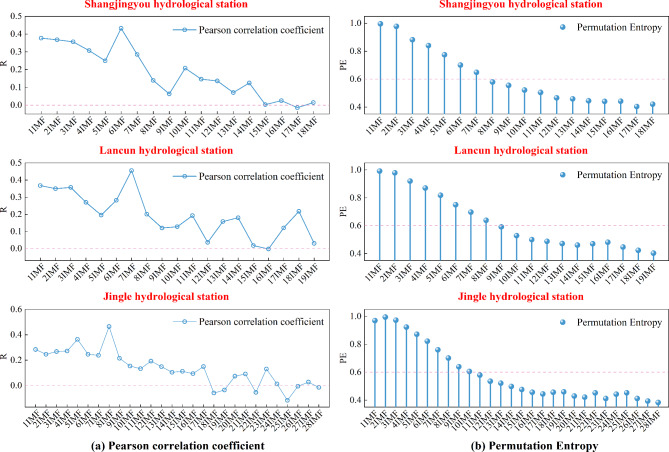
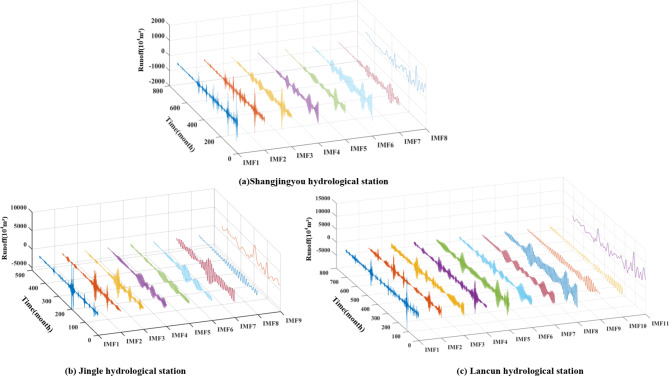
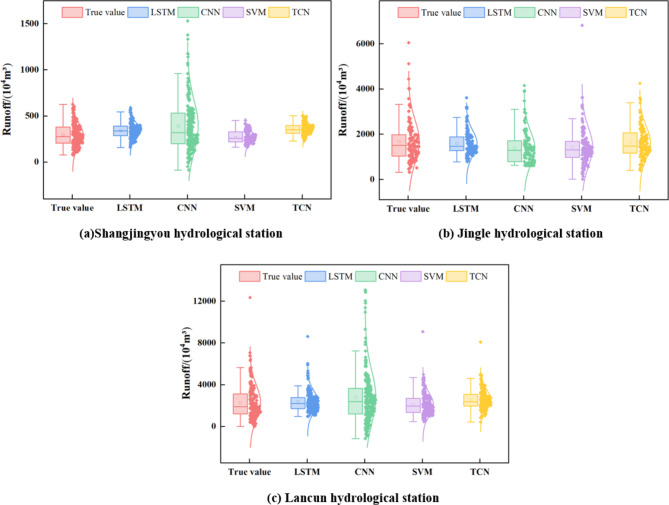
Accurate prediction of runoff is of great significance for rational planning and management of regional water resources. However, runoff presents non-stationary characteristics that make it impossible for a single model to fully capture its intrinsic characteristics. Enhancing its precision poses a significant challenge within the area of water resources management research. Addressing this need, an ensemble deep learning model was hereby developed to forecast monthly runoff. Initially, time-varying filtered based empirical mode decomposition (TVFEMD) is utilized to decompose the original non-stationarity runoff data into intrinsic mode functions (IMFs), a series of relatively smooth components, to improve data stability. Subsequently, the complexity of each sub-component is evaluated using the permutation entropy (PE), and similar low-frequency components are clustered based on the entropy value to reduce the computational cost. Then, the temporal convolutional network (TCN) model is built for runoff prediction for each high-frequency IMFs and the reconstructed low-frequency IMF respectively. Finally, the prediction results of each sub-model are accumulated to obtain the final prediction results. In this study, the proposed model is employed to predict the monthly runoff datasets of the Fenhe River, and different comparative models are established. The results show that the Nash-Sutcliffe efficiency coefficient (NSE) value of this model is 0.99, and all the indicators are better than other models. Considering the robustness and effectiveness of the TVFEMD-PE-TCN model, the insights gained from this paper are highly relevant to the challenge of forecasting non-stationary runoff.
准确预测径流对于区域水资源的合理规划和管理具有重要意义。然而,径流呈现出非平稳特性,使得单一模型无法完全捕捉其内在特征。提高径流预测精度是水资源管理研究领域面临的一项重大挑战。针对这一需求,本文开发了一种集成深度学习模型来预测月径流。首先,利用基于时变滤波的经验模态分解(TVFEMD)将原始的非平稳径流数据分解为一系列相对平滑的本征模态函数(IMF),以提高数据稳定性。随后,使用排列熵(PE)评估每个子分量的复杂性,并根据熵值对相似的低频分量进行聚类,以降低计算成本。然后,分别为每个高频IMF和重构的低频IMF构建时间卷积网络(TCN)模型进行径流预测。最后,将各子模型的预测结果累加得到最终预测结果。在本研究中,将所提出的模型应用于汾河月径流数据集的预测,并建立了不同的对比模型。结果表明,该模型的纳什-萨特克利夫效率系数(NSE)值为0.99,各项指标均优于其他模型。考虑到TVFEMD-PE-TCN模型的稳健性和有效性,本文所得出的见解与非平稳径流预测的挑战高度相关。