Wei Yu-Chen, Yun Liang, Liang Yan-Ling, Grimm Robert, Yang Chongze, Tao Yuan-Fang, Jiang Sheng-Chen, Liao Jin-Yuan
Department of Radiology, The First Affiliated Hospital of Guangxi Medical University, Nanning, China.
Department of Radiology, Guilin Municipal Hospital of Traditional Chinese Medicine, Guilin, China.
Sci Rep. 2024 Dec 30;14(1):31738. doi: 10.1038/s41598-024-82333-7.
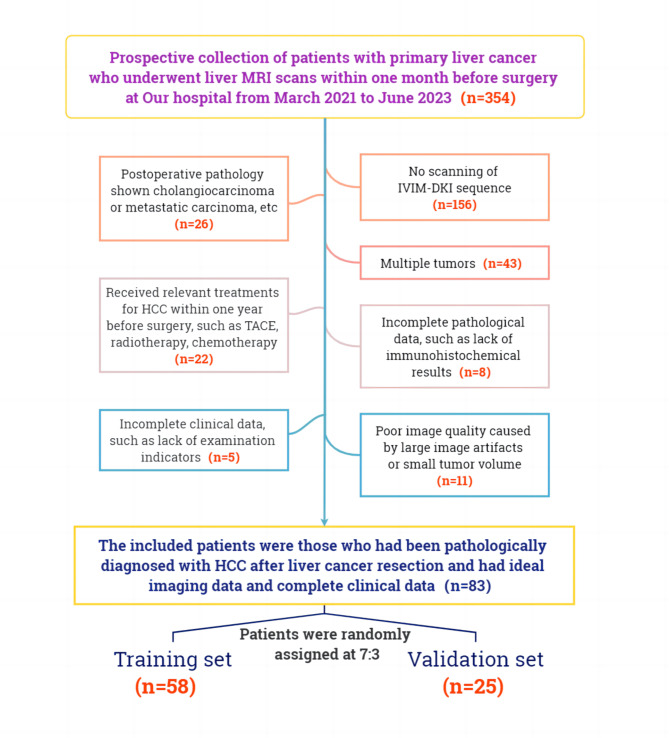
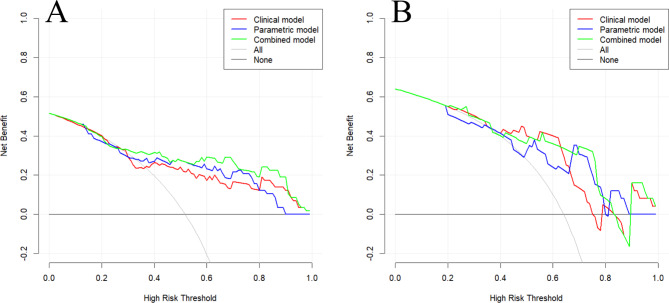
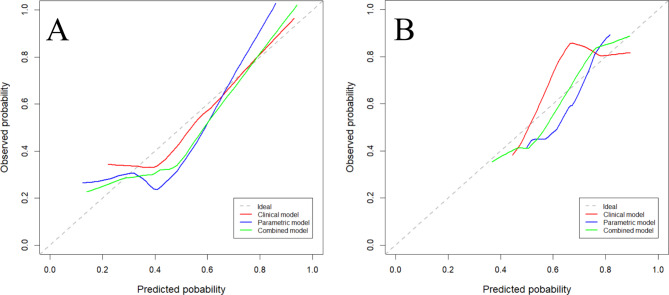
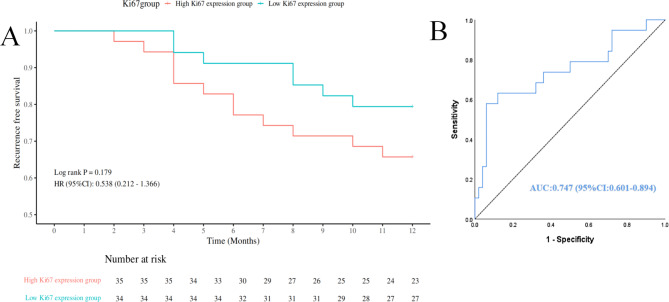
This study aimed to establish and validate a multiparameter prediction model for Ki67 expression in hepatocellular carcinoma (HCC) patients while also exploring its potential to predict the one-year recurrence risk. The clinical, pathological, and imaging data of 83 patients with HCC confirmed by postoperative pathology were analyzed, and the patients were randomly divided into a training set (n = 58) and a validation set (n = 25) at a ratio of 7:3. All patients underwent a magnetic resonance imaging (MRI) scan that included multi-b value diffusion-weighted scanning before surgery, and quantitative parameters were obtained via intravoxel incoherent motion (IVIM) and diffusion kurtosis (DKI) models. Univariate and multivariate logistic regression analyses were conducted using the training set data to construct a model, which was internally validated. The area under the curve (AUC) of the receiver operating characteristics (ROC), a decision curve analysis (DCA), and a calibration analysis were used to evaluate the model's performance. Additionally, for patients with available follow-up data, the combined model was evaluated for its potential utility in predicting the one-year recurrence risk by analyzing the area under the curve (AUC) of the receiver operating characteristic (ROC) curve.The combined model outperformed the clinicaland parametric models in predicting high Ki67 expression. The nomograms based on the combined model included the neutrophil-to-lymphocyte ratio (NLR), ADCslow_Aver. The model showed strong discrimination in the training set, with an AUC of 0.836 (95% CI: 0.729-0.942) and acceptable calibration (Hosmer-Lemeshow p = 0.109). In the validation set, the model maintained moderate discrimination (AUC 0.806, 95% CI: 0.621-0.990) with good calibration (p = 0.663). DCA revealed that the combined model provided good clinical value and correction effects. Additionally, when used to predict the one-year recurrence risk, the combined model achieved moderate accuracy (AUC = 0.747), highlighting its potential utility in identifying patients at a higher risk of recurrence. A nomogram incorporating the NLR and quantitative MR diffusion parameters effectively predicts Ki67 expression in HCC patients before surgery. The model also shows promise in predicting recurrence risk, which may aid in postoperative risk stratification and patient management. Clinical Relevance Statement We established a model that incorporated the NLR and quantitative magnetic resonance diffusion parameters, which demonstrated robust performance in predicting both high Ki67 expression and the one-year recurrence risk in HCC patients. This model shows potential clinical value in guiding postoperative risk stratification and personalized treatment planning.
本研究旨在建立并验证肝细胞癌(HCC)患者Ki67表达的多参数预测模型,同时探索其预测一年复发风险的潜力。分析了83例经术后病理证实的HCC患者的临床、病理和影像数据,并按7:3的比例将患者随机分为训练集(n = 58)和验证集(n = 25)。所有患者在手术前均接受了磁共振成像(MRI)扫描,其中包括多b值扩散加权扫描,并通过体素内不相干运动(IVIM)和扩散峰度(DKI)模型获得定量参数。使用训练集数据进行单因素和多因素逻辑回归分析以构建模型,并进行内部验证。采用受试者操作特征曲线(ROC)的曲线下面积(AUC)、决策曲线分析(DCA)和校准分析来评估模型性能。此外,对于有可用随访数据的患者,通过分析受试者操作特征(ROC)曲线的曲线下面积(AUC)来评估联合模型预测一年复发风险的潜在效用。联合模型在预测高Ki67表达方面优于临床模型和参数模型。基于联合模型的列线图包括中性粒细胞与淋巴细胞比值(NLR)、ADCslow_Aver。该模型在训练集中显示出较强的区分能力,AUC为0.836(95%CI:0.729 - 0.942),校准良好(Hosmer-Lemeshow p = 0.109)。在验证集中,该模型保持了中等区分能力(AUC 0.806,95%CI:0.621 - 0.990),校准良好(p = 0.663)。DCA显示联合模型具有良好的临床价值和校正效果。此外,当用于预测一年复发风险时,联合模型达到了中等准确性(AUC = 0.747),突出了其在识别复发风险较高患者方面的潜在效用。包含NLR和定量MR扩散参数的列线图可有效预测HCC患者术前的Ki67表达。该模型在预测复发风险方面也显示出前景,这可能有助于术后风险分层和患者管理。临床相关性声明我们建立了一个纳入NLR和定量磁共振扩散参数的模型,该模型在预测HCC患者的高Ki67表达和一年复发风险方面表现出强大性能。该模型在指导术后风险分层和个性化治疗规划方面显示出潜在的临床价值。