Gardas Shailesh S, Lysaght Christine, Patterson Charity, Surkar Swati M
Dept of Physical Therapy, East Carolina University, Greenville, NC, United States of America.
Dept of Physical Therapy, University of Pittsburg, Pittsburgh, PA, United States of America.
PLoS One. 2024 Dec 31;19(12):e0313018. doi: 10.1371/journal.pone.0313018. eCollection 2024.
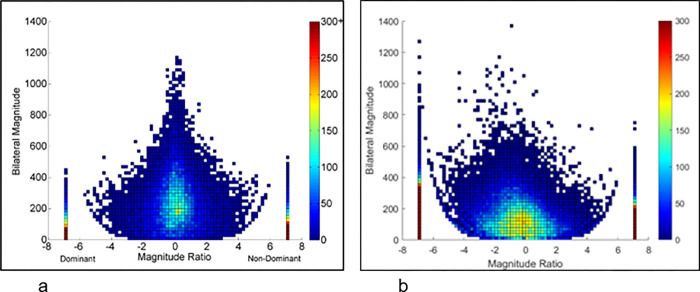
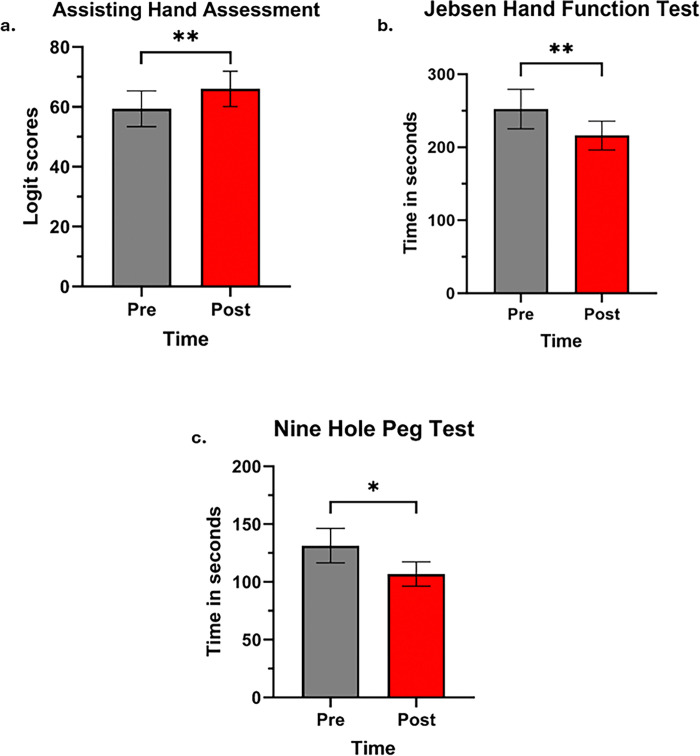
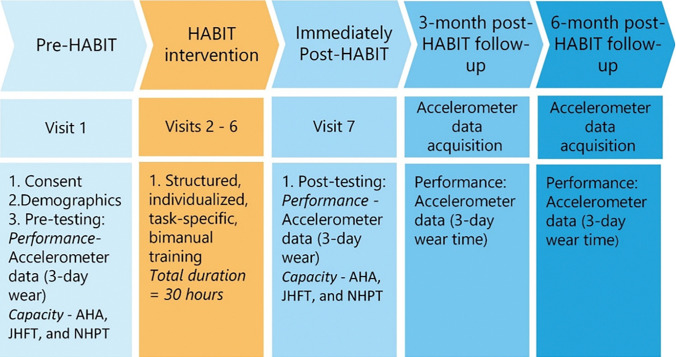
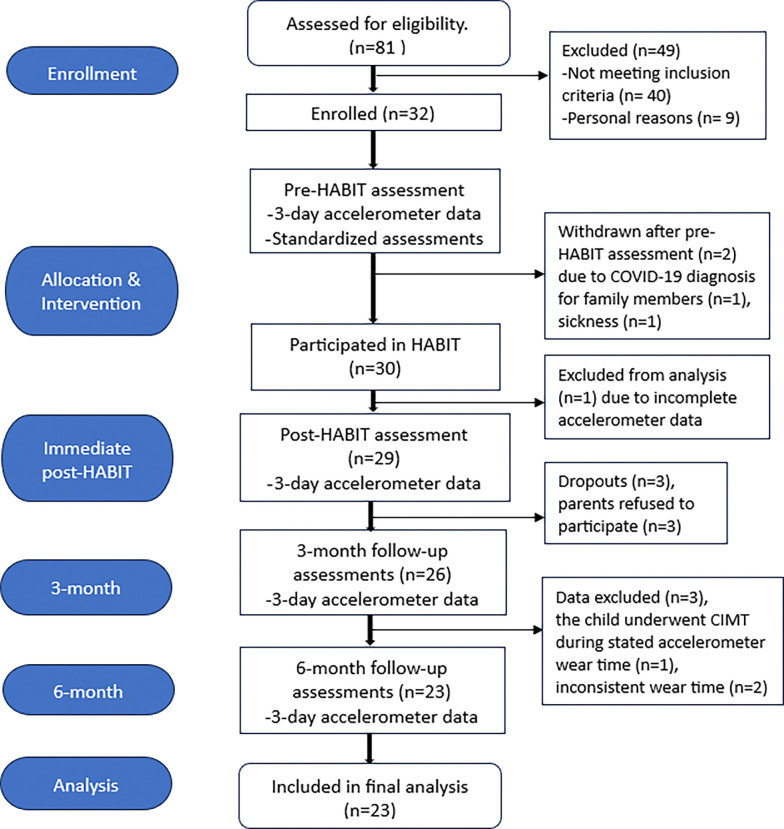
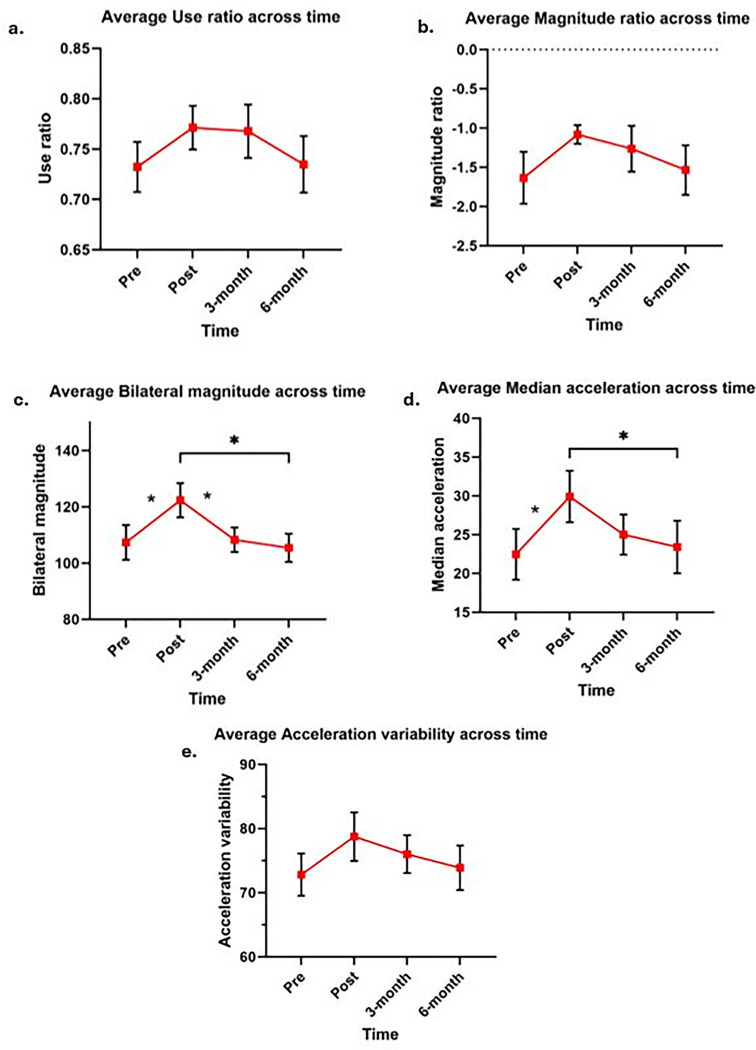
Hand-arm bimanual intensive therapy (HABIT) enhances upper extremity (UE) function and bimanual coordination in children with unilateral cerebral palsy (UCP). Previous studies assessed immediate improvements in UE function using clinical and self-reported measures, which may not accurately reflect real-world UE performance and their long-term retention effects. Therefore, this study aims to investigate the retention of real-world bimanual performance gains over time following HABIT in children with UCP. Thirty children with UCP, age 6-16 years underwent HABIT (6 hours/day for 5 days). Bimanual performance was assessed using GT9X Link accelerometers, worn on bilateral wrists for 3 days pre-, post-, 3-, and 6-month of HABIT. Accelerometer-derived variables-use ratio (UR), magnitude ratio (MR), bilateral magnitude (BM), median acceleration (MA), and acceleration variability (AV)-quantified bimanual performance during real-world activities. UE function was measured with standardized assessments. A mixed model analysis with repeated measures and paired t-tests analyzed the differences real-world bimanual performance and UE function respectively. There was a significant main effect of time in UR (F = 2.72, p = 0.05), BM (F = 4.36, p = 0.007), and MA (F = 3.68, p = 0.016). Post-hoc analysis (mean differences, 95% confidence interval [CI]) revealed improvements immediately post- compared to pre-HABIT in BM (14.99, 4.35-25.63) and MA (7.46, 2.55-12.36). However, subsequent assessments at 3- and 6-months displayed a regression in these gains, suggesting a lack of retention. A decline was observed at 3 months) and 6 months (BM; 16.94, 6.3-27.4, MA; 6.51, 1.61-11.41) in BM and MA compared to post-HABIT. UE capacity measures also showed improvements (p < 0.05) post-HABIT. Although HABIT initially may enhance performance of real-world bimanual tasks, its benefits diminish within six months, suggesting a need for repeating HABIT every 3-6 months to retain long-term improvements.
手臂双手强化疗法(HABIT)可增强单侧脑瘫(UCP)儿童的上肢(UE)功能和双手协调性。以往的研究使用临床和自我报告的测量方法评估了UE功能的即时改善情况,这些方法可能无法准确反映现实世界中的UE表现及其长期保留效果。因此,本研究旨在调查UCP儿童在接受HABIT治疗后,随着时间推移现实世界中双手性能提升的保留情况。30名年龄在6至16岁的UCP儿童接受了HABIT治疗(每天6小时,共5天)。使用GT9X Link加速度计评估双手性能,在HABIT治疗前、后、3个月和6个月时,将加速度计佩戴在双侧手腕上3天。加速度计得出的变量——使用比率(UR)、幅度比率(MR)、双侧幅度(BM)、中位加速度(MA)和加速度变异性(AV)——量化了现实世界活动中的双手性能。通过标准化评估测量UE功能。采用重复测量的混合模型分析和配对t检验分别分析现实世界中双手性能和UE功能的差异。时间在UR(F = 2.72,p = 0.05)、BM(F = 4.36,p = 0.007)和MA(F = 3.68,p = 0.016)方面有显著的主效应。事后分析(平均差异,95%置信区间[CI])显示,与HABIT治疗前相比,治疗后立即在BM(14.99,4.35 - 25.63)和MA(7.46,2.55 - 12.36)方面有改善。然而,在3个月和6个月的后续评估中,这些改善出现了倒退,表明缺乏保留。与HABIT治疗后相比,在3个月(BM;16.94,6.3 - 27.4,MA;6.51,1.61 - 11.41)和6个月时观察到BM和MA下降。UE能力测量在HABIT治疗后也显示出改善(p < 0.05)。尽管HABIT最初可能会提高现实世界中双手任务的表现,但其益处会在六个月内减弱,这表明需要每3至6个月重复进行HABIT治疗以保持长期改善。