Ahrend Hannes, Buchholtz Anja, Stope Matthias B
Department of Medicine, Israelite Hospital Hamburg, Hamburg, Germany.
Department of Gynecology and Gynecological Oncology, Research Laboratories, University Hospital Bonn, Bonn, Germany
In Vivo. 2025 Jan-Feb;39(1):17-24. doi: 10.21873/invivo.13801.
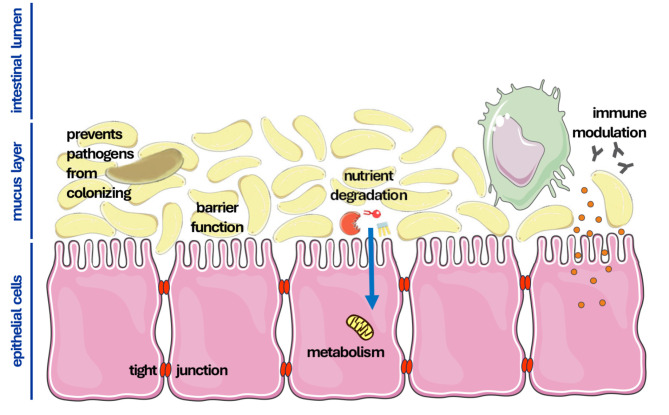
The human bowel is exposed to numerous biotic and abiotic external noxious agents. Accordingly, the digestive tract is frequently involved in malfunctions within the organism. Together with the commensal intestinal flora, it regulates the immunological balance between inflammatory defense processes and immune tolerance. Pathological changes in this system often cause chronic inflammatory bowel diseases including Crohn's disease and ulcerative colitis. This review article highlights the complex interaction between commensal microorganisms, the intestinal microbiome, and the intestinal epithelium-localized local immune system. The main functions of the human intestinal microbiome include (i) protection against pathogenic microbial colonization, (ii) maintenance of the barrier function of the intestinal epithelium, (iii) degradation and absorption of nutrients and (iv) active regulation of the intestinal immunity. The local intestinal immune system consists primarily of macrophages, antigen-presenting cells, and natural killer cells. These cells regulate the commensal intestinal microbiome and are in turn regulated by signaling factors of the epithelial cells and the microbiome. Deregulated immune responses play an important role and can lead to both reduced activity of the commensal microbiome and pathologically increased activity of harmful microorganisms. These aspects of chronic inflammatory bowel disease have become the focus of attention in recent years. It is therefore important to consider the immunological-microbial context in both the diagnosis and treatment of inflammatory bowel diseases. A promising holistic approach would include the most comprehensive possible diagnosis of the immune and microbiome status of the patient, both at the time of diagnostics and during therapy.
人类肠道暴露于众多生物和非生物性外部有害因子。因此,消化道经常参与机体的功能紊乱。它与共生肠道菌群一起,调节炎症防御过程和免疫耐受之间的免疫平衡。该系统的病理变化常导致包括克罗恩病和溃疡性结肠炎在内的慢性炎症性肠病。这篇综述文章强调了共生微生物、肠道微生物群和肠道上皮局部免疫系统之间的复杂相互作用。人类肠道微生物群的主要功能包括:(i)抵御病原微生物定植;(ii)维持肠道上皮的屏障功能;(iii)营养物质的降解与吸收;以及(iv)肠道免疫的主动调节。肠道局部免疫系统主要由巨噬细胞、抗原呈递细胞和自然杀伤细胞组成。这些细胞调节共生肠道微生物群,反过来又受上皮细胞和微生物群信号因子的调节。免疫反应失调起着重要作用,可导致共生微生物群活性降低以及有害微生物活性病理性增加。慢性炎症性肠病的这些方面近年来已成为关注焦点。因此,在炎症性肠病的诊断和治疗中考虑免疫 - 微生物背景非常重要。一种有前景的整体方法将包括在诊断时和治疗期间尽可能全面地诊断患者的免疫和微生物群状态。