Yao Wenjian, Shang Linlin, Wang Yinghao, Xu Lei, Bai Yu, Feng Mingyu, Jia Xiangbo, Wu Sen
Department of Thoracic Surgery, School of Clinical Medicine, Henan Provincial People's Hospital, People's Hospital of Zhengzhou University, Henan University, No.7, Wei Wu Road, Jinshui District, Zhengzhou, Henan, 450003, China.
Department of Thoracic Surgery, Zhengzhou University People's Hospital, Henan Provincial People's Hospital, No.7, Wei Wu Road, Jinshui District, Zhengzhou, Henan, 450003, China.
J Transl Med. 2024 Dec 31;22(1):1167. doi: 10.1186/s12967-024-05960-8.
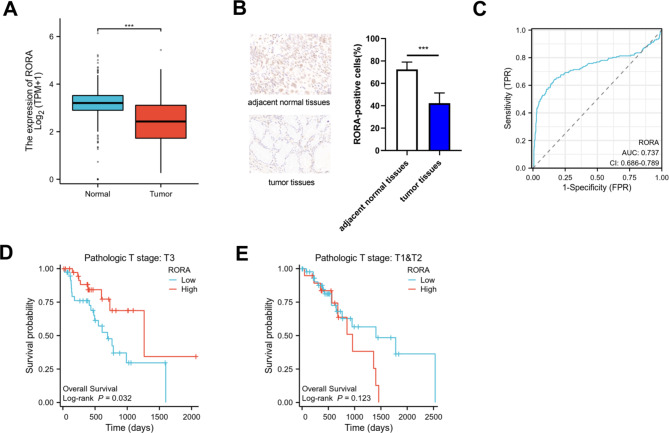
The RAR-related orphan receptor alpha (RORA), a circadian clock molecule, is highly associated with anti-oncogenes. In this paper, we defined the precise action and mechanistic basis of RORA in ESCC development under hypoxia.
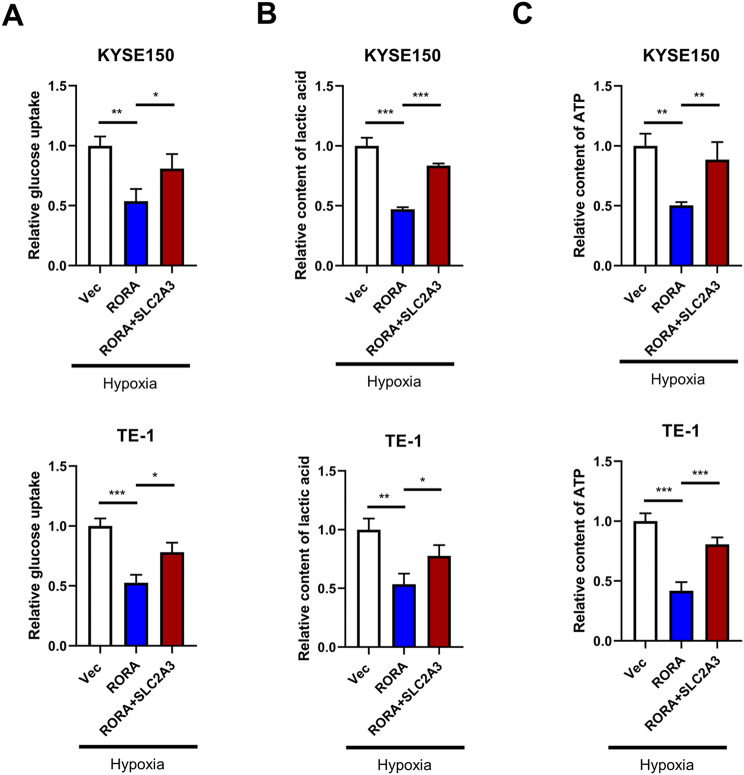
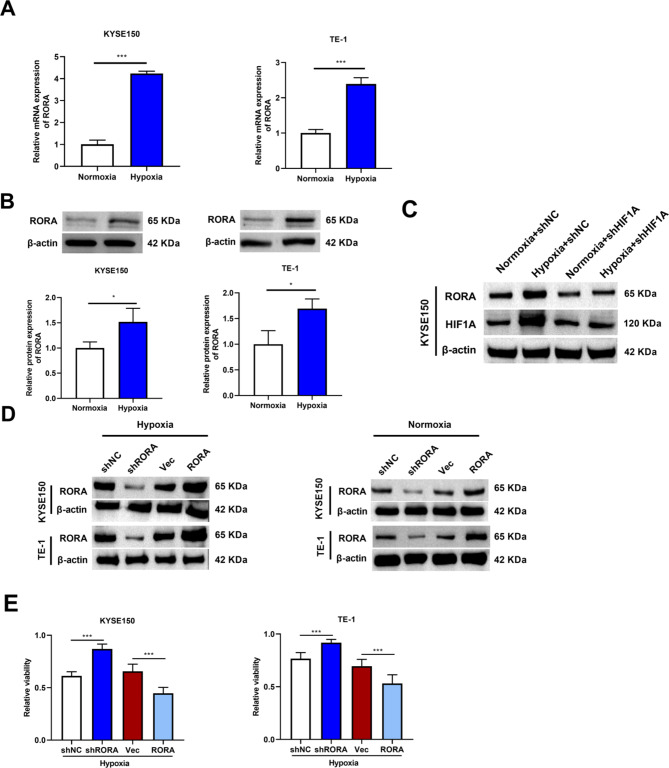
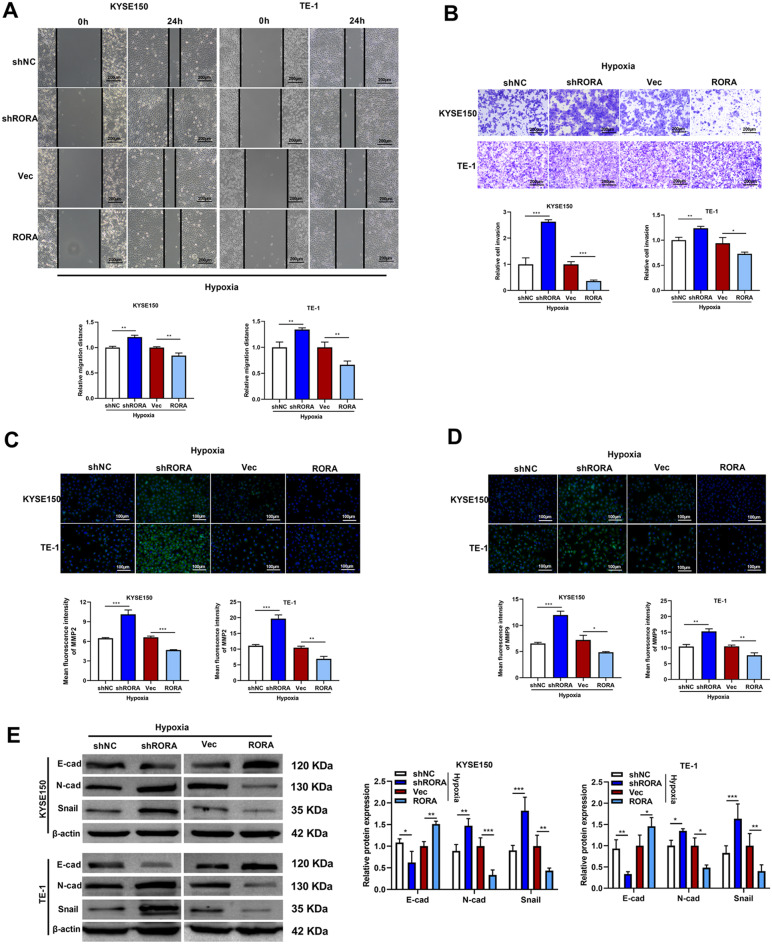
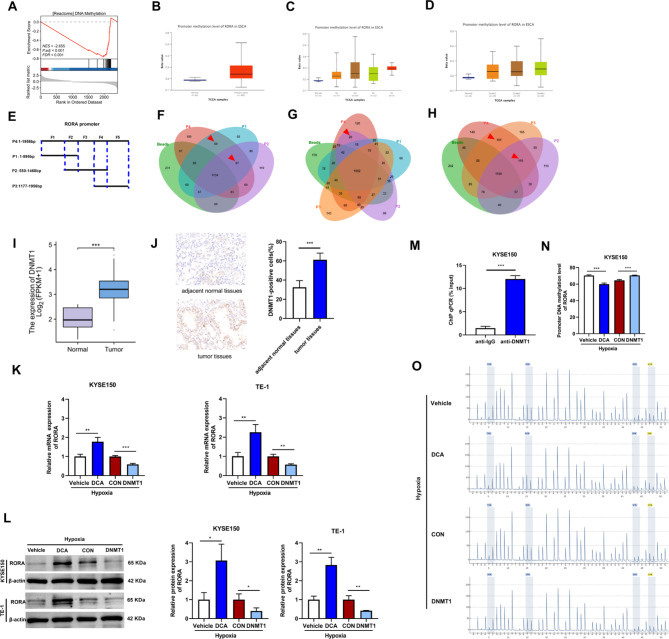
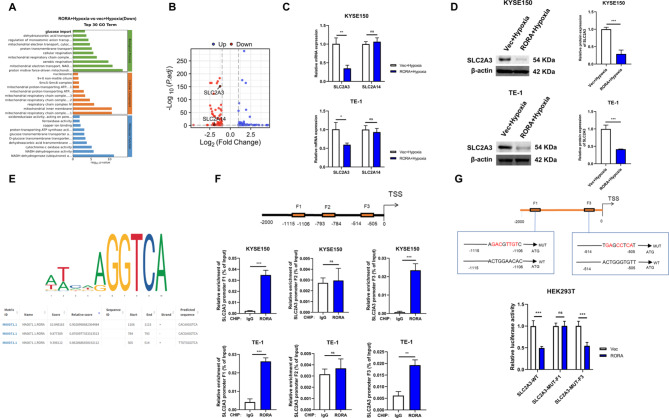
Expression analysis was conducted by RT-qPCR, western blotting, immunofluorescence (IF), and immunohistochemistry (IHC) assays. The functions of RORA were assessed by detecting its regulatory effects on cell viability, motility, invasion, and tumor growth. DNA pull-down assay and proteomic analysis were employed to identify proteins bound to the RORA promoter. The promoter methylation level of RORA was detected by DNA pyrosequencing. RNA-seq analysis was performed to explore the downstream mechanisms of RORA, and the transcriptional regulation of RORA on SLC2A3 was verified by ChIP-qPCR and dual-luciferase reporter assay. Glycolysis was assessed by detecting the consumption of glucose and the production of lactic acid and ATP.
In vitro, RORA was shown to suppress ESCC cell viability, motility, and invasion under hypoxic condition. In vivo, increased RORA expression in mouse xenografts impeded tumor growth. DNMT1 was identified to widely exist in the RORA promoter, increasing DNA methylation and reducing RORA expression in hypoxia-induced KYSE150 ESCC cells. Mechanistically, RORA was found to inactivate the transcription of glucose transporter protein SLC2A3 by interacting with its promoter F1 region. Furthermore, rescue experiments revealed that RORA-mediated suppressive effects on ESCC cell migration and invasion were largely based on its negative regulation of SLC2A3 and glycolysis.
DNMT1-driven methylation of RORA promotes ESCC progression largely through affecting SLC2A3 transcription and glycolysis. These findings turn RORA into potential target of anti-cancer therapeutic agents.
视黄酸受体相关孤儿受体α(RORA)是一种生物钟分子,与抑癌基因高度相关。在本文中,我们明确了RORA在低氧条件下食管鳞癌(ESCC)发生发展中的具体作用及机制基础。
通过逆转录定量聚合酶链反应(RT-qPCR)、蛋白质免疫印迹法、免疫荧光(IF)和免疫组织化学(IHC)分析进行表达分析。通过检测RORA对细胞活力、运动性、侵袭和肿瘤生长的调节作用来评估其功能。采用DNA下拉实验和蛋白质组学分析来鉴定与RORA启动子结合的蛋白质。通过焦磷酸测序检测RORA的启动子甲基化水平。进行RNA测序(RNA-seq)分析以探索RORA的下游机制,并通过染色质免疫沉淀定量聚合酶链反应(ChIP-qPCR)和双荧光素酶报告基因检测验证RORA对溶质载体家族2成员3(SLC2A3)的转录调控。通过检测葡萄糖消耗、乳酸和三磷酸腺苷(ATP)生成来评估糖酵解。
在体外,RORA在低氧条件下可抑制ESCC细胞的活力、运动性和侵袭。在体内,小鼠异种移植瘤中RORA表达增加可抑制肿瘤生长。已确定DNA甲基转移酶1(DNMT1)广泛存在于RORA启动子中,在低氧诱导的KYSE150 ESCC细胞中增加DNA甲基化并降低RORA表达。从机制上讲,发现RORA通过与其启动子F1区域相互作用使葡萄糖转运蛋白SLC2A3的转录失活。此外,挽救实验表明,RORA介导的对ESCC细胞迁移和侵袭的抑制作用很大程度上基于其对SLC2A3和糖酵解的负调控。
DNMT1驱动的RORA甲基化主要通过影响SLC2A3转录和糖酵解促进ESCC进展。这些发现使RORA成为抗癌治疗药物的潜在靶点。