Li Xin, Lu Zhenghui, Song Yang, Liang Minjun, Yuan Yi, Fekete Gusztáv, Kovács András, Sun Dong, Gu Yaodong
Research Academy of Medicine Combining Sports, Ningbo, China.
Faculty of Engineering, University of Pannonia, Veszprém, Hungary.
Front Bioeng Biotechnol. 2024 Dec 17;12:1506002. doi: 10.3389/fbioe.2024.1506002. eCollection 2024.
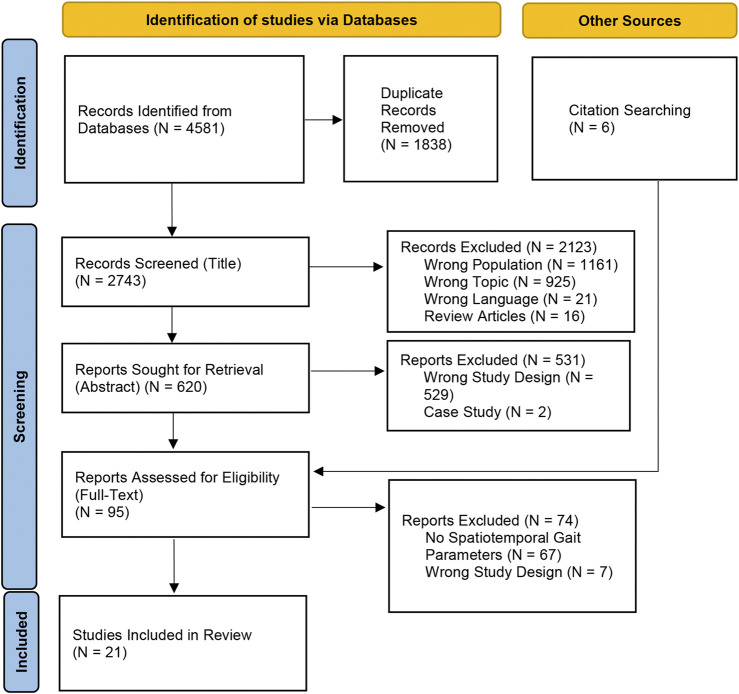
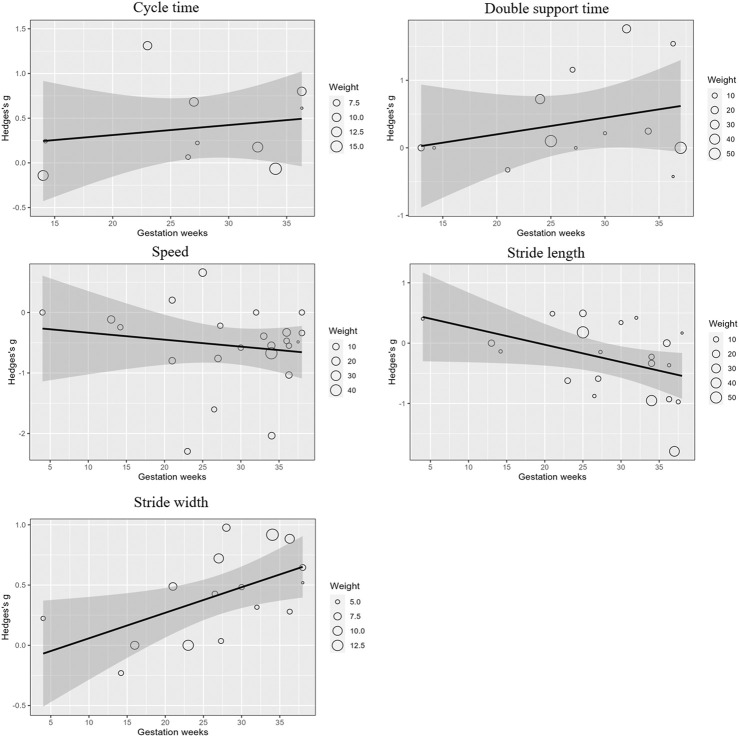
During pregnancy, women undergo significant physiological, hormonal, and biomechanical changes that influence their gait. The forward shift of the center of mass and increased joint loads often result in a "waddling gait," elevating the risk of falls. While gait changes during pregnancy have been documented, findings across studies remain inconsistent, particularly regarding variations at different pregnancy stages. This systematic review and meta-analysis aimed to quantify the impact of pregnancy stages on spatiotemporal gait parameters. A comprehensive literature search across six databases (PubMed, Web of Science, Scopus, EBSCO, Embase, and Cochrane Library) was conducted to identify studies on pregnancy and gait, and data on publication details, methodology, participant characteristics, gait outcomes, and study limitations were extracted. Out of 4,581 initial records, 21 studies met the inclusion criteria. The meta-analysis revealed significant changes in gait parameters during pregnancy, with decreases in stride length (effect size = -0.29) and gait speed (effect size = -0.55), and increases in stride width (effect size = 0.45), cycle time (effect size = 0.38), and double support time (effect size = 0.41). Meta-regression analyses indicated that gestational weeks significantly impacted stride length (β = -0.03 [95% CI, -0.055 to -0.002], p < 0.05) and stride width (β = 0.02 [95% CI, 0.003 to 0.039], p < 0.05), while no significant effects were found for cycle time, double support time, or gait speed. In conclusion, pregnancy leads to significant changes in gait patterns, with a notable increase in stride width and a decrease in stride length as gestation progresses, suggesting these adjustments are strategies for maintaining balance and stability in response to physiological changes. The analysis also emphasizes that while gestational age influences gait adaptations, other factors such as pelvic girdle pain, footwear, and psychological influences play crucial roles. Understanding these complex gait changes can inform interventions and guidelines to support mobility and safety for pregnant women throughout their pregnancy.
在怀孕期间,女性会经历显著的生理、激素和生物力学变化,这些变化会影响她们的步态。重心向前移动以及关节负荷增加通常会导致“摇摆步态”,从而增加跌倒风险。虽然怀孕期间的步态变化已有文献记载,但各项研究的结果仍不一致,特别是在不同怀孕阶段的差异方面。本系统评价和荟萃分析旨在量化怀孕阶段对时空步态参数的影响。我们在六个数据库(PubMed、科学网、Scopus、EBSCO、Embase和Cochrane图书馆)中进行了全面的文献检索,以识别关于怀孕和步态的研究,并提取了有关出版细节、方法、参与者特征、步态结果和研究局限性的数据。在4581条初始记录中,有21项研究符合纳入标准。荟萃分析显示,怀孕期间步态参数有显著变化,步幅长度减小(效应量=-0.29),步态速度降低(效应量=-0.55),步幅宽度增加(效应量=0.45),周期时间增加(效应量=0.38),双支撑时间增加(效应量=0.41)。荟萃回归分析表明,孕周对步幅长度(β=-0.03 [95%CI,-0.055至-0.002],p<0.05)和步幅宽度(β=0.02 [95%CI,0.003至0.039],p<0.05)有显著影响,而周期时间、双支撑时间或步态速度未发现显著影响。总之,怀孕会导致步态模式发生显著变化,随着孕周增加,步幅宽度显著增加,步幅长度减小,这表明这些调整是应对生理变化以维持平衡和稳定性的策略。分析还强调,虽然孕周会影响步态适应,但其他因素,如骨盆带疼痛、鞋类和心理影响也起着关键作用。了解这些复杂的步态变化可为干预措施和指南提供参考,以支持孕妇在整个孕期的行动能力和安全性。