Duan Yuanjia, Ren Xiaotong, Guo Xinyu, Xie Jiayi, Liu Zhaoyun, Li Lijuan
Department of Hematology, Tianjin Medical University General Hospital, Tianjin, China.
Tianjin Key Laboratory of Bone Marrow Failure and Malignant Hemopoietic Clone Control, Tianjin, China.
Front Immunol. 2024 Dec 17;15:1466839. doi: 10.3389/fimmu.2024.1466839. eCollection 2024.
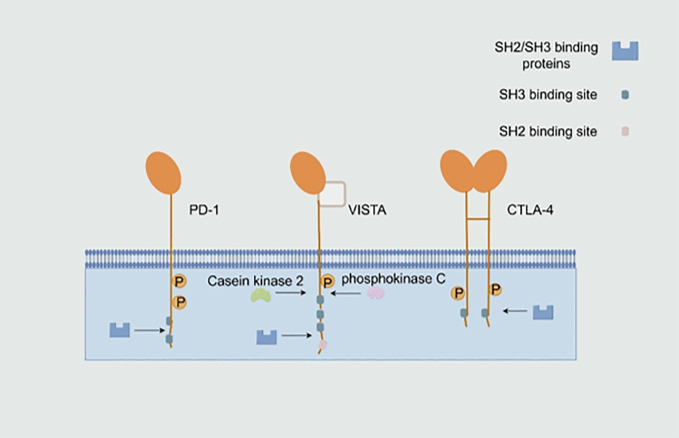
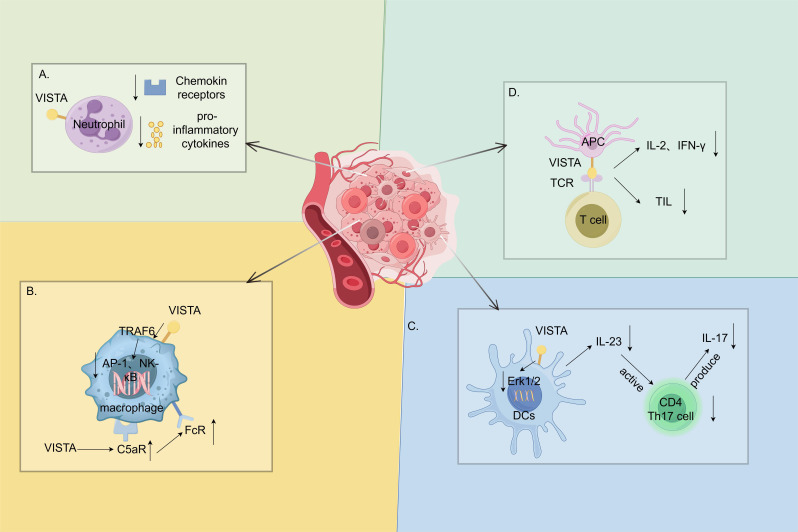
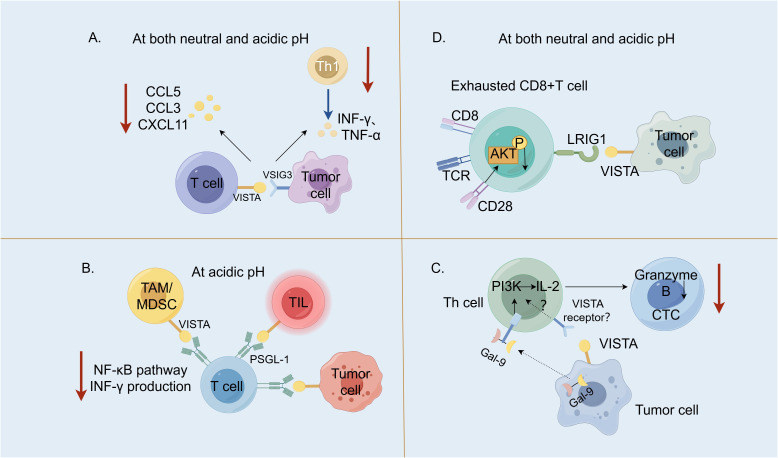
In recent years, tumor immunotherapy has become an active research area, with the emergence of immune checkpoint inhibitors (ICIs) revolutionizing immunotherapy. Clinical evidence indicates that programmed cell death protein 1 (PD-1) monoclonal antibodies and other drugs have remarkable therapeutic effects. V-domain Ig suppressor of T-cell activation (VISTA) is a new type of immune checkpoint receptor that is highly expressed in various tumors. It is co-expressed with PD-1, T-cell immunoglobulin domain, mucin domain-3 (Tim-3), T-cell immunoglobulin, and immunoreceptor tyrosine-based inhibitory motif domain (TIGIT) and is associated with prognosis, which suggests that it may be a target for immunotherapy. As an immune checkpoint receptor with no mature drugs, VISTA is highly expressed in acute myeloid leukemia (AML), multiple myeloma (MM), and other hematological malignancies; however, its pathogenic mechanism should be defined to better guide treatment.
近年来,肿瘤免疫疗法已成为一个活跃的研究领域,免疫检查点抑制剂(ICI)的出现彻底改变了免疫疗法。临床证据表明,程序性细胞死亡蛋白1(PD-1)单克隆抗体及其他药物具有显著的治疗效果。T细胞活化V结构域免疫球蛋白抑制因子(VISTA)是一种新型免疫检查点受体,在多种肿瘤中高表达。它与PD-1、T细胞免疫球蛋白结构域、黏蛋白结构域3(Tim-3)、T细胞免疫球蛋白和基于免疫受体酪氨酸的抑制基序结构域(TIGIT)共同表达,且与预后相关,这表明它可能是免疫治疗的一个靶点。作为一种尚无成熟药物的免疫检查点受体,VISTA在急性髓系白血病(AML)、多发性骨髓瘤(MM)及其他血液系统恶性肿瘤中高表达;然而,其致病机制尚需明确,以便更好地指导治疗。