Choi Yuri, Park Jae Hyun, Jo Ala, Lim Chul-Woo, Park Ji-Min, Hwang Jin Woo, Lee Kang Soo, Kim Young-Sang, Lee Hakho, Moon Jisook
Department of Biotechnology, College of Life Science, CHA University, Gyeonggi-do 13488, Republic of Korea.
Center for Systems Biology, Massachusetts General Hospital, Harvard Medical School, Boston, MA 02114, USA.
Sci Adv. 2025 Jan 3;11(1):eado6894. doi: 10.1126/sciadv.ado6894. Epub 2025 Jan 1.
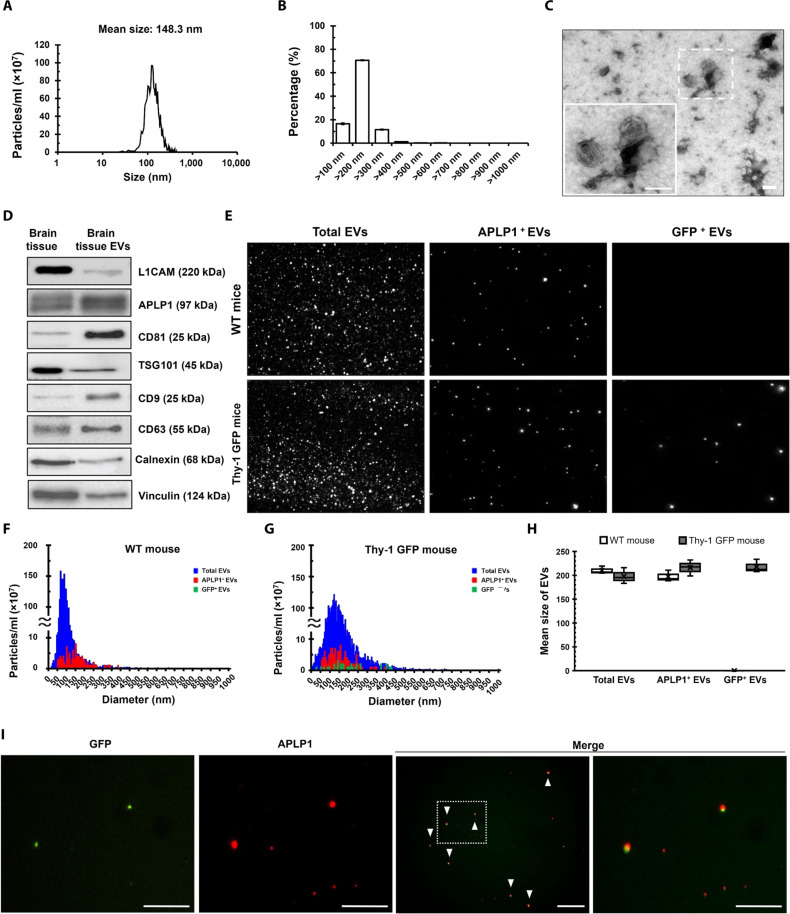
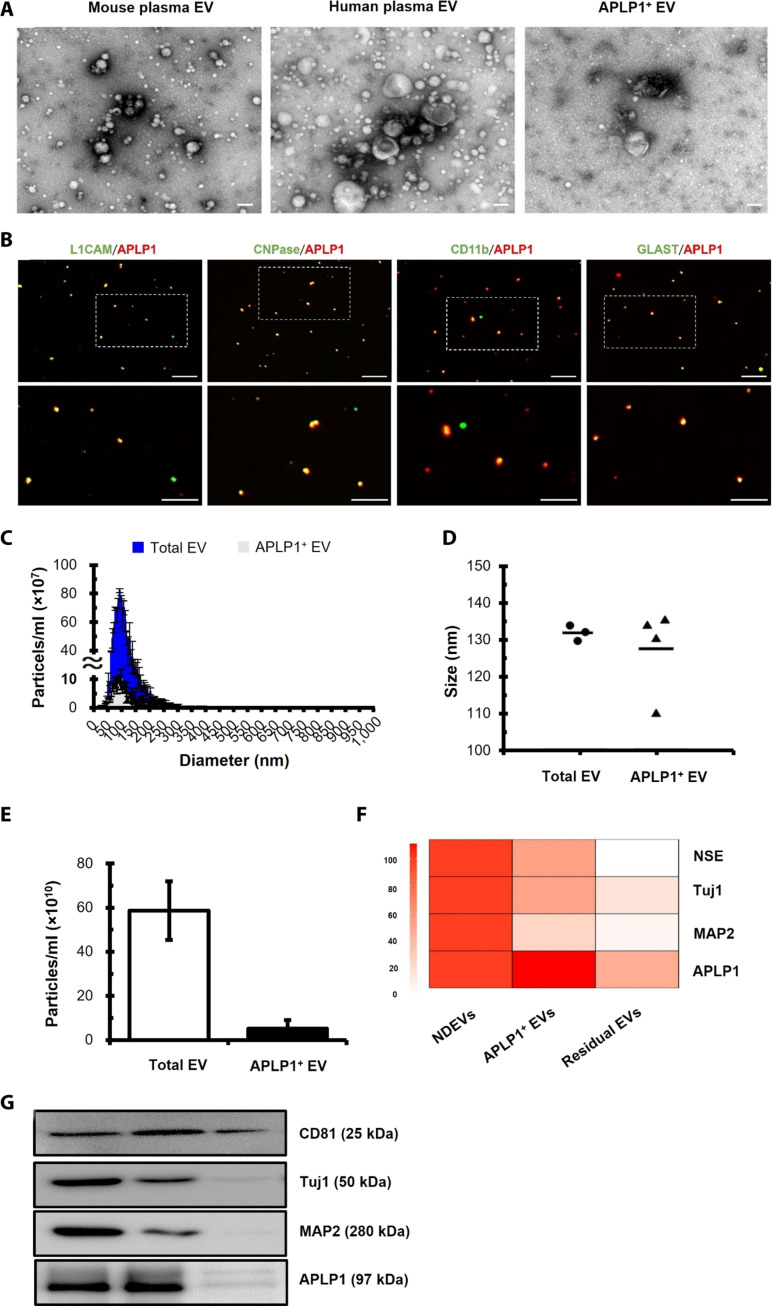
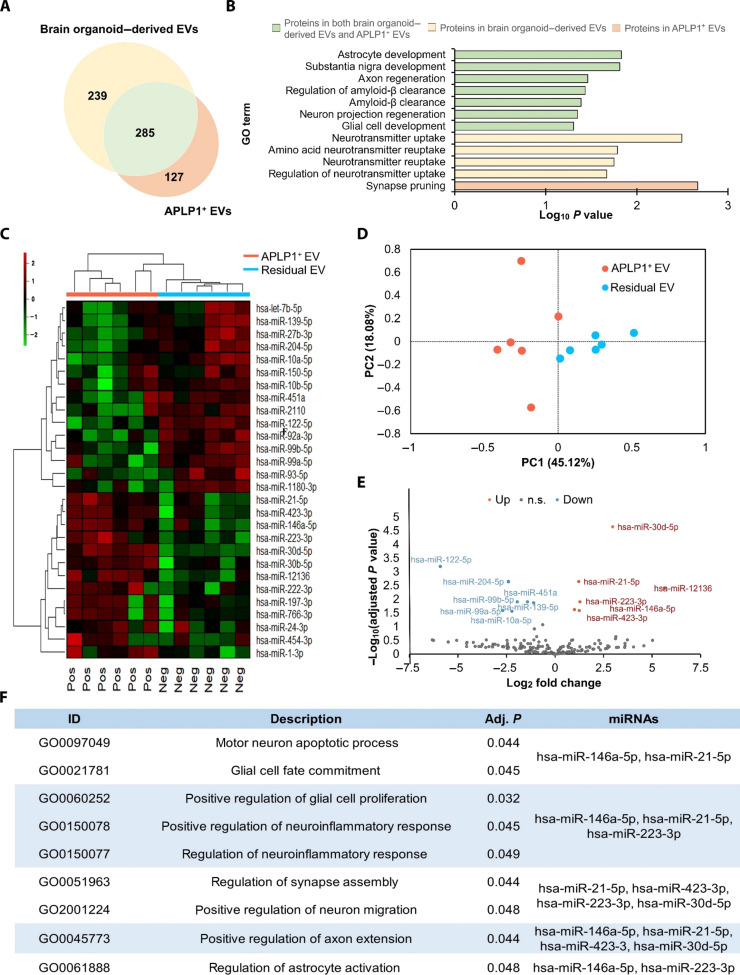
The early detection of neurodegenerative diseases necessitates the identification of specific brain-derived biomolecules in peripheral blood. In this context, our investigation delineates the role of amyloid precursor-like protein 1 (APLP1)-a protein predominantly localized in oligodendrocytes and neurons-as a previously unidentified biomarker in extracellular vesicles (EVs). Through rigorous analysis, APLP1 EVs from human sera were unequivocally determined to be of cerebral origin. This assertion was corroborated by distinctive small RNA expression patterns of APLP1 EVs. The miRNAs' putative targets within these EVs manifested pronounced expression in the brain, fortifying their neurospecific provenance. We subjected our findings to stringent validation using Thy-1 GFP M line mice, transgenic models wherein GFP expression is confined to hippocampal neurons. An amalgamation of these results with an exhaustive data analysis accentuates the potential of APLP1 EVs as cerebrally originated biomarkers. Synthesizing our findings, APLP1 EVs are postulated not merely as diagnostic markers but as seminal entities shaping the future trajectory of neurodegenerative disease diagnostics.
神经退行性疾病的早期检测需要在外周血中识别特定的脑源性生物分子。在此背景下,我们的研究描绘了淀粉样前体样蛋白1(APLP1)——一种主要定位于少突胶质细胞和神经元的蛋白质——作为细胞外囊泡(EVs)中一种先前未被识别的生物标志物的作用。通过严格分析,明确确定来自人血清的APLP1 EVs起源于大脑。APLP1 EVs独特的小RNA表达模式证实了这一论断。这些EVs内miRNA的推定靶标在大脑中表现出明显的表达,强化了它们的神经特异性来源。我们使用Thy-1 GFP M系小鼠(GFP表达局限于海马神经元的转基因模型)对我们的发现进行了严格验证。这些结果与详尽的数据分析相结合,突出了APLP1 EVs作为脑源性生物标志物的潜力。综合我们的发现,APLP1 EVs不仅被假定为诊断标志物,而且是塑造神经退行性疾病诊断未来轨迹的重要实体。